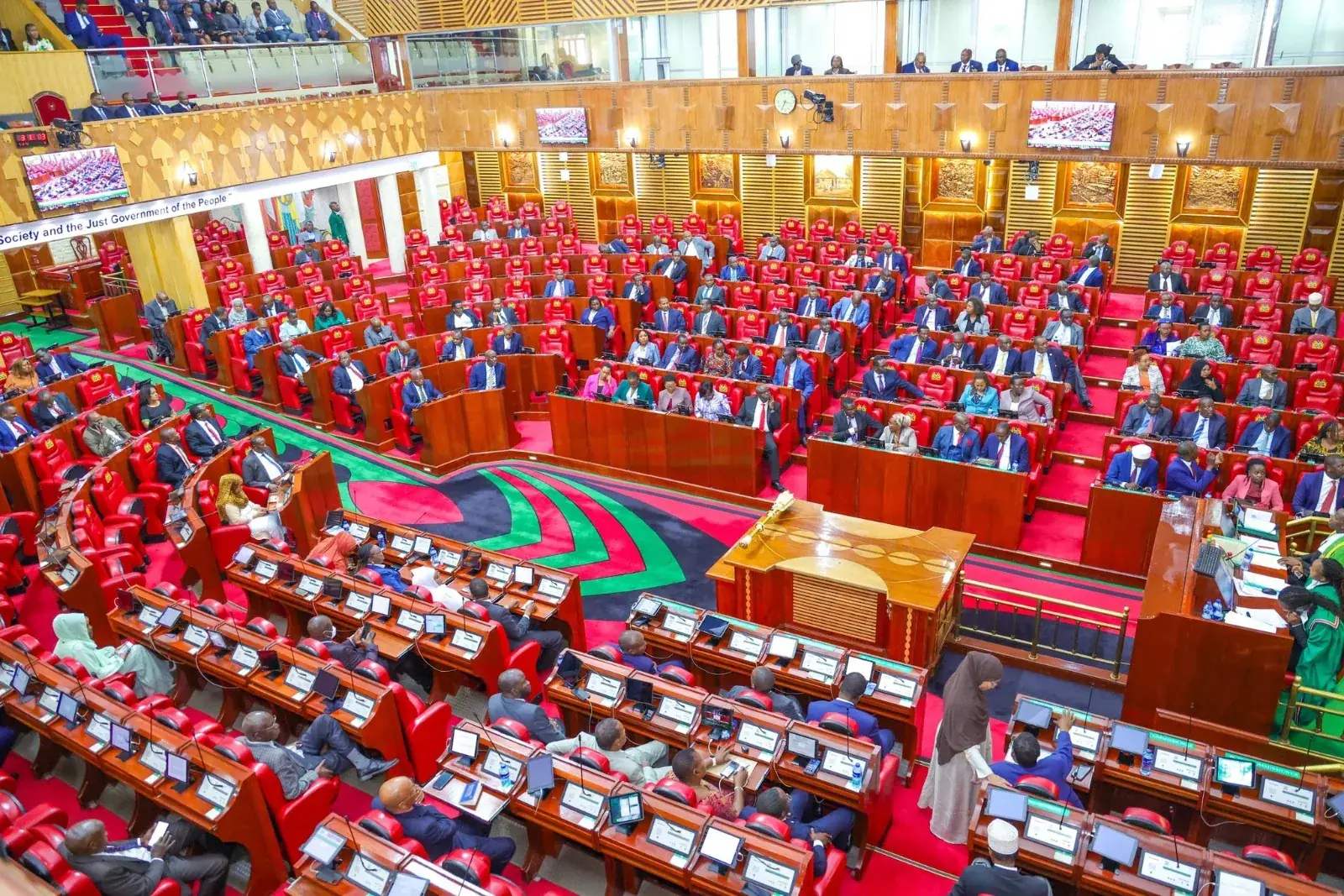
On 6 March 2026, the Communications Authority of Kenya formally brought commercial data centres under its telecommunications licensing framework for the first time. Gazette Notice No. 3335 gave effect to the Revised Telecommunications Market Structure, a document that explicitly categorises data centre operations as a licensable activity under the Network Facilities Provider regime. For the roughly nineteen operational facilities across Nairobi and Mombasa, and for the billions of shillings in planned investment, this is the regulatory framework they will operate under.
Why Did the CA Decide to Licence Data Centres?
Data centres have evolved from simple server rooms into critical national infrastructure. The CA's decision followed a formal public consultation that began with a paper published in December 2024, where the Authority argued that data centres, by virtue of mediating access to digital services, are functionally equivalent to communications tower companies and fibre operators, both of which have long been regulated as Network Facilities Providers.
The Authority wrote that "given that the facility owner in the second type of data centre arrangement significantly influences data accessibility, it is necessary to bring these arrangements within the licensing framework to protect users' data access rights." This was not a cosmetic reclassification. It was an assertion that data centres are the physical layer of the digital economy, and that leaving them unregulated was a gap that needed closing.
The urgency was demonstrated in June 2026 when a power outage at the Huduma Kenya data centre in Nakuru brought government services offline across all forty-seven counties simultaneously. Millions of citizens were unable to access identity documents, business registrations, and essential services. The incident proved that data centre failures are no longer theoretical risks, they are events with immediate, nationwide consequences.

How Does NFP-T1 Differ from NFP-T2?
The CA did not create a standalone "data centre licence" in the March 2026 framework. Instead, it placed data centres within the existing Network Facilities Provider framework. NFP-T2 is the primary route for pure-play data centre operators, while NFP-T1 is available for large integrated operators who also require nationwide spectrum rights.
Update (8 September 2026): The CA has opened a 30-day public consultation on a proposed standalone Data Centre licence that would remove colocation facilities from NFP-T2 entirely, with fees of KES 5,000/100,000 at application and issue, annual operating fees of KES 80,000 or 0.4% of turnover, 15-year validity, and implementation targeted across FY2026/27–FY2027/28. Full analysis: Kenya's CA opens consultation on a standalone data centre licence. Until that regime is finalised and implemented, the NFP-T2 route described below remains the licence of record.
NFP-T1 vs NFP-T2 for Data Centre Operators
| Aspect | NFP-T1 (Tier 1) | NFP-T2 (Tier 2) |
|---|---|---|
| Data Centre Right | Permitted without additional licence | Primary licence category for DCs |
| Geographic Scope | Countrywide with national spectrum | Countrywide, county-by-county build-out |
| Spectrum Fees | Reservation + utilisation fees (national stack) | Utilisation fees only (approved regions) |
| Licence Term | 15 years or 25 years (optional) | 15 years only |
| Application Fee | KES 5,000 | KES 5,000 |
| Initial Licence Fee | KES 15M (15yr) / KES 45M (25yr) | KES 15 million |
| Annual Operating Fee | 0.4% of AGT or KES 4M, whichever is higher | 0.4% of AGT or KES 800K, whichever is higher |
Source: Communications Authority of Kenya, Revised Telecommunications Market Structure (June 2026)
During the consultation process, the CA had initially proposed placing data centres under NFP-T3, which covers limited geographic areas. Industry stakeholders pushed back, arguing that data centres inherently serve a national or regional function. The Authority accepted this reasoning, and the final framework places data centres under the two highest infrastructure tiers.

Kenya's Data Centre Market: The Numbers
Kenya is home to 19 operational data centres: 15 in Nairobi and 4 in Mombasa. The coastal facilities are positioned near submarine cables landing in Mombasa, giving Kenya its competitive advantage as an East African connectivity hub. Nairobi serves as the primary market for domestic and regional enterprise demand, hosting the largest concentration of carrier-neutral colocation facilities in the region.
The market's total IT power capacity stood at approximately 15 megawatts in 2025, projected to reach 25 megawatts by 2030 (CAGR 10.76%, Mordor Intelligence). In monetary terms, the Kenya data centre market was valued at USD 266 million in 2025 and is forecast to reach USD 805 million by 2031 (CAGR 20.27%, ResearchAndMarkets). These figures represent one of the fastest-growing data centre markets on the African continent.
Key operators include Africa Data Centres (Liquid Intelligent Technologies), which operates multiple facilities including a significant presence along Mombasa Road; iXAfrica Data Centres, developer of East Africa's first hyper-scale, AI-ready facility at NBOX1.1 with a 4.5 megawatt IT load; and various government-owned facilities supporting public sector digital services. Safaricom and Telkom Kenya also operate data centre infrastructure for their telecommunications and enterprise services.

Is Power Supply a Bigger Problem Than Licensing?
While the regulatory framework has taken a significant step forward, the single largest obstacle to data centre growth in Kenya remains the power supply. In May 2026, Microsoft and G42's planned one-billion-dollar AI data centre project (potentially the largest single foreign direct investment in Kenya's digital infrastructure) stalled after it became clear that the national grid could not reliably deliver the required power capacity. Government officials indicated that meeting the project's energy demands would require rationing power to other consumers.

Kenya's total installed generation capacity stands at approximately 3,500 megawatts, predominantly from geothermal and hydroelectric sources. But the Microsoft project alone was reported to require several hundred megawatts, a demand that would represent a significant share of the national grid's firm capacity. For more detail on this constraint, see our analysis of data centre power and energy challenges.
The Huduma Kenya outage in June 2026 further illustrated the power reliability challenge: a single power supply failure at one data centre in Nakuru disrupted government services nationwide. This is not a resilience problem that licensing alone can solve, it requires investment in backup power systems, redundant feeds, and the expansion of Kenya's electricity generation and distribution infrastructure.
What Other Changes Did the CA Introduce?
The revised market structure included changes beyond data centre licensing that affect the broader digital infrastructure ecosystem:
-
Landing Rights Authorisation (LRA): A new licence category for entities transmitting signals into Kenya via submarine cables or satellite. Previously, landing rights were bundled within the IGSS licence, creating barriers for international cable operators.
-
Expanded NFP-T3: Now covers up to three counties instead of one, making it viable for smaller infrastructure investors building across county clusters.
-
Micro Network and Services Provider (MNSP): A new licence for operators serving limited areas from residential estates up to county level, covering voice, data, and internet services.
These changes signal a broader strategy: make it easier for international operators to establish infrastructure in Kenya, while also promoting competition and lowering costs for consumers in underserved areas.
What Should Operators and Investors Do Now?
For existing operators, the immediate priority is ensuring they hold the appropriate NFP licence. Those already licensed under NFP-T2 can establish commercial data centres without additional authorisation. Those operating under other licence classes, or without any licence, need to assess their activities against the new framework.
For prospective investors, particularly international operators evaluating East African market entry, the framework provides predictability that was previously absent. The fifteen-year licence term provides sufficient runway for return on investment, and the annual fee structure (percentage of gross turnover with a minimum floor) aligns the Authority's revenue with operator success.
Kenya has progressively liberalised its ICT investment framework: the removal of the 30% local shareholding requirement, the introduction of Special Economic Zones with customs and tax relief on ICT equipment, and now the formal licensing of data centres all signal a deliberate strategy to position the country as a destination for digital infrastructure investment in Africa. The question is no longer whether Kenya is open for investment, it is whether the supporting infrastructure, particularly power, can scale fast enough.
Sources and References
| Source | Reference |
|---|---|
| Communications Authority of Kenya | Revised Telecommunications Market Structure (June 2026) |
| Kenya Gazette Notice No. 3335 | 6 March 2026, DG David Mugonyi |
| Bowmans (Law Firm) | Kenya: Revised Telecommunications Market Structure (2026) |
| McKay Advocates | Kenya Strengthens ICT Investment Appeal (April 2026) |
| Mordor Intelligence | Kenya Data Center Market Size & 2030 Growth Trends (2025) |
| ResearchAndMarkets | Kenya Data Center Investment Analysis 2026 |