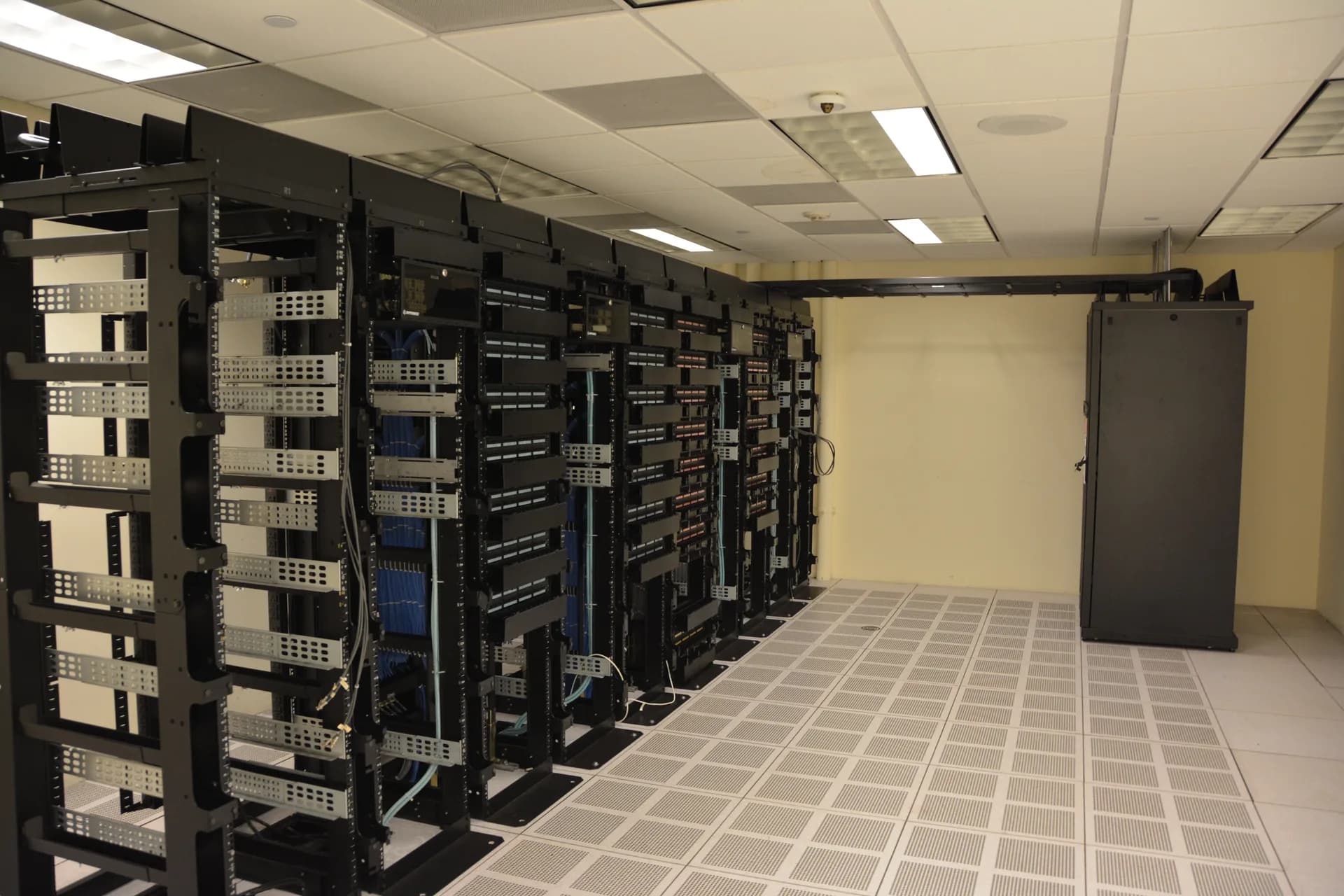
Africa Data Centres (ADC) is the largest data centre platform on the African continent by geographic reach, operating more than 40 facilities across 13 countries. As a subsidiary of Cassava Technologies, the pan-African technology group chaired by Zimbabwean telecoms billionaire Strive Masiyiwa, ADC brings a scale and continental footprint that no other operator on the continent can match. In Kenya, the company operates three facilities, two in Nairobi and one in Mombasa, forming a critical part of the country's digital infrastructure backbone.
This profile examines ADC's origins, its Kenyan operations, its carrier-neutral model, and the competitive dynamics shaping its position in one of East Africa's fastest-growing data centre markets.
From Liquid Intelligent Technologies to Cassava Technologies
Africa Data Centres traces its lineage through a complex corporate evolution that is important to understand because it explains both the company's strengths and its strategic positioning.
The story begins with Liquid Telecom, the fibre and telecommunications company founded by Strive Masiyiwa's Econet Group. Over two decades, Liquid built Africa's largest privately owned fibre network, stretching across more than 100,000 kilometres and connecting over 15 countries. This network became the backbone of data centre strategy: if you owned the fibre connecting businesses and carriers across Africa, building data centres at key interconnection points was a natural vertical integration move.
Liquid Telecom's data centre assets, along with those acquired through its purchase of Dimension Data's Middle East and Africa operations in 2016, formed the foundation of what would become Africa Data Centres. Dimension Data, a South Africa-headquartered IT services company owned by NTT (Nippon Telegraph and Telephone), operated data centre facilities in several African markets including Kenya. The Dimension Data acquisition gave Liquid not just physical facilities but also enterprise relationships and technical capabilities that accelerated its data centre ambitions.
In 2022, the parent company rebranded from Liquid Intelligent Technologies to Cassava Technologies, signalling a shift from telecommunications to a broader pan-African technology platform spanning connectivity, cloud, cybersecurity, and digital infrastructure. Africa Data Centres was established as a distinct subsidiary brand within the Cassava portfolio, giving it operational independence and a focused identity. Cassava Technologies is majority-owned by Econet Global, with the Public Investment Corporation of South Africa holding a significant minority stake, and is listed on the London Stock Exchange through a secondary listing.
Pan-African Footprint
Africa Data Centres' defining characteristic is scale. The company operates facilities in South Africa, Kenya, Nigeria, Egypt, Morocco, Tunisia, Senegal, Cote d'Ivoire, Ghana, Zambia, Zimbabwe, and Uganda, with additional markets under development. South Africa represents the largest concentration of facilities, with multiple campuses in Johannesburg, Cape Town, and Durban, but Kenya is the company's most important market outside Southern Africa.
This pan-African footprint is a significant competitive advantage because it enables multi-country deployments under a single contractual framework, with consistent service level agreements, security standards, and operational procedures. A bank headquartered in Nairobi with operations in Dar es Salaam, Lusaka, and Lagos can collocate across all four markets through one provider. This is a capability that national operators or single-market entrants cannot match.
Kenya Operations: Nairobi 1, Nairobi 2, and Mombasa

ADC's Kenyan operations consist of three facilities strategically positioned to serve both the Nairobi enterprise market and the international connectivity hub at the coast.
Nairobi 1 (Sameer Park)
ADC's original Kenyan facility, commonly referred to as Nairobi 1, is located within the Sameer Business Park along Mombasa Road in Nairobi's Industrial Area. Sameer Park has long been a hub for technology and telecommunications operations, housing multiple network operators and technology companies.
Nairobi 1 provides enterprise colocation services with multiple carrier interconnections, serving financial institutions, government agencies, telecommunications operators, and technology companies. As ADC's first facility in Kenya, it carries the established customer relationships that form the company's foundation in the market. The facility offers carrier-neutral access to multiple network providers, allowing tenants to select and negotiate connectivity arrangements independently.
Nairobi 2 (Mombasa Road)
Nairobi 2 represents a more modern addition to the company's Kenyan portfolio, also located along the Mombasa Road corridor and developed to address growing demand with updated infrastructure specifications.
The Mombasa Road location for both Nairobi facilities is strategically significant. It is the primary fibre corridor connecting Nairobi to the coastal submarine cable landing stations. All four major subsea cables serving Kenya, EASSy, SEACOM, TEAMS, and DARE1, land in Mombasa and their terrestrial extensions pass through this corridor. Facilities on Mombasa Road benefit from direct access to diverse fibre routes, low-latency connectivity to international gateways, and proximity to networks serving landlocked East African markets.

Mombasa Facility
ADC's Mombasa data centre extends the company's reach directly to the coastal connectivity hub. Located near the submarine cable landing stations, it serves as a critical interconnection point where international cables meet terrestrial fibre networks carrying traffic inland to Nairobi and onward to Uganda, Rwanda, Burundi, South Sudan, and the eastern Democratic Republic of Congo. The facility is particularly important for content delivery networks, cloud providers, and wholesale carriers that need to cache content and exchange traffic close to the landing points.
For a deeper understanding of the international connectivity landing at the coast, see our guide to submarine cables in Mombasa.
Carrier-Neutral Model and Connectivity
ADC's carrier-neutral model is central to its value proposition in Kenya and across the continent. Unlike facilities owned by telecommunications companies that may favour their own network services, ADC's facilities are designed to give tenants full freedom of choice in network provider selection.
In Kenya, ADC facilities provide access to connectivity from Liquid Datapoint (the Cassava group's own network arm), SEACOM, WIOCC, and multiple other carriers. This diversity of connectivity options serves several purposes. Enterprise customers can maintain relationships with their preferred network providers while benefitting from the physical security, power reliability, and cooling infrastructure of a professional data centre. Network operators can establish points of presence to interconnect with each other and with enterprise customers without building their own facilities. Cloud providers can connect to multiple downstream carriers for optimal routing and redundancy.
The carrier-neutral approach also supports the growth of internet exchange points and peering ecosystems. By providing neutral ground where networks can interconnect, ADC facilities contribute to the localisation of internet traffic, reducing the volume of Kenyan traffic that needs to transit through international links and improving both latency and cost for end users.
Competition with iXAfrica
The Kenyan data centre market has become increasingly competitive, and the most significant competitive dynamic is between ADC and iXAfrica, the Actis-backed operator that launched East Africa's first purpose-built hyperscale facility, NBOX1, on Mombasa Road in early 2025.
The two operators represent fundamentally different approaches to the market. ADC brings the advantage of continental scale, an established customer base built over years of operation, and the backing of a parent company that also owns Africa's largest fibre network. Its facilities are proven and operational, with long track records of reliability serving Kenyan enterprises. For many customers, particularly those with multi-country African operations, ADC's pan-African platform is a decisive factor.
iXAfrica, by contrast, offers a newer, purpose-built facility designed from the ground up for high-density workloads. NBOX1 delivers up to 50 kW per rack, a specification that exceeds what ADC's existing Nairobi facilities were originally designed to support. This makes iXAfrica the preferred option for AI training clusters, GPU-dense workloads, and hyperscale cloud deployments that require high rack densities and advanced cooling infrastructure.
In practice, the two operators are likely to coexist and serve overlapping but distinct segments of the market. ADC will continue to dominate in traditional enterprise colocation, multi-country deployments, and customers who value the Cassava ecosystem integration. iXAfrica will capture the high-density and hyperscale segment. For customers evaluating between them, the choice depends primarily on workload requirements, rack density needs, and whether multi-country African coverage is a factor.
For a full comparison of operators and facilities, visit our data centre directory. If you are evaluating colocation for the first time, our guide to colocation in Kenya covers the fundamentals.
Cloud On-Ramp Partnerships
One of the most strategically important dimensions of ADC's business is its role as a cloud on-ramp provider. As more African enterprises migrate workloads to public cloud platforms, the data centre that hosts the direct, dedicated connection between the enterprise network and the cloud provider becomes a critical piece of infrastructure.
ADC has established partnerships with several major cloud providers and technology platforms, positioning its facilities as the preferred points of presence for cloud services across Africa. These partnerships allow enterprise customers to connect to cloud platforms through dedicated, private connections rather than traversing the public internet, providing improved security, consistent performance, and predictable latency.
In the Kenyan context, cloud on-ramp services are becoming increasingly important as the country's financial services sector, government agencies, and technology companies accelerate cloud adoption. The Central Bank of Kenya's cloud computing guidelines for financial institutions, combined with the broader push toward digital government services, are driving demand for secure, high-performance connections to cloud platforms. ADC's facilities in Nairobi are well-positioned to serve this demand.
The cloud on-ramp strategy also positions ADC to benefit from the entry of hyperscale cloud providers into Kenya. Oracle has announced plans for a sovereign cloud region in the country. Microsoft has committed significant investment to establish a regional cloud zone. These deployments require local data centre infrastructure, and ADC's existing facilities, customer relationships, and continental platform make it a natural partner for such initiatives.
Sustainability Efforts
Sustainability has become a non-negotiable requirement for data centre operators globally, and ADC has made environmental responsibility a visible part of its strategy. The company has committed to achieving net-zero carbon emissions across its operations, a significant undertaking for a platform of its scale operating across diverse African energy markets.
Kenya's energy profile gives ADC a structural advantage in this regard. Approximately 93% of Kenya's electricity grid is sourced from renewables, with geothermal energy from the Olkaria geothermal field in the Rift Valley being the single largest contributor. Kenya is the sixth-largest geothermal energy producer globally, a fact that means every kilowatt-hour consumed by ADC's Kenyan facilities has a substantially lower carbon footprint than equivalent consumption in markets dependent on coal, gas, or heavy fuel oil generation.
ADC has invested in energy efficiency improvements across its facility portfolio, including modernising cooling systems, optimising power distribution architectures, and deploying monitoring systems that enable real-time tracking of Power Usage Effectiveness (PUE) and other efficiency metrics. The company reports performance metrics aligned with global sustainability reporting frameworks, reflecting the expectations of its international enterprise and cloud customers who require verifiable ESG credentials from their infrastructure partners.
The broader sustainability conversation in Kenya's data centre sector also includes the anticipated enactment of power wheeling legislation, which would allow large consumers to purchase electricity directly from renewable generators. If implemented, this could enable ADC and other operators to contract directly with geothermal producers, potentially reducing both energy costs and further improving the carbon intensity of operations.
Significance for East Africa
ADC's Kenyan operations matter beyond the country's borders. Kenya serves as the digital gateway to a landlocked hinterland of over 200 million people across Uganda, Rwanda, Burundi, South Sudan, the eastern Democratic Republic of Congo, and parts of Tanzania and Ethiopia. Data centre infrastructure built in Nairobi inherently serves this broader regional market.
ADC's position is strengthened by the fact that its parent company, Cassava Technologies, operates fibre networks that physically connect Nairobi to these landlocked markets. The synergy between Cassava's connectivity infrastructure and ADC's data centre facilities creates a vertically integrated platform that can offer end-to-end solutions: fibre connectivity from the enterprise location in Kampala or Kigali, through to colocation and cloud on-ramp services in Nairobi. No other operator in the region can offer this combination of data centre and connectivity at continental scale.
The submarine cable landscape is also evolving in ways that favour Kenya and, by extension, ADC's Kenyan facilities. The 2Africa cable, one of the largest subsea projects globally, is expected to land in Kenya, adding massive international bandwidth capacity. Google's Africa-1 cable is under development with planned Kenyan landing. These next-generation cables will reduce the cost per megabit of international connectivity and enable new categories of data-intensive services. ADC's facilities on the Nairobi-Mombasa fibre corridor are architecturally positioned to serve as the primary on-ramp for this increased capacity.
Expansion Plans and Outlook
ADC has signalled continued investment in its Kenyan operations. The company's broader African expansion strategy involves both growing capacity at existing sites and developing new facilities in underserved markets. In Kenya, this is likely to mean additional capacity in Nairobi to meet growing demand, particularly as cloud adoption accelerates and as the competitive pressure from iXAfrica pushes all operators to upgrade their offerings.
The company's expansion is supported by its access to capital through the Cassava Technologies group. In 2024 and 2025, Cassava announced significant capital expenditure commitments to grow its data centre platform, funded through a combination of equity from its shareholders and debt facilities from development finance institutions and commercial banks. This financial capacity gives ADC the resources to pursue expansion at a pace that most competitors would struggle to match.
Looking ahead, several factors will shape ADC's trajectory in Kenya. The entry of hyperscale cloud providers will create both opportunity and competitive pressure. The growth of AI workloads will demand facility upgrades to support higher rack densities. The maturation of Kenya's regulatory environment, including data protection and data localisation requirements, will drive enterprise demand for in-country colocation. And the ongoing evolution of the submarine cable landscape will increase the strategic value of Kenya's coastal connectivity.
ADC enters this period from a position of strength. It has the largest continental footprint, an established Kenyan customer base, the backing of a well-capitalised parent company, and the synergies that come from being part of Africa's largest integrated technology platform. The competitive challenge from iXAfrica and others will push the company to invest in facility modernisation and higher-density capabilities, but its scale and ecosystem advantages provide a durable foundation.
For Kenya's digital economy, ADC's continued investment is unambiguously positive. More capacity, more connectivity options, and more competition ultimately serve the enterprises, governments, and citizens who depend on digital infrastructure. Whether you are evaluating colocation providers for your organisation or tracking the development of East Africa's digital ecosystem, Africa Data Centres is an operator that will remain central to the conversation for years to come.
Explore all operators and facilities in our data centre directory, learn the basics with our guide to colocation in Kenya, or read about the international connectivity that makes Kenya's data centres strategically valuable in our overview of submarine cables in Mombasa.
Weighing ADC against another pan-African operator? Our fact-checked Raxio vs Africa Data Centres in Kenya comparison separates what is open from what is only announced.