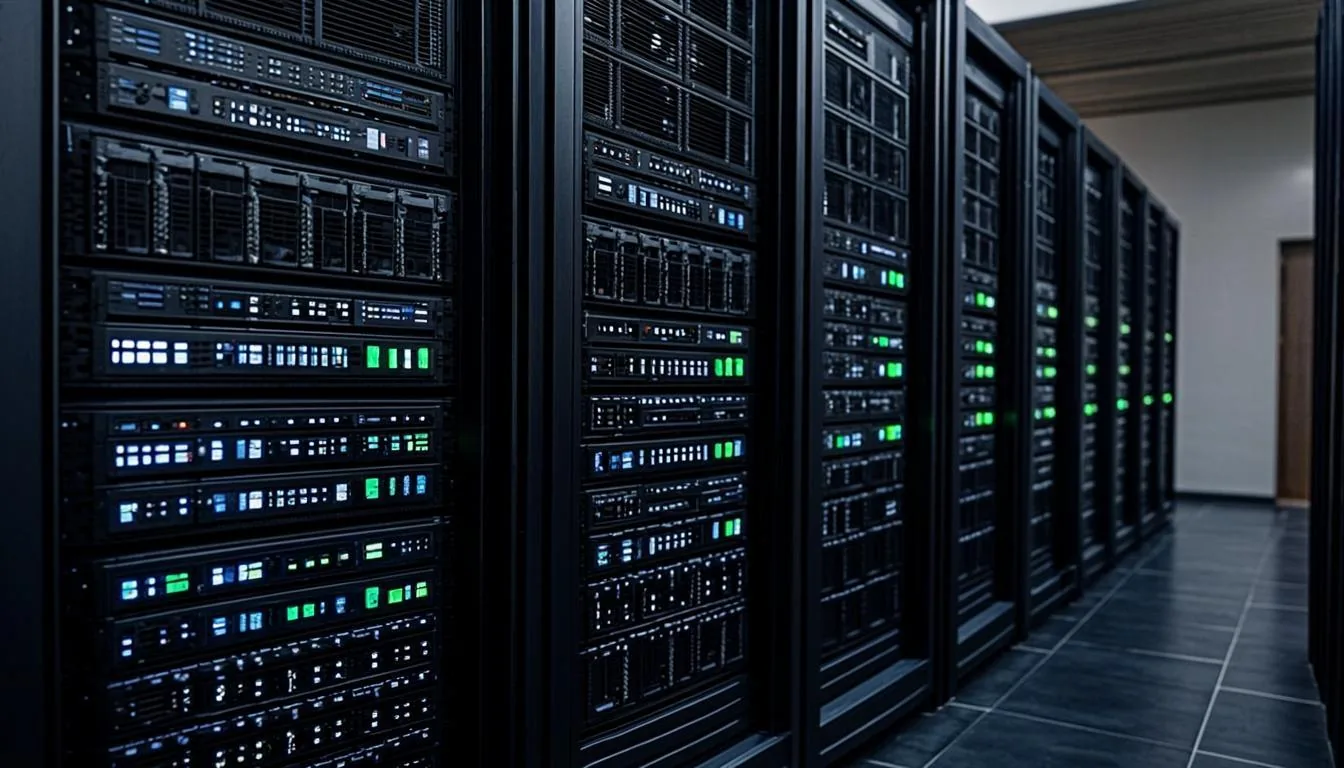
Why AI Model Training Is Coming to Kenya
Kenya's digital economy has matured rapidly, and with that maturity comes an inevitable question: can the country support not just AI inference but full-scale AI model training on its own soil? For years, Kenyan organisations have relied on cloud providers in distant regions to handle computationally intensive workloads. That dynamic is beginning to shift as data sovereignty concerns grow, bandwidth costs remain stubbornly high, and the strategic value of indigenous AI capability becomes clear.
Model training (the process of feeding large datasets through neural networks to adjust weights and produce a useful AI model) is fundamentally different from running inference. It demands orders of magnitude more compute, memory, storage throughput, and networking bandwidth. Understanding what this requires, and where Kenya stands in meeting those requirements, is essential for anyone tracking the East African data centre market.
What Model Training Actually Requires
GPU Clusters and Compute Density
Training modern AI models (whether large language models, computer vision systems, or recommender engines) requires clusters of specialised GPUs. A single NVIDIA H100 GPU delivers roughly 4 times the training throughput of the previous A100 generation. However, no single GPU is sufficient for serious training workloads. Production training happens across clusters of 64 to 512 GPUs working in parallel, organised into configurations such as NVIDIA DGX SuperPOD.
Each H100 GPU consumes approximately 700 watts under load. A modest 64-GPU cluster draws around 45 kW just for the GPUs alone, before factoring in CPUs, memory, storage, networking, and cooling. A serious training facility (the kind that would serve multiple Kenyan enterprises) would need 5 to 10 MW of dedicated power capacity.
High-Speed Interconnects
Distributed training across multiple GPUs requires extremely low-latency, high-bandwidth interconnects. InfiniBand, specifically NVIDIA's Quantum-2 InfiniBand at 400 Gbps, is the gold standard. Ethernet alternatives like RoCE (RDMA over Converged Ethernet) can work but introduce latency that slows training. For a deeper look at why GPU computing matters for Kenya, our dedicated analysis covers the full picture.
Storage and Data Pipelines
Training a large language model might require ingesting terabytes of text data per hour. Storage systems must deliver sustained throughput of hundreds of gigabytes per second, far beyond what conventional enterprise storage provides. Parallel file systems such as Lustre or WekaIO are standard in training environments.
Power and Cooling
At H100 density levels, traditional air cooling becomes impractical. Liquid cooling (either direct-to-chip or immersion cooling) is essential to manage the 40-50 kW per rack thermal output that GPU training clusters generate. Kenya's relatively mild climate in Nairobi (average temperatures of 18-25°C) offers some advantage for free cooling, but liquid systems remain necessary for GPU-dense deployments.
Current AI Use Cases Driving Demand in Kenya
Banking and Financial Services
Kenyan banks are among the most aggressive AI adopters on the continent. NCBA Bank has deployed machine learning models for credit scoring that analyse mobile money transaction histories, M-Pesa statements, and alternative data sources to serve customers without formal credit histories. KCB Group uses similar approaches for loan default prediction and fraud detection, processing millions of transactions daily through models that must be regularly retrained on fresh data.
These workloads don't yet require training foundation models from scratch, but they do involve frequent retraining of supervised learning models on large, sensitive financial datasets. The intersection of ML and Kenyan banking reveals just how much compute this sector alone could consume.
Telecommunications
Safaricom, Kenya's largest telecom with over 45 million subscribers, applies AI across its operations. Network optimisation models predict traffic patterns and dynamically allocate bandwidth. Customer service chatbots handle millions of queries annually. Predictive maintenance models analyse tower sensor data to anticipate equipment failures. Training and retraining these models on Safaricom's proprietary network data represents a significant and growing compute demand.
Agricultural Supply Chains
Twiga Foods, one of Kenya's most prominent agritech companies, uses machine learning for demand forecasting across its supply chain connecting thousands of farmers to urban markets. Their models optimise routing, pricing, and inventory management. The agricultural sector generates enormous volumes of data that could fuel much more sophisticated AI models if adequate compute infrastructure existed locally.
Academic and Research Institutions
The University of Nairobi's School of Computing and Informatics, Strathmore University's @iLabAfrica, and Kenyatta University all conduct AI research, but face severe GPU resource constraints. Most academic AI research in Kenya relies on limited on-premises GPUs (often a handful of NVIDIA RTX 3090 or 4090 cards) or cloud credits donated by providers like Google and AWS. This limits the scale of research and slows the development of local AI talent.
The iHub ecosystem in Nairobi continues to incubate AI-focused startups, and initiatives like iCompute have experimented with shared GPU resources. However, these remain small-scale compared to what is needed.
The Infrastructure Gap: Why Kenya Can't Train at Scale, Yet
No Commercial GPU Cloud in Kenya
As of mid-2026, there is no commercially available GPU cloud in Kenya. Organisations that need GPU compute for training must either:
- Use AWS Cape Town (the closest African AWS region, offering P4d and P5 instances with NVIDIA A100 and H100 GPUs, but with cross-continent latency from Nairobi)
- Use European or US cloud regions (higher latency, higher egress costs, and potential data residency complications)
- Deploy on-premises NVIDIA setups (capital-intensive, requiring in-house expertise)
The lack of local GPU cloud is not just an inconvenience, it is a structural impediment to Kenya's AI ambitions. According to Microsoft's Azure infrastructure documentation, the closest Azure regions with GPU instances are in South Africa and the UAE, neither of which provides ideal latency for Kenyan users.
Data Transfer Costs
Moving a terabyte of data from Nairobi to AWS Cape Town costs approximately $80-120 in egress fees alone. Training a serious model might require moving 10-50 TB of data, translating to thousands of dollars purely in transfer costs, before any compute charges. For organisations with continuously growing datasets, these recurring costs become a significant operational burden.
The Data Sovereignty Imperative
The Kenya Data Protection Act 2019, overseen by the Office of the Data Protection Commissioner (ODPC), requires that personal data processing be conducted in accordance with Kenyan law. While the Act does not explicitly prohibit cross-border data transfers, it imposes conditions (including adequacy assessments and appropriate safeguards) that create compliance complexity for organisations sending Kenyan citizens' data to foreign GPU clusters. Banks and telcos, in particular, face scrutiny from the Central Bank of Kenya and the Communications Authority regarding where customer data is processed.
Emerging Players and Investments
Microsoft Africa Development Centre
Microsoft's Africa Development Centre (ADC) in Nairobi, established in 2019 with a multi-million dollar investment, employs hundreds of engineers working on global products including Azure, Teams, and AI services. While the ADC does not currently operate its own GPU cluster in Nairobi, its presence signals Microsoft's commitment to the Kenyan tech ecosystem and raises expectations that Azure's regional infrastructure will eventually expand to include GPU capacity closer to East Africa.
Google AI Lab in Accra
Google's AI research lab in Accra, Ghana, opened in 2018, serves the broader African continent and has produced research on applications relevant to East Africa, including agricultural AI and healthcare models. While not based in Nairobi, the lab's work demonstrates that major tech companies see Africa as a viable location for AI research investment, and Kenya's more mature tech ecosystem arguably makes it a stronger candidate for the next such investment.
Local GPU Hosting Experiments
Several Kenyan tech companies and academic consortia have begun experimenting with local GPU hosting. These range from small GPU-as-a-service offerings (renting access to shared NVIDIA servers) to discussions within the Kenya ICT Action Network about establishing a national AI compute resource. None has yet achieved commercial scale.
What a Kenyan AI Data Centre Would Need
Building a facility capable of supporting serious AI model training in Kenya would require:
Compute: A minimum of 64-128 NVIDIA H100 GPUs, expandable to 256+, organised in a DGX SuperPOD or equivalent architecture. Estimated capital cost: KES 2-5 billion for the GPU hardware alone.
Networking: NVIDIA Quantum-2 InfiniBand at 400 Gbps, with spine-leaf topology to minimise bisection bandwidth bottlenecks.
Storage: 500 TB to 2 PB of high-performance parallel storage, delivering 400+ GB/s sustained throughput.
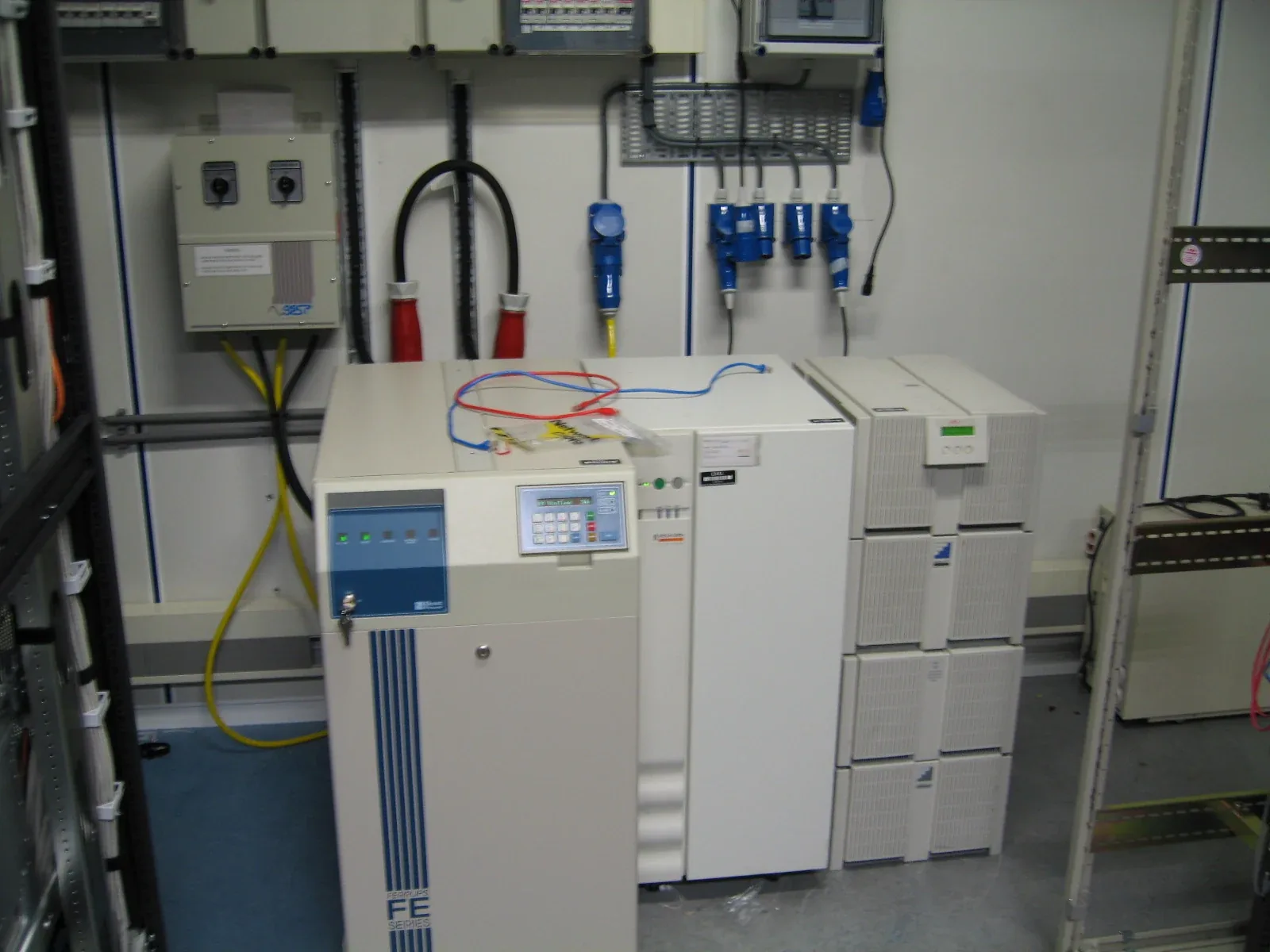
Power: 5-10 MW of dedicated, redundant power with at least N+1 generator backup and UPS systems. Kenya Power's grid reliability in Nairobi has improved, but industrial-scale GPU training demands utility-grade redundancy.
Cooling: Direct-to-chip liquid cooling or rear-door heat exchangers as a minimum, with immersion cooling as the preferred long-term solution for H100 and future GPU generations.
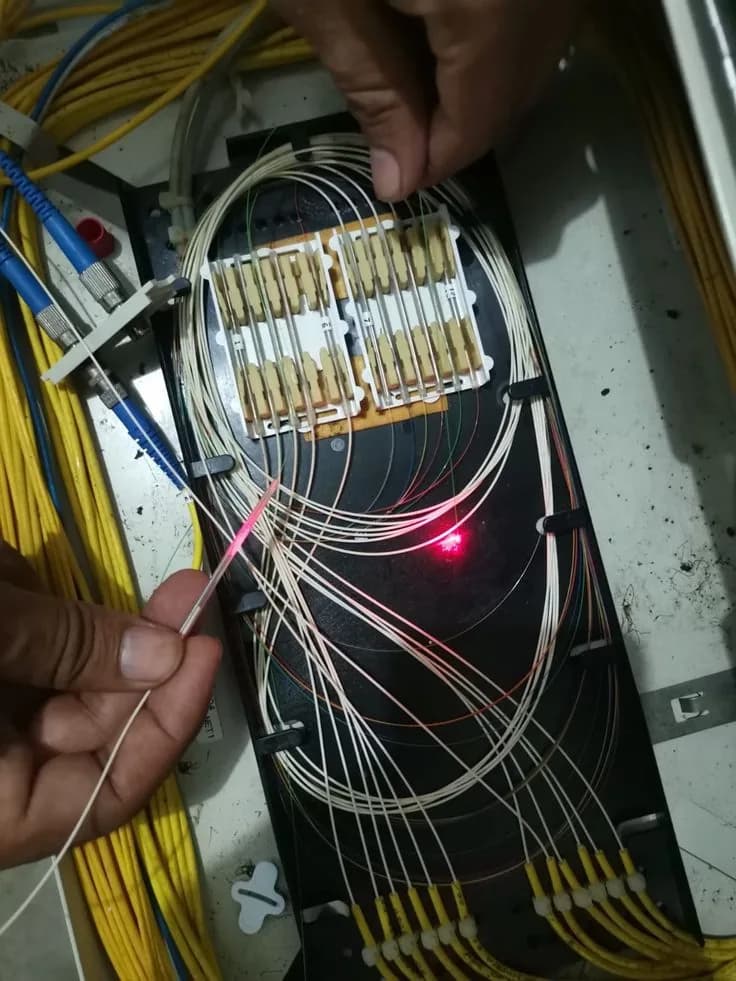
Connectivity: Multiple diverse fibre paths, direct peering at KIXP, and ideally submarine cable diversity through both the EASSy and SEACOM systems landing in Mombasa.
Projecting Future Demand
Kenya's digital economy is projected to contribute over 10% of GDP by 2030, up from approximately 7.5% in 2023. The fintech sector alone processes transactions worth trillions of shillings annually through M-Pesa and banking platforms. Each of these transactions generates data that could improve AI models, if the compute existed to train on it.
Conservative estimates suggest Kenya will need 50-100 MW of data centre capacity by 2030, up from approximately 30 MW today. A significant portion of that new capacity will need to be GPU-ready. If even 10% of the projected capacity is allocated to AI training, that represents 5-10 MW of GPU-dense infrastructure, comparable to a mid-sized AI cluster in a European or Asian market.
The question is no longer whether Kenya needs AI training infrastructure, but when and who will build it. The convergence of data sovereignty requirements, growing enterprise AI adoption, and the strategic importance of indigenous AI capability makes a compelling case that the first commercial GPU cloud in East Africa will likely launch in Kenya within the next three to five years.
Frequently Asked Questions
Can AI model training actually happen in Kenya today?
Limited model training is possible using on-premises NVIDIA GPU setups at universities and some enterprises, but there is no commercially available GPU cloud in Kenya. Organisations currently rely on AWS Cape Town (the closest African AWS region) or cloud providers in Europe and the US for serious training workloads. Smaller models and fine-tuning can run on local multi-GPU servers, but large-scale foundation model training remains offshore.
Why would a Kenyan company train AI models locally instead of using overseas cloud?
Several factors drive the push for local training. The Kenya Data Protection Act 2019 imposes obligations on personal data processing, making data sovereignty a real concern for banks and telcos handling sensitive customer data. Sending large training datasets abroad incurs significant egress costs, transferring terabytes of financial or health data to US-based GPUs can cost thousands of dollars. Additionally, latency matters for iterative ML development workflows, and local training enables faster experimentation cycles. There are also strategic arguments around building indigenous AI capabilities rather than being dependent on foreign infrastructure.
What hardware does a Kenyan AI data centre need for serious model training?
A production-grade AI training facility requires NVIDIA A100 or H100 GPUs organised in clusters of 64 to 256+ GPUs, connected via InfiniBand or NVIDIA Spectrum networking for low-latency inter-GPU communication. Storage must be high-throughput parallel file systems (such as NVIDIA DGX SuperPOD architecture) capable of feeding data at hundreds of GB/s. Power draw ranges from 5 to 10 MW for a meaningful cluster, and liquid cooling becomes necessary at H100 density levels. The facility also needs redundant fibre connectivity, ideally with direct access to the Kenya Internet Exchange Point (KIXP) for efficient data transfer.
Which Kenyan organisations are actively using or developing AI models?
NCBA Bank and KCB Group are using machine learning for credit scoring and fraud detection. Safaricom leverages AI for network optimisation and customer service chatbots. Twiga Foods applies ML models for supply chain optimisation and demand forecasting. Academic institutions (the University of Nairobi, Strathmore University, and Kenyatta University) conduct AI research, often with limited GPU resources. The iHub ecosystem and iCompute have incubated AI-focused startups, and the Microsoft Africa Development Centre in Nairobi contributes to global AI product development.
How does Konza Technopolis fit into Kenya's AI infrastructure plans?
Konza Technopolis, a key Vision 2030 project, has designated land and planning for data centre development. While its primary data centre component has not yet materialised at scale, Konza represents the government's long-term vision for a technology city that could host the kind of high-power, high-connectivity facilities that AI training demands. If a GPU cloud provider were to establish a presence in Kenya, Konza would be a logical location given its planned power infrastructure and fibre connectivity.