Artificial intelligence does not exist in the cloud. It exists on physical servers, in physical data centres, consuming physical electricity and generating physical heat. Every time you use ChatGPT, every time a bank's fraud detection system flags a suspicious M-Pesa transaction, every time an AI model translates a document from Swahili to English, a GPU somewhere is performing billions of calculations per second. The gap between the promise of AI and the reality of running it is bridged by data centre infrastructure, and in Kenya, that bridge is still being built.
GPU computing represents a fundamental shift in what data centres must be designed to handle. Traditional data centres were built for CPU workloads (web servers, databases, virtual machines) where a typical rack consumes 5–10 kilowatts of power. GPU computing pushes rack power densities to 20, 40, or even 100 kilowatts. This changes everything: the power infrastructure, the cooling systems, the cabling, the floor loading, and the economics of running the facility. Kenya's data centre industry, still in its early growth phase, must reckon with this shift or risk being left behind as AI becomes the primary driver of new data centre demand globally.
Why AI Needs GPUs
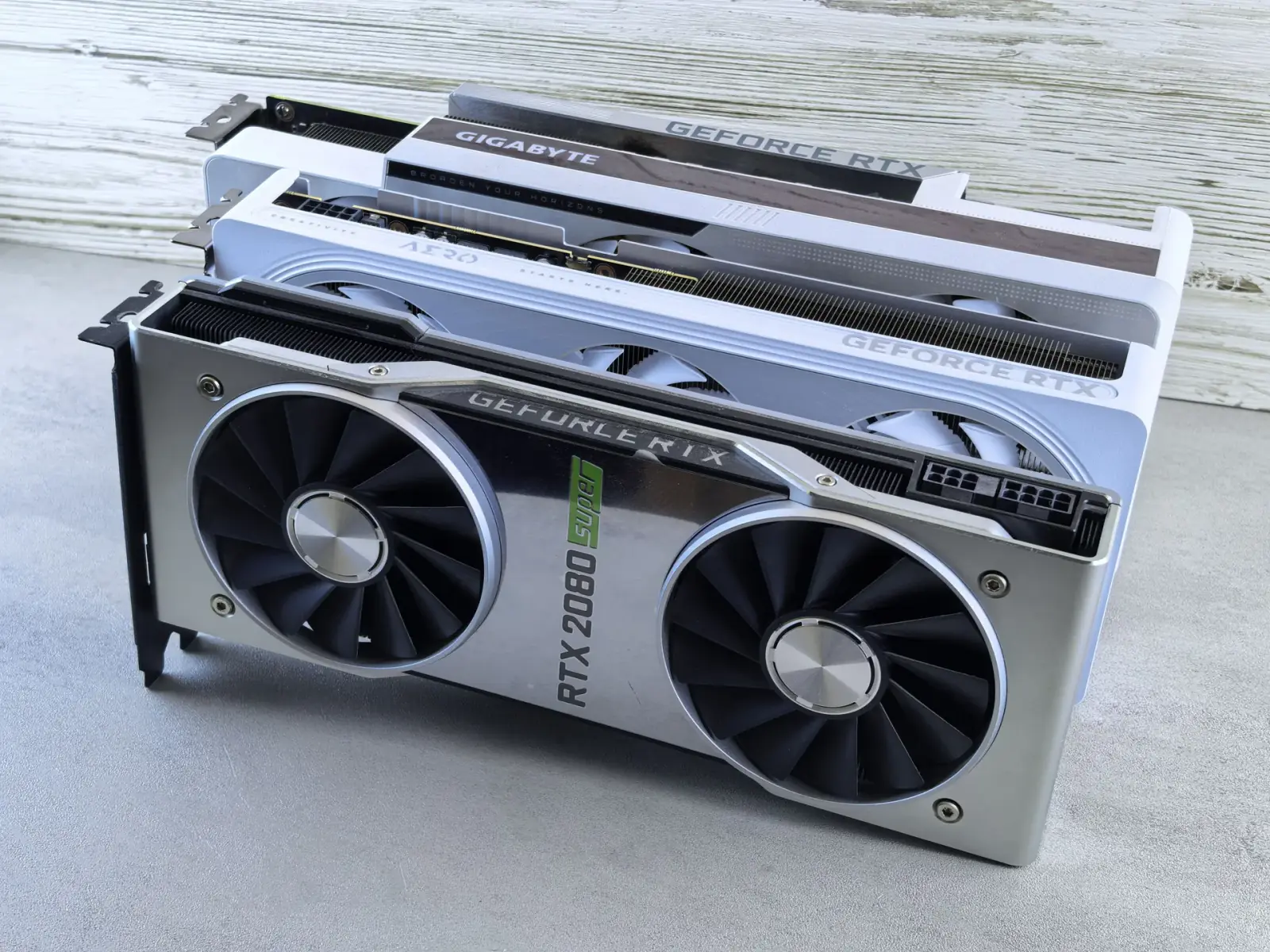
To understand the infrastructure challenge, it helps to understand why AI needs GPUs in the first place. AI models, the large language models behind ChatGPT, the computer vision models behind autonomous vehicles, the recommendation systems behind every streaming service, are trained on massive datasets using a technique called deep learning. Deep learning involves performing billions or trillions of simple mathematical operations (primarily matrix multiplications) in parallel.
Central processing units (CPUs), the general-purpose processors in traditional servers, are designed to handle a wide variety of tasks sequentially. They are good at doing one complex thing at a time. GPUs, originally designed for rendering graphics (where millions of pixels must be calculated simultaneously), are designed to do thousands of simpler things at the same time. For deep learning, this parallelism makes GPUs 10 to 100 times faster than equivalent CPUs.
The scale of modern AI is staggering. GPT-4, for example, was trained on an estimated 13 trillion tokens of text using approximately 25,000 GPUs over several months. The training run consumed an estimated 50 gigawatt-hours of electricity, enough to power 5,000 Kenyan homes for a year. Even inference (running a trained model to generate responses) requires significant GPU resources, as millions of users make simultaneous requests.
What GPU Computing Demands from Data Centres
Power Density
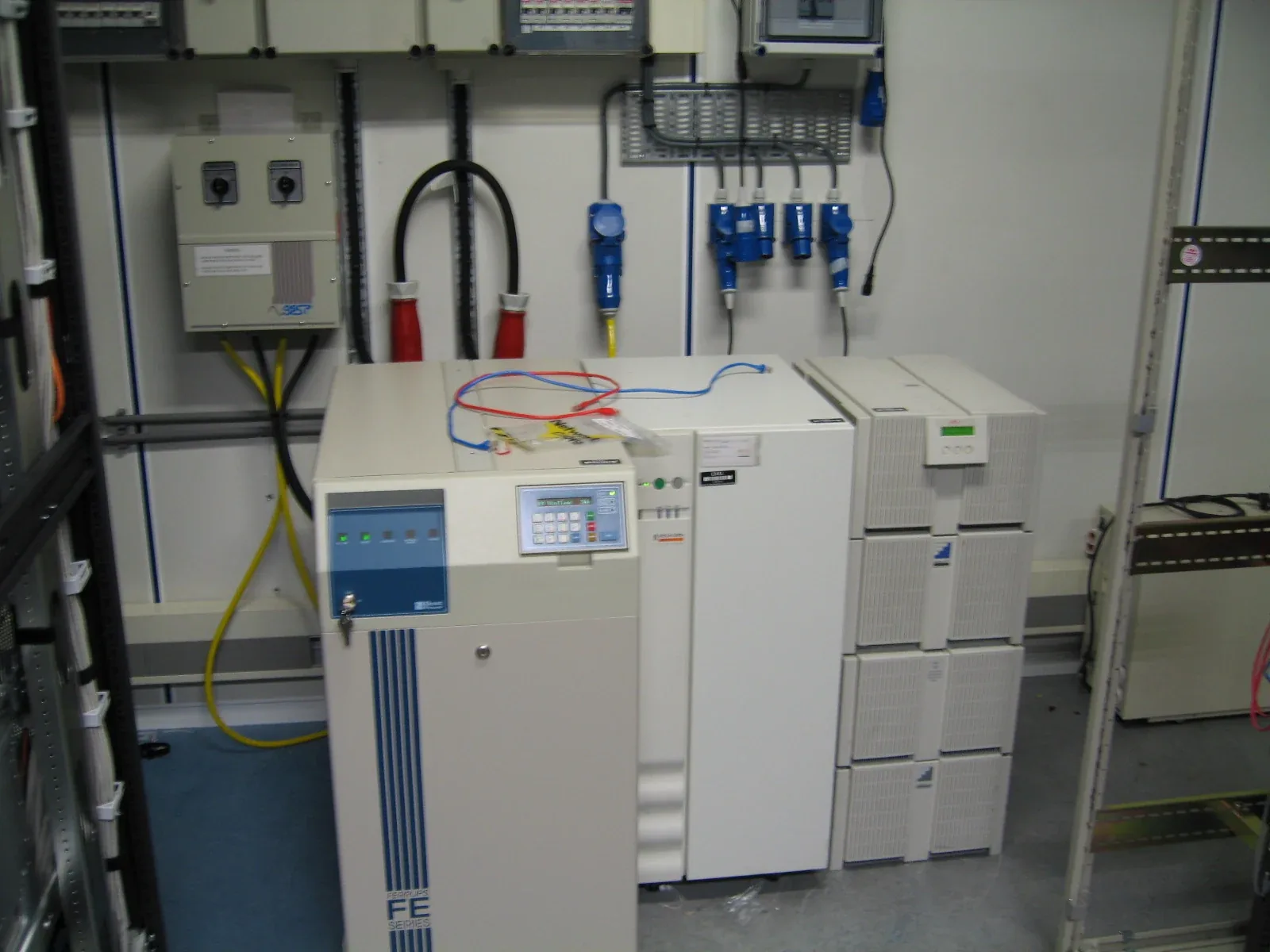
The most obvious impact of GPU computing on data centres is power density. A traditional server rack with 20–40 CPU servers might consume 5–10 kilowatts. A rack with 4–8 NVIDIA H100 GPU servers can consume 30–60 kilowatts. The latest NVIDIA Blackwell B200 GPUs, released in 2024, push single-rack power beyond 100 kilowatts when fully populated.
This power density has cascading effects on every aspect of data centre design. Standard power distribution units (PDUs) rated for 20–30kW per rack must be replaced with higher-capacity units. Electrical cable sizes must increase to carry more current without excessive voltage drop. Floor loading (the weight per square metre that the raised floor can support) must be designed for heavier transformers and switchgear. And the total power demand of the facility increases, requiring larger transformer connections from Kenya Power and larger generator capacity for backup.
Cooling
Cooling is where GPU computing creates the most significant engineering challenge. Traditional data centre cooling uses cold air blown from computer room air conditioning (CRAC) units through the raised floor and into the server racks. This air-cooling approach works well at 5–10kW per rack but becomes increasingly inefficient and eventually impractical at higher densities.
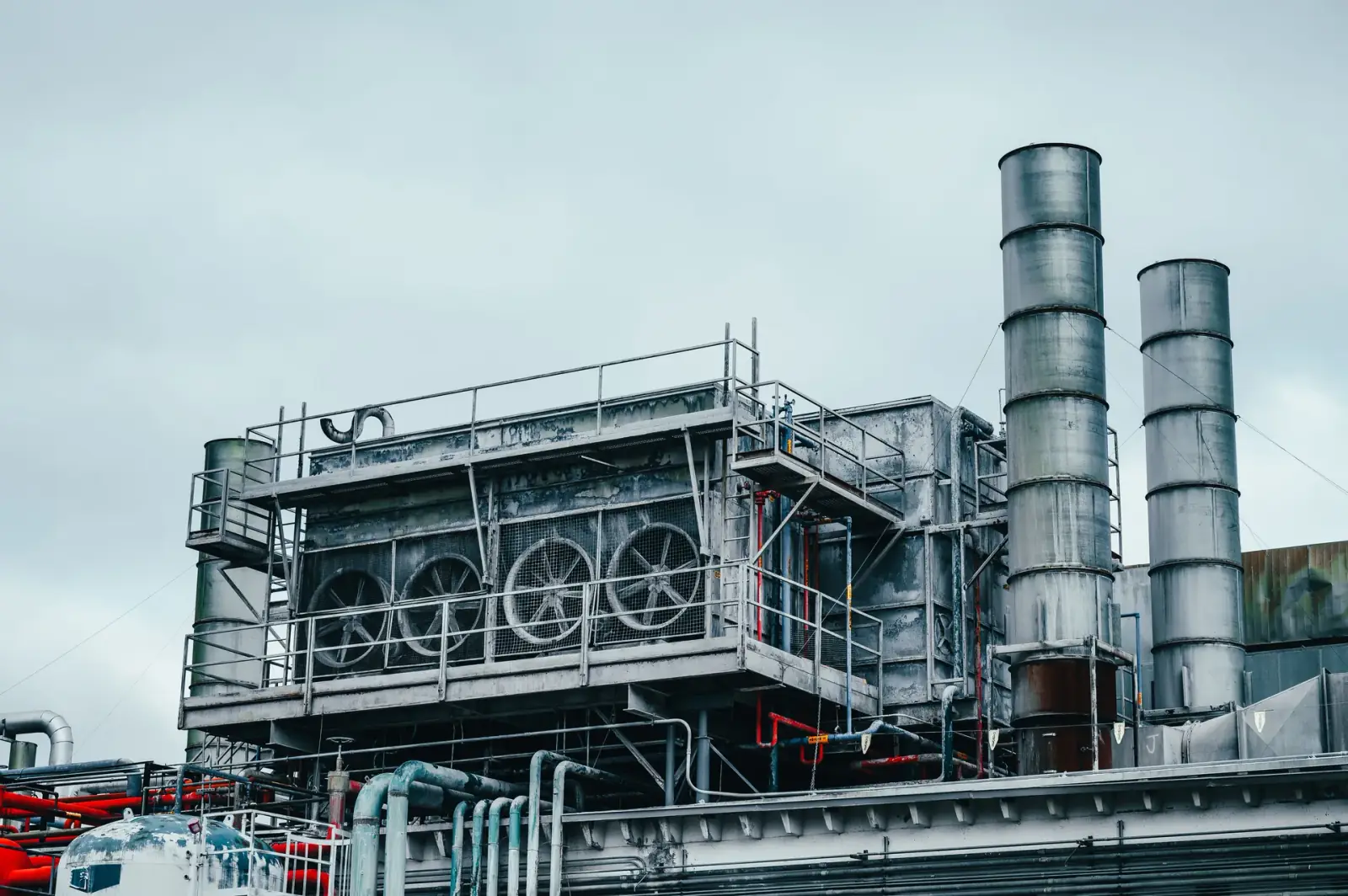
At 20kW per rack, air cooling requires very high airflow volumes and very cold supply air, which increases energy consumption and reduces cooling efficiency. At 40kW per rack, air cooling is at the practical limit of what is achievable. Beyond 40kW, liquid cooling becomes necessary.
Liquid cooling for GPU data centres takes several forms. Direct-to-chip cooling circulates cold liquid through cold plates mounted directly on the GPU processors, removing heat at the source with much higher efficiency than air. Immersion cooling submerges entire servers in a dielectric fluid that absorbs heat directly from all components. Both approaches can handle 50–100kW per rack and dramatically reduce the overall cooling energy required.
For Kenyan data centres, liquid cooling represents both a challenge and an opportunity. The challenge is that it requires different facility design, different skills, and higher capital investment than air-cooled facilities. The opportunity is that liquid cooling is more energy-efficient, which reduces operating costs and aligns with the sustainability positioning that Kenyan data centres are building.
Connectivity
GPU computing also has specific networking requirements. AI training clusters require high-bandwidth, low-latency interconnects between GPU servers, because training large models requires distributing the computation across many GPUs that must communicate frequently. NVIDIA's InfiniBand and NVLink technologies provide these high-speed interconnects, with bandwidths of 400–800 Gbps between servers.
This networking requirement affects data centre design in several ways. The cabling between GPU servers must support these high-speed interconnects, using specialised optical cables and switches. The network topology within a GPU cluster is different from a traditional data centre network, with spine-leaf or fat-tree topologies optimised for east-west (server-to-server) traffic rather than north-south (server-to-internet) traffic.
Kenya's Emerging GPU Landscape
Kenya does not yet have a purpose-built GPU data centre, but the building blocks are being put in place.
Research and Academic Institutions
The University of Nairobi, Strathmore University, and the Kenya Medical Research Institute (KEMRI) operate small GPU clusters for research purposes. These are typically a handful of GPU servers, often housed in general-purpose IT facilities rather than dedicated data centres. They serve important research functions (training AI models for healthcare diagnostics, agricultural analysis, and natural language processing) but they are not designed for commercial AI services.
The Microsoft Africa Development Centre
Microsoft's Africa Development Centre (ADC) in Nairobi employs hundreds of engineers working on global Microsoft products, including Azure AI services. While the ADC does not publicly disclose its local GPU infrastructure, its work on AI for African languages and African markets likely involves local GPU resources, whether on-premises or in Azure regions.
AI Startups
Kenya's startup ecosystem includes several AI-focused companies working on natural language processing (building models that understand Swahili, Sheng, and other Kenyan languages), computer vision (agricultural monitoring, security), and fintech AI (credit scoring, fraud detection). These startups typically use cloud GPU services (AWS, Azure, Google Cloud) rather than local infrastructure, paying per-hour rates for GPU instances. As these startups grow and their GPU needs become more sustained and predictable, the economic case for local GPU hosting in Kenyan data centres strengthens.
Data Centre Operators
The most significant development is the planning and design of GPU-capable zones within Kenyan colocation facilities. iXAfrica, in the design of its NBOX1.1 expansion, has included provisions for high-density zones that can support GPU rack power densities of 20–40kW per rack, with provisions for future liquid cooling upgrades. Africa Data Centres, with its pan-African scale, has been deploying GPU-ready infrastructure in South Africa and can bring that expertise to Kenya as demand materialises.

The Economic Opportunity
The economic opportunity for GPU computing in Kenya is driven by three factors. First, Africa has 1.4 billion people and 2,000+ languages, most of which are underserved by current AI models that are primarily trained on English and European language data. Building AI for African languages and African use cases requires GPU infrastructure in Africa, not just access to overseas clouds.
Second, data sovereignty requirements and latency constraints mean that certain AI workloads (particularly those involving government data, financial transactions, or real-time applications) must run within Kenya's borders. This creates a floor of domestic demand for GPU infrastructure.
Third, Kenya's competitive advantages in renewable energy (geothermal power at $0.07–0.09/kWh), connectivity (four submarine cables), and strategic location (serving East Africa's 300 million people) make it a natural location for AI infrastructure serving the region.
The challenge is that GPU data centres are expensive to build and require specialised expertise that is still developing in Kenya. A dedicated GPU zone with liquid cooling, high-density power, and InfiniBand networking might cost 30–50% more per rack to build than a traditional air-cooled zone. The question is whether demand will materialise fast enough to justify this investment.
What This Means for East Africa
GPU computing is not just a Kenya story, it is an East African opportunity. Kenya's data centres serve the entire East African Community and beyond. If Kenya builds GPU-capable infrastructure, it becomes the AI processing hub for a region of 300+ million people. Developers in Tanzania, Uganda, Rwanda, and Ethiopia could access GPU resources in Nairobi with sub-100ms latency, far better than connecting to South Africa or Europe.
This positions Kenya as the AI infrastructure capital of East Africa, in the same way that it has become the data centre capital. The countries that invest in AI infrastructure early will attract the AI talent, the AI startups, and the AI investment that will define the next decade of digital economic growth. For Kenya, the opportunity is real, the timing is right, and the question is not whether to build GPU infrastructure, but how fast.
For where that infrastructure stands right now, our GPU cloud infrastructure in Kenya guide maps the AI-ready facilities, the data protection rules pulling training work onshore, and a practical starting path for Kenyan teams.