

The LLM Revolution Reaches Kenya
Large language models (LLMs) have moved from research curiosity to enterprise necessity in under three years. Globally, organisations are deploying generative AI for customer service, content creation, data analysis, software development, and decision support. Kenya is no exception, but the country's adoption trajectory is shaped by unique infrastructure constraints, regulatory considerations, and a rapidly maturing local AI ecosystem.
The numbers tell a compelling story. According to the Communications Authority of Kenya, internet penetration in the country exceeded 85% in 2025, with mobile data usage growing at over 20% year-on-year. This digital foundation, combined with Kenya's position as East Africa's leading tech hub, has created fertile ground for LLM adoption. Yet the gap between enthusiasm and infrastructure remains the defining challenge.
This article examines how Kenyan organisations are adopting LLMs today, the compute infrastructure required, the data sovereignty implications under Kenyan law, and what the future holds for local AI deployment.
How Kenyan Organisations Are Using LLMs Today
Telecommunications: Safaricom's AI-Powered Customer Service
Safaricom, Kenya's largest telecoms operator with over 45 million subscribers, has been at the forefront of AI adoption. The company has integrated LLM-powered chatbots into its customer service operations, handling thousands of routine enquiries daily, from M-Pesa transaction queries to data bundle requests. While Safaricom has not publicly disclosed whether it runs these models locally or via cloud APIs, the volume of personal data processed makes the Kenya Data Protection Act and its implications for data centres a critical consideration in their architecture decisions.
The efficiency gains are substantial. Industry benchmarks suggest that AI chatbots can resolve 60-70% of tier-one customer enquiries without human intervention, reducing call centre costs by 30-40% while improving response times from minutes to seconds.
Banking and Financial Services: NCBA and Beyond
NCBA Group has deployed an AI-powered banking assistant that helps customers with account enquiries, loan information, and financial product recommendations. This builds on the broader trend of machine learning adoption in Kenyan banking and fintech, where LLMs are adding a natural language interface to existing ML systems.
Equity Bank and KCB Group are reported to be exploring similar deployments, particularly for customer onboarding in multiple Kenyan languages. The ability of LLMs to process and generate text in Kiswahili and vernacular languages represents a significant opportunity for financial inclusion, potentially bringing banking services to millions of underserved Kenyans who are more comfortable in their mother tongue than in English.
Agriculture and Supply Chain: Twiga Foods
Twiga Foods, Kenya's leading agricultural supply chain platform connecting over 14,000 farmers to urban markets, has begun leveraging LLM technology for supply chain optimisation. This includes analysing market data, generating demand forecasts in natural language for farmers, and automating communications between suppliers and buyers. The application of AI in agriculture is particularly impactful in Kenya, where smallholder farmers produce over 70% of the country's food supply.
Government and Public Services
The Kenyan government has shown growing interest in LLM applications. The Kenya Revenue Authority has explored AI tools for taxpayer communication and compliance assistance. The e-Citizen platform, which processes millions of transactions monthly for services ranging from passport applications to business registration, is evaluating LLM-powered interfaces to simplify citizen interactions with government services.
However, government adoption faces additional hurdles beyond infrastructure. Data sovereignty requirements are particularly stringent for public sector data, and the regulatory framework for government use of AI is still under development.
Media and Content Creation
Kenya's vibrant media sector has embraced generative AI tools for content drafting, translation between English and Kiswahili, and social media management. Nation Media Group, The Standard Group, and several digital-native publishers have adopted AI-assisted workflows. While this raises important questions about journalistic integrity and attribution, the productivity gains in fast-paced newsrooms are driving rapid adoption.

The Infrastructure Challenge: Inference vs Training
Understanding the distinction between LLM training and LLM inference is essential for assessing Kenya's infrastructure needs.
Training: Beyond Kenya's Current Reach
Training a large language model from scratch requires clusters of hundreds or thousands of GPUs (typically NVIDIA H100s or A100s) running continuously for weeks or months. Meta's Llama 3 70B model reportedly required over 6,000 GPUs for training. The capital expenditure for such infrastructure runs into tens of millions of dollars, and the power requirements (often exceeding 10 megawatts for a training cluster) put it well beyond what Kenya's current data centre ecosystem can support.
This is a reality Kenya must accept strategically: large-scale foundation model training will remain offshore for the foreseeable future. The country's power grid, while improving, cannot yet reliably deliver the dedicated, high-density power that GPU training clusters demand. As explored in our analysis of GPU computing needs in Kenya's data centres, the gap between current capacity and AI training requirements is measured in orders of magnitude.
Inference: The Achievable Frontier
Inference (using a trained model to generate responses) requires far less compute. A 7-billion parameter model like Llama 3 8B or Mistral 7B can run on a single NVIDIA A100 (80GB) GPU server for concurrent user queries. Even a 13-billion parameter model can be served efficiently with quantisation techniques that reduce memory requirements without significant quality loss.
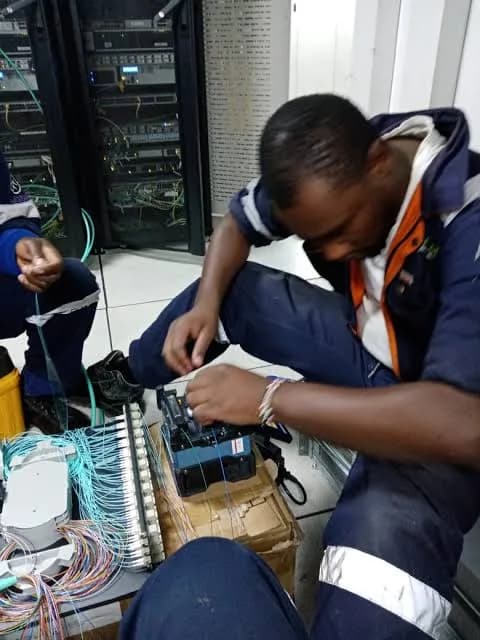
This is where Kenya's opportunity lies. A single GPU server, collocated in a Nairobi data centre with adequate power and cooling, can serve LLM inference for dozens of enterprise clients. The capital investment is in the range of USD 100,000–300,000 for the GPU hardware, plus ongoing colocation and connectivity costs, well within the budget of Kenya's larger enterprises and technology companies.
The Emerging Kenyan AI Ecosystem
Local AI Startups
Nairobi's startup ecosystem is producing a growing number of AI-native companies. iCompute AI has focused on building AI solutions tailored to the African market, including natural language processing for Kenyan languages. Several other Nairobi-based startups are working on domain-specific LLM applications in healthcare diagnostics, legal document analysis, and agricultural advisory services.
The Microsoft Africa Development Centre (ADC) in Nairobi, which employs over 500 engineers, has made significant contributions to global AI products, including work on Azure AI services, Copilot features, and models optimised for African languages. The Microsoft Africa Development Centre in Nairobi represents the largest single concentration of AI engineering talent in East Africa.
Regional AI Research
While Kenya's dedicated AI research infrastructure is still developing, the country benefits from regional initiatives. Google's AI research centre in Accra, Ghana (the only Google AI research centre on the African continent) produces research that serves the entire region, including Kenya. Their work on African language models, agricultural AI, and health diagnostics has direct applicability to Kenyan use cases.
Open-Source Models: Lowering the Barrier
The availability of high-quality open-source LLMs has been transformative for Kenyan organisations. Meta's Llama family of models (particularly Llama 3 8B and 70B) and Mistral AI's models provide capabilities that, two years ago, were only available through expensive proprietary APIs.
The advantages of open-source models for Kenya are significant:
- Data sovereignty: Organisations can run models entirely on-premises or in Kenyan data centres, ensuring personal data never leaves the country.
- Cost predictability: No per-token API charges means costs are fixed and known in advance.
- Customisation: Models can be fine-tuned on domain-specific Kenyan data (legal documents, medical records, agricultural data) without sharing that data with external providers.
- Kiswahili and vernacular support: Open-source models can be fine-tuned on local language datasets, improving their performance for Kenyan users.
The Africa-centric fine-tuning of models like Llama for Kiswahili and other African languages is an active area of work, with researchers at the University of Nairobi and Strathmore University's iLabAfrica contributing to multilingual model development.
Data Sovereignty: The Kenya Data Protection Act and LLMs
The Kenya Data Protection Act 2019 (DPA) is the primary legal framework governing how personal data is processed, stored, and transferred. For organisations deploying LLMs, several provisions are directly relevant.
Section 48 of the DPA restricts cross-border data transfers to countries or territories with comparable data protection standards, or where adequate safeguards are in place. When a Kenyan bank sends customer data to OpenAI's servers in the United States for processing through ChatGPT, this constitutes a cross-border data transfer that must comply with these requirements.
The Office of the Data Protection Commissioner (ODPC) has issued guidance indicating that organisations using foreign cloud-based AI services must conduct a Data Protection Impact Assessment (DPIA) and implement appropriate contractual safeguards. This regulatory pressure is a key driver pushing Kenyan enterprises toward local LLM deployment.
For sectors handling particularly sensitive data, banking (regulated by the Central Bank of Kenya), healthcare (regulated by the Ministry of Health), and government services, the case for local inference infrastructure is strongest. These organisations cannot easily justify sending citizen or customer data to foreign APIs, creating a clear market opportunity for GPU-equipped data centre facilities in Nairobi.

What Infrastructure Would Kenya Need?
To support meaningful local LLM deployment, Kenya needs investment in several interconnected areas.
GPU-Equipped Colocation Facilities
Current Kenyan data centres are primarily designed for standard enterprise workloads with rack power densities of 3-8 kW. GPU inference servers, even for smaller models, require 10-20 kW per rack. Purpose-built AI inference colocation (with higher power density per rack, liquid cooling or enhanced air cooling, and high-bandwidth, low-latency networking) is the foundational requirement.
NVIDIA Inference GPUs
The NVIDIA A100 and H100 remain the gold standard for LLM inference. The newer L40S and H200 GPUs offer improved performance per watt. For cost-sensitive deployments, NVIDIA's T4 and even consumer-grade RTX 4090 GPUs can serve smaller models, though with limitations on concurrent user capacity. The availability of these GPUs in Kenya is improving through distributors like Spectra Systems and other IT infrastructure providers, but pricing remains 20-40% higher than in the US or Europe due to import duties and logistics.
Edge AI for Low-Latency Applications
Not every LLM deployment requires a data centre. Edge AI (running smaller, optimised models on devices or on-premises servers) has compelling use cases in Kenya. Retail businesses can run customer service bots on local servers. Healthcare facilities can deploy diagnostic AI without internet connectivity. Agricultural cooperatives can use AI advisors in areas with limited connectivity.
Connectivity and Latency
While Kenya has excellent international connectivity through the submarine cables landing in Mombasa, internal latency between data centre facilities and end users varies. A well-connected Nairobi data centre can serve clients across East Africa with 20-50ms latency, adequate for most LLM inference applications, but demanding for real-time voice or video AI features that require sub-100ms end-to-end response times.
The Skills Gap and Training Programmes
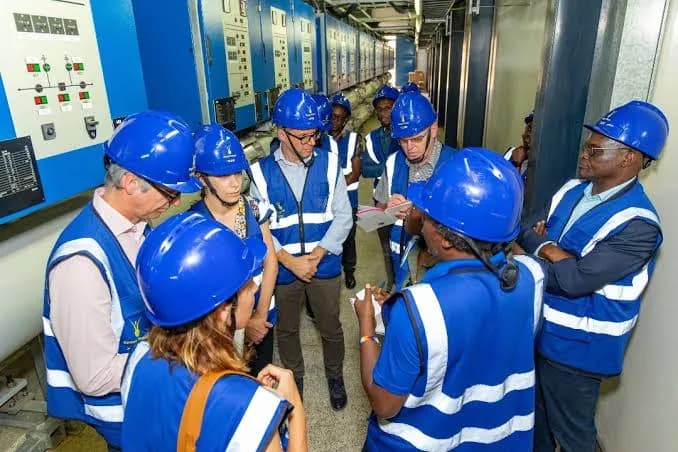
Kenya's most significant long-term constraint on LLM adoption is not hardware, it is people. The country needs professionals skilled in prompt engineering, model fine-tuning, MLOps, GPU cluster management, and AI safety. Several programmes are addressing this gap:
- Microsoft ADC Skills Programme: Microsoft's Africa Development Centre runs technical training programmes for Kenyan developers, including AI and machine learning modules.
- Google Developer Groups (GDG) Nairobi: Regular meetups and workshops on AI technologies, including LLM fine-tuning and deployment.
- University of Nairobi AI Research Lab: Academic research and postgraduate training in machine learning and natural language processing.
- Strathmore University iLabAfrica: Applied research and industry partnerships focused on AI solutions for African challenges.
- DeepLearning.AI: Online courses, many available for free, covering practical LLM deployment skills.
- Andela and other talent platforms: Connecting Kenyan AI engineers with global and local opportunities.
Despite these programmes, demand for AI skills in Kenya far outstrips supply. The Kenya ICT Board estimates that the country needs at least 10,000 additional AI-skilled professionals by 2028 to meet industry demand, a target that will require significant scaling of current training efforts.
The Road Ahead
Kenya's LLM ecosystem is at an inflection point. The demand is real and growing across every major sector. The technology (particularly open-source models) is accessible and increasingly optimised for the African context. The regulatory environment, while still evolving, is creating a clear incentive for local infrastructure investment.
What remains is the infrastructure buildout, GPU-equipped colocation in Nairobi, skills development at scale, and a policy framework that supports innovation while protecting citizens' data rights. Organisations that invest in these capabilities now will be positioned to capture the enormous value that LLMs can deliver in Kenya's rapidly digitising economy.
The question is no longer whether Kenya will develop significant LLM infrastructure, but how quickly and through what combination of public and private investment. The foundations are being laid today.
Frequently Asked Questions
Can Kenyan organisations run LLMs locally without sending data abroad?
Yes, but with limitations. Small to medium LLMs (7B-13B parameters) such as Llama 3, Mistral 7B, and Phi-3 can run on a single NVIDIA A100 or H100 GPU server for inference. Kenya's data centres are beginning to offer GPU-capable colocation, but options remain limited compared to Europe or the US. Organisations handling sensitive data, such as banks and hospitals, are the primary drivers of local deployment.
What is the difference between LLM training and inference, and why does it matter for Kenya?
Training involves teaching a model on massive datasets and requires clusters of hundreds or thousands of GPUs running for weeks or months. Inference is using a trained model to generate responses and needs far less compute, often a single GPU server for smaller models. Kenya is not positioned for large-scale training due to power and GPU infrastructure gaps, but inference is entirely feasible with modest infrastructure investments.
How does the Kenya Data Protection Act affect LLM usage?
The Kenya Data Protection Act 2019 requires that personal data processed by organisations must have a lawful basis, and data controllers must ensure appropriate security measures. Sending personal data to foreign LLM APIs (such as OpenAI or Google) may constitute cross-border data transfer, which under the Act requires adequacy assessment or appropriate safeguards. This is pushing Kenyan banks and government agencies toward local or self-hosted LLM solutions.
Which Kenyan companies are actively using large language models?
Safaricom uses AI chatbots for customer service, NCBA Group has deployed AI-driven banking assistants, Twiga Foods applies LLM technology for supply chain optimisation, and several media houses use generative AI for content drafting and translation. Government agencies, particularly the Kenya Revenue Authority and the e-Citizen platform, are exploring LLM-powered citizen service tools.
What skills are needed for LLM deployment in Kenya, and where can people learn them?
Key skills include prompt engineering, model fine-tuning, MLOps (model deployment and monitoring), GPU server management, and data engineering. Training programmes are available through the Microsoft ADC skills programme, Google Developer Groups in Nairobi, the University of Nairobi's AI research lab, Strathmore University's iLabAfrica, and online platforms like DeepLearning.AI. The skills gap remains significant, with demand far outstripping supply.