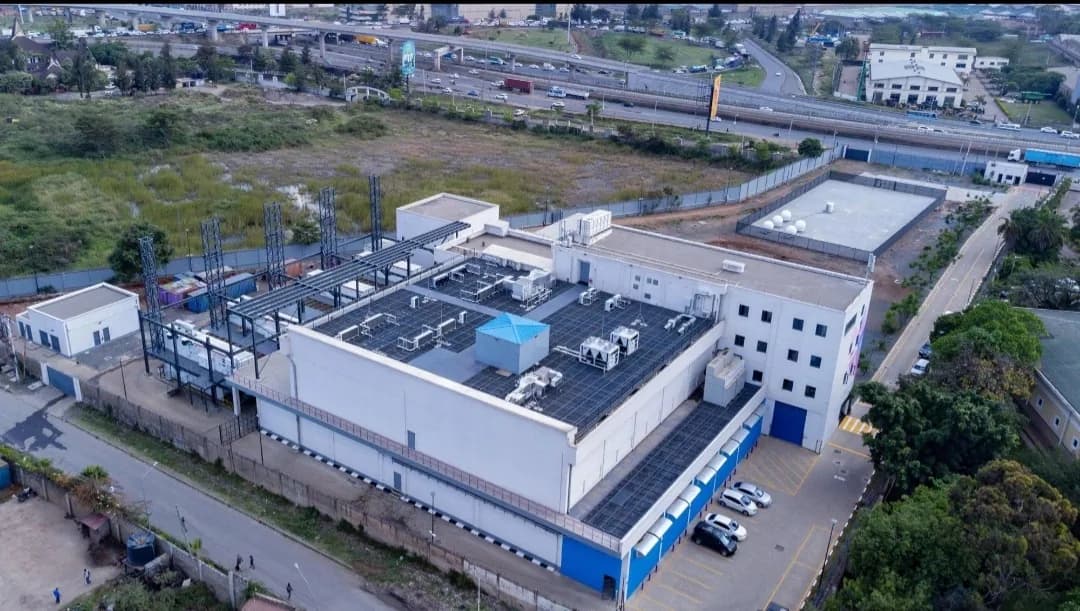
When the first phase of iXAfrica's NBOX1 facility went live in early 2025, it marked a turning point for East Africa's digital infrastructure. For the first time, the region had a purpose-built, carrier-neutral, hyperscale data centre engineered to handle the power and cooling demands of modern AI workloads. Backed by Actis, one of the world's most active emerging market investors, iXAfrica has moved quickly from a greenfield startup to the largest operational data centre platform in East and Central Africa, serving everyone from Kenyan banks to global satellite operators.
This profile examines how iXAfrica was built, what its facilities deliver, who leads it, and why its trajectory matters for Kenya's position as a digital hub for a region of over 300 million people.
Founding Story and Investment Backing
iXAfrica Data Centres was co-founded in 2018 by Guy Willner, a veteran of the global data centre industry whose career stretches back to 1999. Willner previously co-founded IXEurope, a pioneer in European carrier-neutral colocation that he grew from startup to a publicly listed company before its acquisition by Equinix. After decades building data centres across Europe, the Middle East, and Russia, Willner identified East Africa - and Kenya in particular - as the next frontier for hyperscale infrastructure investment. He co-founded iXAfrica with the explicit mission of building the region's first facility capable of serving hyperscale cloud providers and high-density AI compute customers.
The company attracted early backing from Helios Investment Partners, which invested $50 million into iXAfrica in 2022. Helios, one of Africa's most prominent private equity firms, brought not just capital but also a continent-wide platform of infrastructure investments. Actis subsequently joined as a significant investor, adding iXAfrica to its growing portfolio of data centre assets across emerging markets. Actis brings deep expertise in building and scaling infrastructure businesses in Africa, and its involvement has strengthened iXAfrica's ability to pursue an aggressive campus expansion strategy.
The combination of Willner's operational experience and the financial backing of two leading Africa-focused investors gave iXAfrica a foundation that most entrants to the Kenyan market lack. Rather than retrofitting an existing building or starting with a small pilot, the company designed its campus from the ground up for the workloads it expected to serve five and ten years out.
NBOX1: The Live Facility on Mombasa Road
iXAfrica's first facility, NBOX1, sits on a 4.3-acre campus along Mombasa Road in Nairobi's Industrial Area. This location is not accidental. Mombasa Road is the primary fibre corridor connecting Nairobi to the submarine cable landing stations in Mombasa, including the EASSy, SEACOM, TEAMS, and DARE1 cables. Every major terrestrial fibre route from the coast passes through this corridor on its way to Uganda, Rwanda, Burundi, and the wider Great Lakes region. For a carrier-neutral facility whose value depends on connectivity, this is arguably the best address in East Africa.
NBOX1.1, the first phase now in commercial operation, delivers the following specifications:
- IT power capacity: 4.5 MW
- Rack capacity: 780 racks across three data halls
- White space: 1,653 square metres
- Rack power density: up to 40 kW per rack (tested to 50 kW per rack)
- Power Utilisation Effectiveness (PUE): 1.25
- Meet-Me Rooms (MMRs): four carrier-neutral MMRs
- Fibre entry points: four physically diverse and secure fibre entry routes
- Building footprint: 15,587 square metres across the full NBOX1 campus
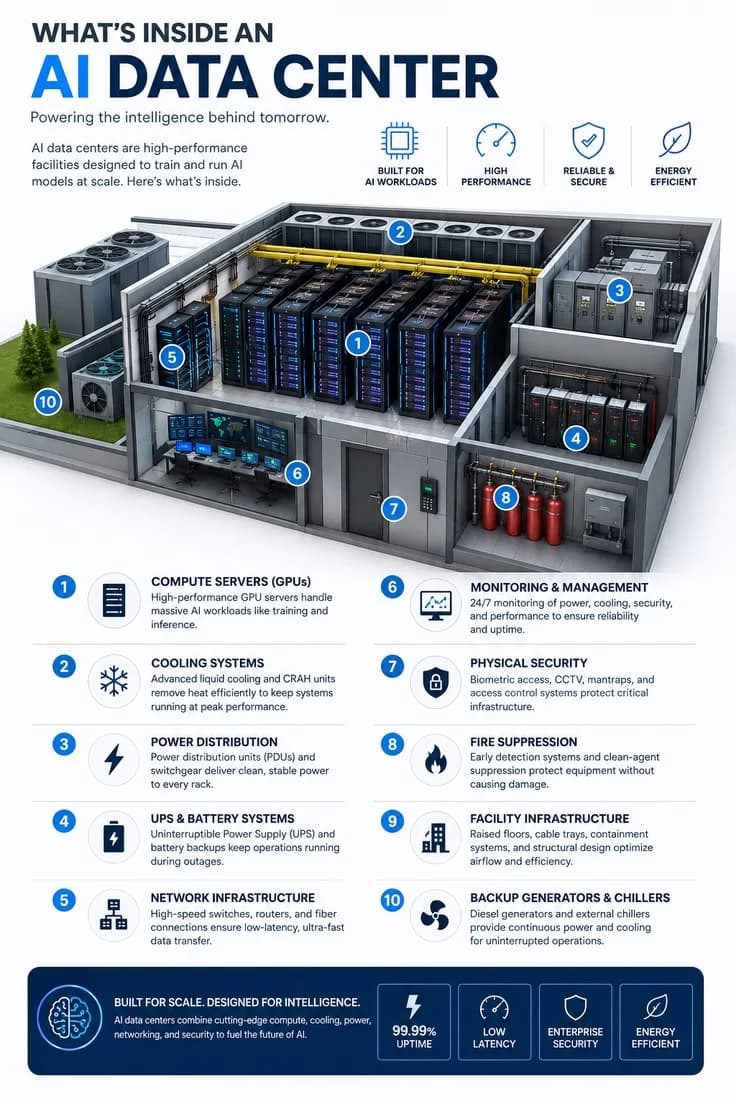
These specifications place NBOX1 in a different category from every other operational facility in Kenya. The 40 to 50 kW per rack density is the critical differentiator. Standard enterprise data centres in Nairobi typically deliver 3 to 5 kW per rack, sufficient for traditional servers but entirely inadequate for GPU clusters used in AI training and inference. iXAfrica's facility was engineered with solid floors capable of supporting heavier and taller rack configurations, adiabatic cooling systems that consume only 25% of server power for cooling (compared to 100% in older facilities), and the structural headroom to incorporate liquid cooling as GPU densities continue to increase beyond 100 kW per rack.
The facility achieved its PUE of 1.25 partly by leveraging Kenya's energy profile. Approximately 93% of Kenya's electricity grid is sourced from renewables, with geothermal energy from the Olkaria geothermal field in the Rift Valley being the single largest contributor. Kenya is the sixth-largest geothermal energy producer globally, a fact that gives its data centres a structural ESG advantage over competitors in markets reliant on coal or gas-fired generation. iXAfrica holds EcoVadis certification, reflecting independent verification of its sustainability practices.
NBOX1.2 and the Mombasa Road Campus Master Plan
The NBOX1 site is designed as a multi-phase campus. The next phase, designated NBOX1.2, will add a further 18 MW of IT load capacity with 3,744 racks on the same Mombasa Road campus. When NBOX1.2 is complete, the total NBOX1 campus will deliver 22.5 MW of IT power, making it by far the largest single-site data centre campus in the Greater East African region.
In September 2025, iXAfrica announced it had secured financing for this 20 MW expansion, signalling that the growth phase is moving from planning to construction. The expansion is designed to accommodate the type of large-footprint deployments that hyperscale cloud providers require: dedicated halls, custom build-outs, and the power and cooling infrastructure to support multi-megawatt commitments from a single tenant.
The full NBOX1 campus sits on 17,300 square metres of land with a total building footprint of 15,587 square metres, providing significant room for the additional data halls and supporting infrastructure that NBOX1.2 will require. The site's power allocation from the grid is 22.5 MW, ensuring that the full campus build-out is supported by committed utility power rather than speculative capacity.
NBOX2: The Tilisi Campus Expansion
In August 2023, iXAfrica acquired 11 acres of land in the Tilisi development, a 400-acre master-planned mixed-use development located approximately 30 kilometres from the NBOX1 campus along the Nairobi-Nakuru highway near Limuru. This second campus, designated NBOX2, is planned for over 53 MW of IT load capacity.
The Tilisi location was chosen strategically. While Mombasa Road offers the best connectivity to coastal submarine cables, Tilisi provides access to different fibre routes, a separate power feed, and geographic diversity that allows iXAfrica to offer disaster recovery and business continuity options to customers who need their primary and secondary infrastructure in different physical locations. The Tilisi development itself is designed with modern infrastructure including dedicated power and water systems, making it well-suited for data centre operations.
Between the NBOX1 campus on Mombasa Road and the NBOX2 campus at Tilisi, iXAfrica's total planned capacity exceeds 75 MW of IT load. This scale positions the company not just as a Kenyan operator but as a platform capable of serving as the primary digital infrastructure hub for the entire East and Central African region.
Carrier-Neutral Model and Connectivity Ecosystem
A data centre is only as valuable as the networks and services reachable from within it. iXAfrica's carrier-neutral model is central to its value proposition, and it has invested heavily in building a connectivity ecosystem that makes NBOX1 the most interconnected facility in the region.
As of mid-2026, NBOX1 hosts connections from more than 20 network providers, including all major Kenyan telecommunications operators, international wholesale carriers, and content delivery networks. The facility's four MMRs provide physically separated interconnection spaces where these providers can exchange traffic with each other and with enterprise customers without traversing the public internet.
Two internet exchange points operate within NBOX1, which is a significant competitive advantage:
-
KIXP (Kenya Internet Exchange Point): The country's primary domestic internet exchange, operated by the Telecommunications Service Providers Association of Kenya (TESPOK). KIXP established a new peering point of presence at NBOX1, which localises traffic exchange and reduces both latency and costs for participating networks.
-
LINX Nairobi: A point of presence operated by the London Internet Exchange, one of the world's largest internet exchanges by membership and traffic volume. The LINX presence at NBOX1 enables direct peering between East African networks and global carriers, content providers, and cloud platforms without traffic needing to transit through Europe first.
Beyond traditional connectivity, iXAfrica also hosts SpaceX's Starlink teleport infrastructure, serving as the regional ground station for satellite broadband services across East Africa. This is a notable win because it demonstrates the facility's ability to attract and serve non-traditional data centre customers who require specialised infrastructure.
The company has also established a strategic partnership with Safaricom, East Africa's largest telecommunications operator. Under this arrangement, iXAfrica provides the physical data centre platform while Safaricom contributes its brand recognition, established enterprise relationships, and last-mile connectivity. The partnership is jointly targeting enterprise clients and cloud providers who want the confidence of a Safaricom-branded solution delivered from a purpose-built hyperscale facility.
Leadership Team
iXAfrica's leadership combines deep global data centre expertise with local market knowledge.
Guy Willner, Co-Founder and Executive Chairman. Willner has worked in the data centre industry since 1999. He co-founded IXEurope, one of Europe's first carrier-neutral colocation providers, and served as its CEO through its growth from startup to a publicly traded company. His experience building IXEurope, and later serving in leadership roles at IXcellerate in Russia and India, gave him the playbook for identifying underserved markets and building greenfield data centre platforms. He has been based in Nairobi since co-founding iXAfrica in 2018.
Snehar Shah, Chief Executive Officer. Shah was appointed CEO in September 2023, bringing 25 years of cross-industry experience spanning telecommunications, investment banking, and infrastructure development. Notably, Shah previously helped build Moringa School, one of East Africa's prominent technology education institutions, giving him both an understanding of Kenya's tech ecosystem and a personal commitment to talent development. Under his leadership, iXAfrica has gone from pre-launch to commercial operations, signed the Safaricom partnership, and begun discussions with global hyperscalers.
The board of directors includes William Barney (Bill), founder and chairman of Asian Century Equity and a former award-winning telecoms CEO, providing additional governance experience at the intersection of telecommunications and digital infrastructure.
Role in Kenya's Data Centre Ecosystem
iXAfrica occupies a specific and important position in Kenya's data centre landscape. The market has three broad categories of provider:
- Telecom-integrated facilities, led by Safaricom, which primarily serve their own network and enterprise cloud requirements.
- Africa Data Centres (a subsidiary of the Remgro-owned Digital Realty competitor), which operates facilities at Sameer Park and Westlands.
- iXAfrica, the only provider building a greenfield, purpose-designed hyperscale campus.
This distinction matters. Africa Data Centres' Nairobi facilities are capable and well-established, but they were not originally designed for the rack densities that AI workloads demand. iXAfrica's NBOX1 was designed from its first architectural drawings to support 40 to 50 kW per rack and to be upgradeable to liquid cooling for even higher densities. In practice, this means iXAfrica is currently the only facility in Kenya that can host NVIDIA GPU clusters and similar AI infrastructure without requiring the customer to accept design compromises.
The company's impact extends beyond its own facilities. The launch of NBOX1 and the establishment of the KIXP and LINX peering points within it have effectively created a new interconnection hub for the region. Networks that previously had to establish separate peering relationships in multiple locations can now interconnect at a single facility. This network effect - where the value of the facility increases with each new network that connects to it - is a powerful competitive moat.
The Kenyan government has recognised iXAfrica's strategic importance. At the NBOX1 launch in February 2025, Kenya Investment Authority (KenInvest) CEO John Mwendwa highlighted the facility's role in strengthening data sovereignty and positioning Kenya as a technology hub. The company is also engaged in AI policy discussions, contributing to regulatory frameworks on data sovereignty, digital policy, and AI governance in collaboration with the Kenyan government's tech envoy and the United Nations AI board.
Significance for East Africa
Kenya's data centre market does not exist in isolation. The country serves as the digital gateway to a landlocked hinterland of over 200 million people across Uganda, Rwanda, Burundi, South Sudan, the eastern Democratic Republic of Congo, and parts of Tanzania and Ethiopia. Any infrastructure built in Nairobi has a potential addressable market that extends far beyond Kenya's 50 million citizens.
iXAfrica's facility is positioned to capture this regional demand. The Mombasa Road location sits directly on the fibre routes that carry international traffic from Mombasa's cable landing stations to these landlocked markets. Enterprises in Kampala, Kigali, and Bujumbura that want to access cloud services, AI compute, or content delivery with low latency will find iXAfrica's facility the natural interconnection point.
The AI dimension adds urgency. As global hyperscalers look to establish presence in Africa beyond South Africa, Kenya is consistently mentioned alongside Nigeria as the next priority market. Oracle has announced plans for a sovereign cloud in Kenya. Microsoft has committed to investing $1 billion to establish a regional cloud zone in the country. These deployments require the kind of hyperscale, high-density facilities that iXAfrica has built, and the company reports that it is in active discussions with several hyperscale providers.
The submarine cable landscape is also evolving in ways that favour Kenya. Meta's 2Africa cable, one of the largest subsea projects globally, is expected to go live with Kenyan landing capacity. Google's Africa-1 cable is under development. These next-generation cables will dramatically increase international bandwidth availability at the Kenyan coast, reducing the cost per megabit and enabling new categories of data-intensive services. iXAfrica's campus, sitting on the fibre corridor that carries this bandwidth inland, is architecturally positioned to be the primary on-ramp for this capacity.
Sustainability and ESG Positioning
Sustainability is not an afterthought for iXAfrica - it is a structural advantage of operating in Kenya. The country's 93% renewable energy grid, anchored by geothermal production from Olkaria, means that every kilowatt-hour consumed by NBOX1 has a significantly lower carbon footprint than equivalent facilities in markets dependent on fossil fuels.
iXAfrica has gone further by pursuing EcoVadis certification, which evaluates companies across environmental, labour, ethics, and sustainable procurement criteria. The certification provides independently verified ESG credentials that are increasingly required by international enterprise customers and cloud providers as part of their own sustainability reporting obligations.
Looking ahead, iXAfrica is preparing for the enactment of Kenya's power wheeling legislation, which has been passed by Parliament and is awaiting gazettement. Power wheeling will allow the company to purchase electricity directly from renewable generators, potentially including geothermal producers at Olkaria, rather than buying through the grid at blended tariffs. This could further reduce both energy costs and the carbon intensity of operations.
Talent Development and Community Impact
One of the most significant long-term constraints on Africa's data centre industry is the shortage of skilled professionals. iXAfrica has addressed this proactively through partnerships with Nomad Futurists, a global organisation focused on developing data centre talent, and through its own internship programme that recruits university students and trains them in mechanical and electrical engineering, cloud engineering, and data centre operations.
Shah's background at Moringa School has influenced this approach. The company views talent development not as corporate social responsibility but as a strategic investment: the more skilled professionals in the Kenyan market, the more effectively the broader ecosystem can grow. Several interns have progressed into full-time engineering roles at iXAfrica, and the company is working toward a more structured, scalable framework for talent pipeline development that could serve the wider East African market.
Future Plans and Expansion
iXAfrica's near-term priorities are clear. The construction of NBOX1.2, the 18 MW expansion on the Mombasa Road campus, is the immediate focus, with financing secured and construction underway. The development of the NBOX2 campus at Tilisi, with its 53 MW planned capacity, represents the medium-term growth vector.
On the commercial side, the company is focused on converting hyperscale discussions into signed commitments. The entry of Oracle and Microsoft into the Kenyan market creates a window of opportunity, and iXAfrica's position as the only facility engineered for the workloads these companies require gives it a significant first-mover advantage. The Safaricom partnership is expected to accelerate enterprise customer acquisition, particularly among Kenyan financial institutions and government agencies that already have trusted relationships with the telecom.
Beyond Kenya, Helios Investment Partners' portfolio includes Morocco Data Centre, suggesting the possibility of a pan-African platform. CEO Snehar Shah has identified Egypt, Nigeria, and Morocco as additional Tier 1 African markets for potential expansion. Kenya, however, remains the anchor and the priority.
For Kenya's data centre ecosystem, iXAfrica's trajectory is unambiguously positive. The company has taken the upfront risk of building a large-scale, purpose-designed facility in a market that many international investors still view as emerging. Its success validates Kenya's positioning as East Africa's digital infrastructure hub and raises the competitive bar for every other operator in the market. Whether you are an enterprise customer evaluating colocation options, a network engineer planning interconnection, or a policy analyst tracking digital infrastructure development, iXAfrica is a company that will shape the trajectory of Kenya's data centre industry for the next decade.
For a full list of data centre operators and facilities in Kenya, visit our data centre directory. For broader market analysis, see our Kenya data centre market outlook. If you are new to colocation, our guide to colocation in Kenya covers the fundamentals.