When you open a banking app on your phone and your account balance loads instantly, when a YouTube video starts playing within seconds, or when a video call connects in high definition, you are experiencing the result of internet speed. The speed at which data travels between your device, the network, and the data centre where the service is hosted determines the quality of your digital experience. For Kenya's data centre industry, internet speeds are both an enabler and a measure of the country's digital maturity.
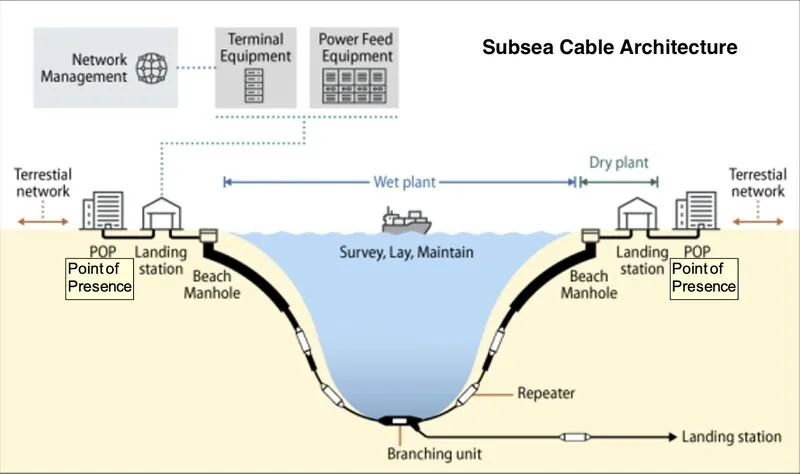
Internet speed in Kenya has improved dramatically over the past decade, driven by submarine cable landings, fibre network expansion, mobile network upgrades, and the growth of local data centre capacity that keeps content and services close to users. But speed is not uniform, it varies by location, by technology, and by time of day. Understanding these variations, and what they mean for data centre demand and strategy, is important for anyone involved in Kenya's digital infrastructure.
Kenya's Internet Speed in Context
The Numbers
Kenya's internet speeds, as measured by platforms like Ookla's Speedtest Global Index, place the country among the better-connected in Africa while still well below global averages. As of 2025, typical performance includes:
Mobile internet (4G/LTE, the dominant mobile technology): average download speeds of 25-30 Mbps, with peak speeds of 50-100 Mbps on good connections in well-served areas. Safaricom's 4G network covers most urban and peri-urban areas and delivers the fastest mobile speeds, with Airtel also providing competitive 4G coverage.
Fixed broadband (fibre connections to homes and businesses): average download speeds of 40-60 Mbps in Nairobi, with premium plans from providers like Safaricom Home Fibre, Zuku, and Faiba offering 100-500 Mbps. These speeds are available primarily in Nairobi, Mombasa, and other major towns where fibre-to-the-home (FTTH) has been deployed.
5G: Safaricom has launched 5G in select areas of Nairobi, Mombasa, Kisumu, and other towns. 5G speeds can reach 200-1000 Mbps in ideal conditions, though coverage is still limited and device adoption is in early stages. 5G's impact on data centre demand will grow as coverage expands.
Global and Regional Comparison
Globally, the fastest mobile internet speeds are found in the UAE (300+ Mbps), South Korea (200+ Mbps), and Norway (180+ Mbps). The global average is approximately 50-60 Mbps for mobile and 100+ Mbps for fixed broadband. Kenya's speeds, while above the African average, are roughly half the global average.
Within Africa, Kenya typically ranks 3rd-5th for both mobile and fixed speeds. Egypt often leads due to its investments in mobile infrastructure and fibre. South Africa's speeds are comparable to Kenya's but vary more widely due to the geographic spread of its population. Morocco and Tunisia also rank highly, particularly for fixed broadband.
The Speed Chain: Why Every Link Matters
Internet speed experienced by the end user is determined by the slowest link in a chain that connects the user's device to the server in a data centre. Understanding this chain is essential for understanding where speed improvements can be made.
The Last Mile (User to Network)

For mobile users, this is the radio connection between the phone and the cell tower. For fixed broadband users, this is the fibre or copper connection between the home/business and the ISP's network. The last mile is often the bottleneck because it is the most expensive part of the network to upgrade and the part most affected by physical constraints (distance from the cell tower, quality of the in-building wiring).
The Backhaul (Network to Data Centre)
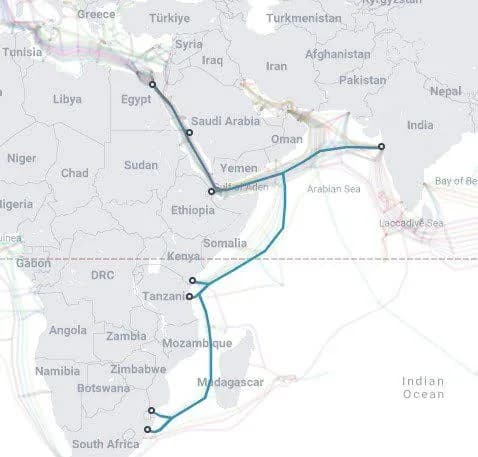
Once data reaches the ISP's network, it travels over backhaul links (fibre or microwave) to the ISP's core network, and from there to the data centre where the service is hosted. If the service is hosted in a Kenyan data centre, this journey is entirely within Kenya and typically adds 5-20ms of latency. If the service is hosted overseas (in South Africa, Europe, or the US), the journey includes submarine cable segments that add 50-200ms.
This is where data centres make a direct impact on perceived internet speed. Services hosted in Kenyan data centres are accessed with 5-20ms latency, while the same services hosted overseas are accessed with 50-200ms latency. For most web browsing and email, this difference is imperceptible. For real-time applications (video calls, online gaming, financial trading), the difference matters.
The Server (Data Centre Processing)

The server itself contributes to the speed equation. A slow or overloaded server takes longer to respond to requests, regardless of how fast the network is. This is why data centre operators invest in high-performance servers, fast storage (SSDs), and efficient software. A well-provisioned data centre with modern servers can serve responses in milliseconds; an under-provisioned or poorly managed one can add hundreds of milliseconds.
How Internet Speeds Drive Data Centre Demand
The Bandwidth Demand Cycle
Faster internet speeds create a virtuous cycle for data centre demand. When users get faster connections, they consume more data, they stream higher-quality video, use more cloud applications, upload and download larger files, and spend more time online. This increased consumption requires more server capacity in data centres to handle the traffic.
The evidence is clear globally: as internet speeds increase, data traffic grows exponentially. In Kenya, mobile data consumption has grown from approximately 1 exabyte (1 billion gigabytes) per year in 2018 to over 10 exabytes in 2025. This growth is driven by both the increasing number of internet users (from 40 million to 55 million) and the increasing speed of connections (which enables more data-intensive usage).
Content Localisation
When internet speeds are high enough to support data-intensive applications like video streaming, the location of the server matters more, not less. A user streaming a 4K video on a fast fibre connection consumes 25-50 Mbps, and if the video server is in South Africa or Europe, every second of video requires a round trip of 100-400ms across submarine cables, adding to buffering and startup time.
This creates demand for content localisation, placing content servers in Kenyan data centres so that popular content is served locally rather than fetched from overseas every time. Content delivery networks (CDNs) like Cloudflare, Akamai, and Google have established caching nodes in Kenya for precisely this reason, and their presence in Kenyan data centres is a direct result of increasing internet speeds.
Cloud and SaaS Adoption

Cloud computing and Software-as-a-Service applications require reliable, reasonably fast internet connections. As Kenya's internet speeds have improved, cloud and SaaS adoption has accelerated, more organisations are moving their applications to the cloud, which requires server capacity in data centres (whether local or overseas). The cloud services comparison guide covers the providers serving Kenya.
The Urban-Rural Speed Divide
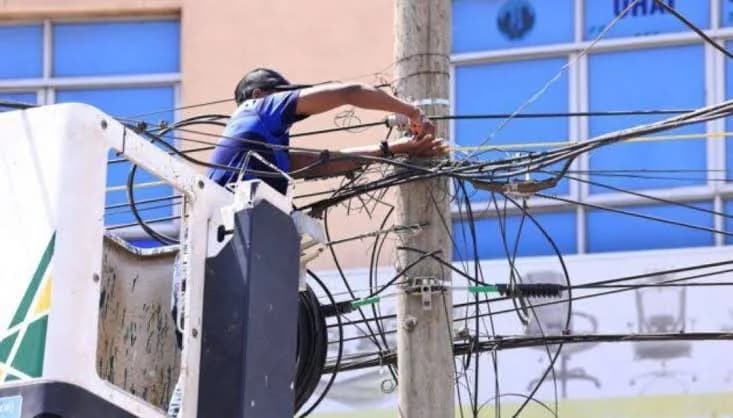
One of Kenya's most significant digital infrastructure challenges is the gap between internet speeds in urban and rural areas. In Nairobi's wealthy neighbourhoods, fibre connections deliver 100-500 Mbps. In rural areas of North Eastern or parts of the Rift Valley, mobile connectivity may be limited to 3G with speeds of 2-5 Mbps, or may be unavailable entirely.
This divide affects data centre demand unevenly. Urban users, with fast connections, generate the most data centre demand, they use cloud applications, stream video, and consume data-intensive services. Rural users, with slower connections, generate less demand per user but represent a large and growing market as mobile coverage expands.
For data centre operators, the urban-rural divide reinforces the concentration of demand in Nairobi. As internet speeds in rural areas improve (through 4G expansion, satellite internet like Starlink, and government connectivity programmes), demand for data centre services from rural-connected users will grow, but this demand will be served by the same Nairobi-based facilities, because the economics of building data centres in rural areas do not work at current demand levels.
5G: The Next Speed Frontier
Safaricom's 5G deployment, while still in its early stages, represents the next step in Kenya's internet speed evolution. 5G's promised speeds of 100-1000 Mbps, combined with sub-10ms latency and the ability to connect far more devices per cell tower, will enable new categories of data-intensive applications that drive data centre demand.
These applications include augmented and virtual reality (which require both high speed and low latency), connected vehicles, remote healthcare (telemedicine, remote surgery), smart city infrastructure, and massive IoT deployments. Each of these applications generates data that must be processed somewhere, and increasingly, that somewhere will include edge computing facilities in Kenyan data centres.
The Outlook
Kenya's internet speeds will continue to improve. 4G coverage is expanding, 5G is rolling out, fibre-to-the-home deployments are extending beyond Nairobi, and satellite internet services (Starlink) are providing high-speed options for previously unserved areas. Each speed improvement drives data consumption growth, which drives data centre demand. The data centres being built today are preparing for the traffic that tomorrow's faster connections will generate.
For Kenya's data centre industry, the message is straightforward: faster internet speeds are the fuel that powers demand. Every improvement in speed (whether from 4G expansion, 5G rollout, fibre deployment, or submarine cable upgrades) translates directly into more traffic that needs to be processed, stored, and served from data centres. The relationship between internet speed and data centre demand is not just correlated, it is causal.