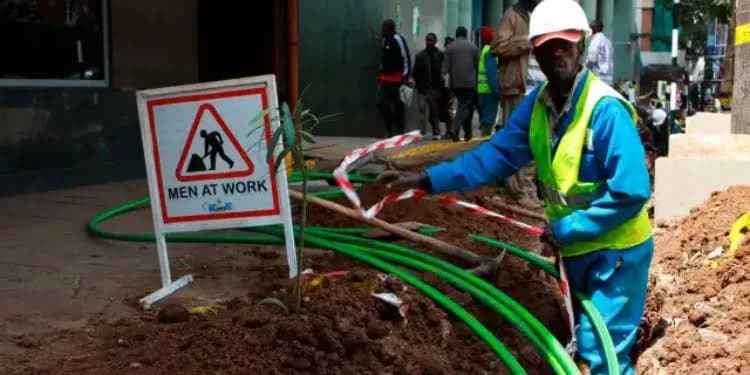
Africa's fibre build-out has entered a new phase, and the industry's own analysts have noticed. A 4 September 2026 open-access analysis by TelcoTitans (Neal Doran and Alex Birkhead, drawing on conversations with European BSS specialist ZIRA Group) argues that the continent's fibre boom is becoming "a test of commercial execution as much as network construction." Network reach, they contend, is only the first step; the harder task is turning capacity into services that households, businesses and service-provider partners can discover, afford, order and use. For anyone tracking East Africa's digital infrastructure (where every fibre route ultimately terminates in an exchange, a mobile backhaul link or a data centre hall) the argument deserves a close read, because it reframes where the next wave of returns (and failures) will come from.
The thesis lands at a peculiar moment: the capital is arriving faster than the operating models. Within a single week at the end of August and early September 2026, Vivica Group's South African fibre units secured R14.4 billion in funding, and regional wholesaler WIOCC Group landed a $300 million investment from Africa Finance Corporation and Saudi Arabia's Vision Invest. Money, in other words, is not the constraint. The constraint is what happens after the trenching crews leave.
The Money Is Arriving Faster Than the Business Models
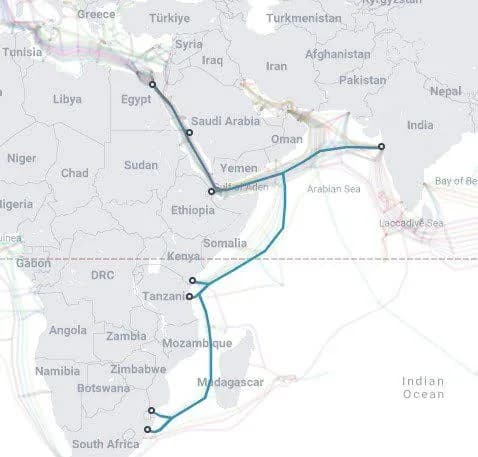
The deal flow tells the story on its own. On 1 September, WIOCC Group confirmed a $300 million facility from Africa Finance Corporation and Vision Invest earmarked for exactly the kind of system-level build this publication tracks: carrier-neutral data centres, open-access terrestrial fibre and subsea infrastructure. The investment is explicitly about accelerating data centre deployment and consolidation alongside fibre expansion, evidence that the continent's smartest wholesalers no longer see fibre, towers and data centres as separate businesses but as one connected digital system. As our coverage of the submarine cables landing at Mombasa shows, capacity at the coast only matters when inland infrastructure can absorb it.
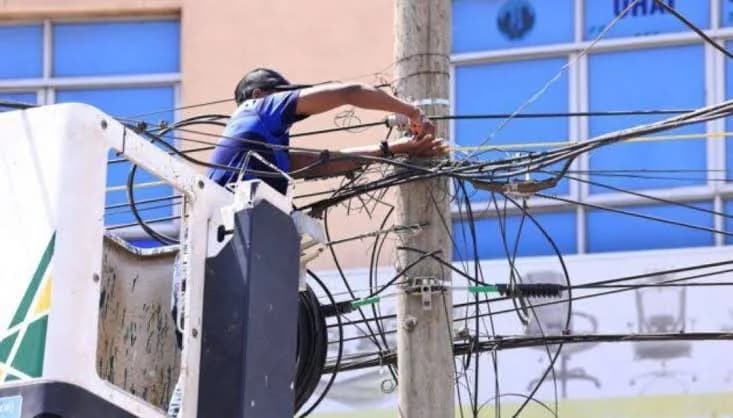
WIOCC is not alone in thinking in systems. MTN has spent recent years extending its portfolio across fibre, towers, backbone, data centres, cloud and fintech, while new subsea systems, 2Africa most prominent among them, keep raising international capacity at the landing points. The Broadband Commission and ITU's State of Broadband in Africa 2025 projects that operators across sub-Saharan Africa will invest some $62 billion in connectivity infrastructure between 2023 and 2030, and current disclosures from Airtel Africa, MTN, Orange and Vodacom imply a combined annual capex run-rate of roughly $6 billion from the continent's largest groups.
The macro prize is real. GSMA's Mobile Economy Africa 2026 report (published in June 2026) calculates that mobile technologies and services contributed $240 billion to Africa's economy in 2025, about 7.8 percent of regional GDP, on a forecast path to $290 billion by 2030. But the same report identifies usage, rather than coverage, as the binding constraint in many countries. The Africa Finance Corporation makes a complementary argument: physical infrastructure needs complementary cloud capability, digital platforms and enterprise services if access is to generate real economic activity, pointing to Ghana, where it estimates digitally delivered-services exports already account for 6.3 percent of GDP, broadly comparable with India and the Philippines. Translation: pipes alone do not produce returns. Services running over pipes do.
What the Numbers Say: Fastest-Growing, Least-Connected
Fixed broadband is where the usage gap is widest, and where the growth is fastest. Broadband researcher Point Topic places Africa, and more recently the combined Middle East & Africa category, among the lowest-penetration but fastest-growing fixed-broadband regions in the world. Its Q2 2025 country growth ranking put South Africa first, with nine further African markets in the top twenty, and the firm forecasts 39.4 percent growth in fixed-broadband subscriptions across Middle East & Africa between 2023 and 2030, the fastest increase of any region. Algeria, Egypt and South Africa feature among the continent's strongest FTTH/B growth markets.
Low penetration is not a weakness in this story; it is the headroom. When a region starts from a small base and grows fastest, the operators who win are not those with the most kilometres of fibre but those who convert coverage into paid subscriptions efficiently. That is a marketing question, a product question, a payments question, and, less glamorously, an operations-and-systems question.
South Africa: Prepaid Fibre and the 120-ISP Market
South Africa is the continent's live laboratory for fibre business-model innovation, and TelcoTitans' numbers are specific. About six million of the country's 22 million residential and business premises have been passed by fibre, with take-up estimated at around 40 percent. Those are good but not comfortable numbers: two of every five passed homes pay, which means the industry's growth now depends more on converting passed premises than on passing new ones.
The most instructive deal is Vivica Group's. Its structurally separated fibreco Frogfoot Networks and ISP Vox Telecom (which includes the prepaid-fibre brand Hypa) secured R14.4 billion (about $900 million) in August 2026, structured as R8.4 billion in equity plus R6 billion in debt. The stated plan is to quadruple the annual build rate from roughly 80,000 to 360,000 homes passed per year, focused deliberately on underserved, lower-income townships. The strategic logic is double-edged: township expansion only pencils if the commercial model fits township cashflows. Monthly debit-order contracts assume salary regularity that many households cannot offer, so day-passes, weekly vouchers and prepaid top-ups become the growth engine, and those demand flexible product configuration, distribution through local agents, and payment systems that behave more like airtime than like European broadband.
South Africa's market structure sharpens the lesson further. Frogfoot alone serves 120 ISP customers through wholesale FTTH and interconnect services, competing alongside giants like Vumatel/MAZIV (now in a joint venture with Vodacom), Telkom's Openserve and MetroFibre. In a market that crowded, coverage stops being the differentiator; pricing, partner onboarding speed and service delivery decide who wins each suburb. As ZIRA Group puts it, prepaid fibre will not become Africa's universal model, but product design, payment options, distribution and margin management must reflect local demand and cashflow conditions, and the systems underneath have to be flexible enough to support that innovation.
Kenya's Lesson: Products That Match How People Pay
Kenya, this publication's home market, offers the East African counterpoint, and it validates the same thesis from a different direction. The Communications Authority counted about 2.14 million fixed-internet subscriptions by June 2025, led by Safaricom with roughly 678,000 lines (about 36.5 percent market share), followed by Jamii Telecommunications and Wananchi Group's Zuku. TelcoTitans' analysis, drawing on Point Topic data, places the fibre-to-the-home subset at around 1.2 million lines by the same date, the remainder rides on fixed-wireless access, an important nuance in a market where mobile-led consumer behaviour shapes expectations for everything.
Three Kenyan realities make the commercial-layer argument concrete. First, M-Pesa: digital payments are so embedded that fibre billing has never had the cash-collection friction seen elsewhere on the continent, but the flip side is that customers expect the same instant, self-service, top-up-as-needed flexibility they get from mobile money bundles. Second, fixed-wireless and 5G networks are themselves lifting data centre demand in Kenya, blurring the line between fixed and mobile products and forcing operators to design across both. Third, the market's growth engine is experience, not coverage: in Nairobi's fibre-rich neighbourhoods a household chooses between Safaricom, Faiba, Zuku and others on price, reliability and support, which is precisely the multi-ISP dynamic South Africa's wholesale market formalises.
The timing of the TelcoTitans piece is not accidental either. ZIRA Group will be outlining its modular commercialisation platform at ITW Africa in Nairobi on 7–10 September, a signal that European BSS vendors now see East Africa's fibre operators as a priority market, and that the commercial-systems conversation has arrived in Kenya. Local operators arguably got here first: Kenya's ISPs have been improvising flexible commercial models since the M-Pesa era began. What the analysis adds is the warning that improvisation stops scaling, at 120 ISP partners or 2 million subscribers, spreadsheets and manual onboarding become the bottleneck.
The Wholesale Turn: Open Access as a Systems Problem
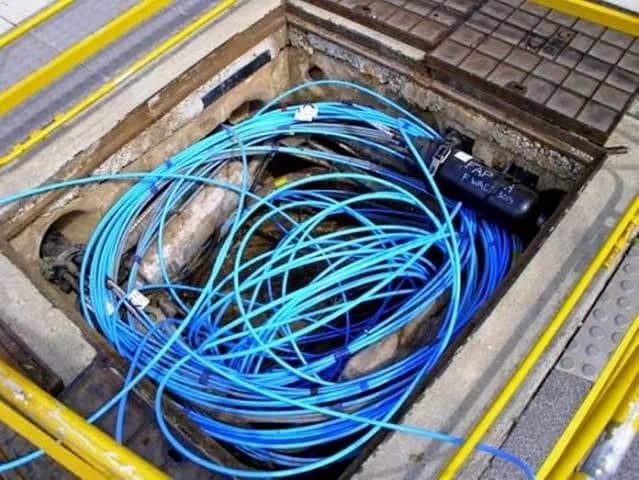
Underneath both markets sits the same structural shift: the separation of network builders from retail sellers. Wholesale and open-access models improve capital efficiency, reduce duplicate trenches, and widen consumer choice, the fibreco builds and operates, ISPs and enterprise providers distribute and serve. How fibre optic networks feed Kenya's data centres is part of the same logic: infrastructure layered on infrastructure, each layer selling access to the next.
But this division of labour changes what operators need from their systems. A retail provider serves one customer base; an open-access fibreco must serve dozens of partners simultaneously, each expecting reliable coverage and price data, fast ordering and fulfilment workflows, service assurance, and accurate billing and settlement. ZIRA Group's framework (set out in its paper The Fiber Revolution: Beyond Infrastructure) names four requirements: end-to-end fibre processes, wholesale-partner capability, open integration, and commercial scalability. Amir Turalić, the company's Chief Product Officer, puts the cultural point bluntly: "A fibre network is not automatically a wholesale business. The commercial foundations have to be built to support growth."
The transferable proof comes from an unexpected market. When Liberty Global's Virgin Media Ireland moved from coaxial cable to FTTH and XGS-PON, it launched a wholesale-fibre business that required new workflows, product catalogue data, partner access and B2B2X lead-to-cash capability, integrating workforce management, fulfilment, GIS and incident systems, with self-service and TM Forum Open API access for partners. Technical use cases went live in about a year, followed by wholesale agreements with national retail providers. The lesson for African operators is not that an Irish model can be transplanted (it cannot) but that operators moving to multi-partner models need systems purpose-built for their chosen route to market, and that building those foundations is a one-year programme, not an afterthought bolted onto a network plan.
Why This Matters for Data Centres
Readers of this publication should care about fibre business models for a direct reason: fibre take-up is a leading indicator of data centre demand. Every household that buys fibre, every ISP that plugs into an open-access network, every business that moves its workloads from mobile hotspot to fixed broadband is adding traffic that must be exchanged, peered, cached, stored and computed somewhere. Kenya's exchange point story, why KIXP matters, and the growth of data centre interconnection and peering in Kenya are downstream of exactly the fixed-broadband expansion this analysis describes.
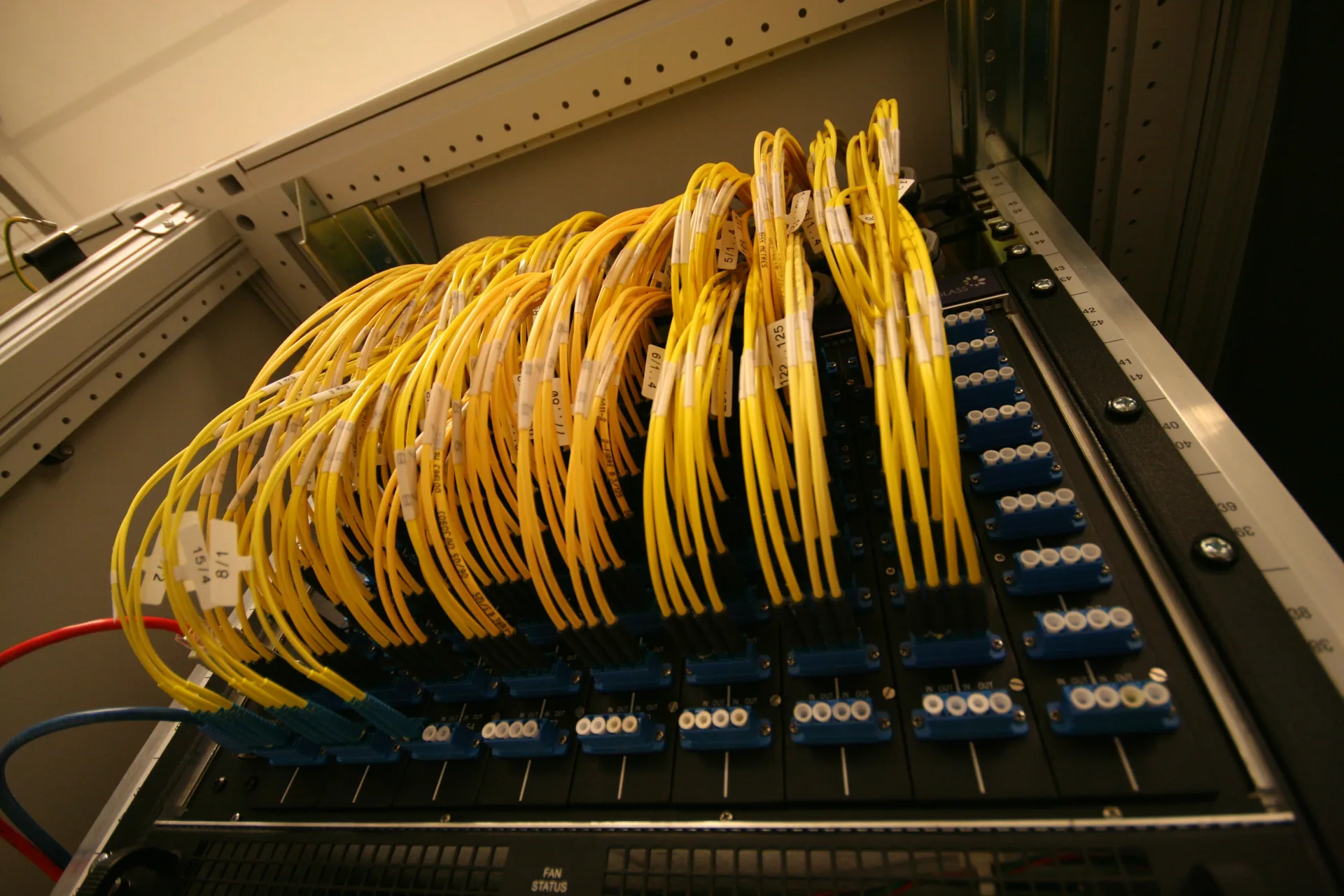
The WIOCC deal makes the connection explicit: the same $300 million funding data centre deployment and terrestrial open-access fibre. Carrier-neutral facilities and open-access networks share one commercial philosophy (build once, serve many partners) and they rise or fall on the same operational capability: coverage and capacity data partners can trust, ordering that does not require weeks of email, and settlement that does not require an audit to reconcile. Operators and investors evaluating Africa's digital infrastructure should therefore score fibre providers and data centre operators on the same axis: not just how much network they have built, but how efficiently they can turn that network into partner-ready products.
The capital has kept arriving since that analysis. On 16 September 2026, the US International Development Finance Corporation committed up to $155 million in equity to WIOCC, the largest equity investment in the agency's history (Reuters, 16 September 2026), stacking on top of the $300 million above. We unpack what that money changes for Kenyan bandwidth prices and data centre buyers in our DFC-WIOCC explainer.
The Takeaway for Operators and Investors
The next phase of African fibre will be judged by more than construction progress. Local economics, payment patterns, regulation, geography and partner structures vary widely from Lagos to Nairobi to Cape Town, and across those differences, one principle holds. The operators who win will be those who can package capacity into offers customers and partners can actually buy: prepaid where cashflow demands it, monthly where it does not; wholesale where ISPs are strong, retail where they are not; open APIs everywhere. Emir Bukvić, ZIRA Group's CEO, frames the stakes in one line: "The ability to scale the commercial side of the business as quickly as the network will be central to turning infrastructure investment into sustainable growth."
For fibre providers entering their next build phase, and for the data centre operators whose demand curves depend on theirs, the message is the same: making capacity easy to package, buy, deliver and manage may now matter as much as making it available. The boom has proved the continent will fund networks. The test ahead is whether it can operate them like businesses.