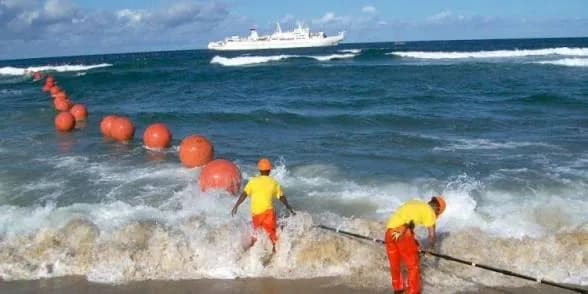
For two days in September 2026, the most important room in African connectivity was the Kenyatta International Convention Centre in Nairobi, where more than 1,800 delegates gathered for ITW and Datacloud Africa 2026 to decide where the continent's next internet capacity gets bought and built. The most interesting pitch in the building came from a company most Kenyan buyers have never had a reason to call. Somaliland's Somcable stood up as the builder of a "Northern Route": dual submarine landings at Berbera, wired overland to Ethiopia and beyond, offering the region a second gateway at the exact moment Red Sea disruptions have exposed how concentrated East Africa's international bandwidth really is.
This article unpacks what Somcable actually announced, how it fits with the eight cable systems already landing at Mombasa, and what it changes for Kenyan businesses that depend on international capacity.
What Somcable Announced
The company behind the pitch is not a newcomer. Somcable was founded in 2009 and is headquartered in Hargeisa, and it operates two of the most significant submarine cable landings on the Horn: the 2Africa and PEACE systems, both terminating at the Port of Berbera. Business Daily reported on 15 September 2026 that Somcable is linking those landings to terrestrial fibre networks extending into Ethiopia, South Sudan and neighbouring countries, and that it has opened talks with Ethiopia's state-owned Ethio Telecom to expand international capacity lease agreements.
The technical argument the company made is worth restating plainly. "Our dual landings at Berbera give us a concrete technical advantage, two physically diverse subsea routes into East Africa directly integrated with a terrestrial backbone built to reach landlocked markets," said Abdurahman Yusuf, Somcable's chief technology officer. Chief executive Mohammed Ibrahim Ahmed framed the goal as resilience rather than raw bandwidth: "East Africa's digital economy demands more than bandwidth, it demands resilience," with the company aiming to provide diverse, high-capacity routes for coastal and landlocked countries. In other words, Berbera's pitch is not to carry more traffic than Mombasa, it is to carry traffic that Mombasa physically cannot reach if something breaks.
Kenya's Cable Arithmetic
Start with what Kenya actually has. Seven major submarine systems are live on the Kenyan coast as of September 2026, per the DC254 verified register: SEACOM, TEAMS, EASSy, LION2, DARE1, PEACE and 2Africa, with Africa-1 landed at Mombasa in 2024 pending full service and Daraja (Salalah to Mombasa, hosted by Safaricom) announced in October 2025 and in development. On paper this is exceptional redundancy, and it is the foundation of Kenya's data centre market. The caveat sits in the geography: most of these systems reach Europe through the Red Sea and the Suez region, one of the world's great maritime chokepoints, and several share sea corridors with each other.
That caveat has bitten. The Star's ITW coverage (14 September 2026) noted that Kenya learned during recent Red Sea cable disruptions how quickly traffic from Mombasa slows when key systems fail, a reminder that capacity without diverse international routes is a risk. When a cable is cut, carrier traffic re-routes automatically over surviving systems (border gateway protocol does this by design), but the maths are unforgiving: rerouted traffic crowds onto fewer cables, congestion rises, and effective speeds drop until repair ships do their work. Redundancy on paper only protects you if the backup path is physically independent of the failure.
The Northern Route, Mapped
Berbera's geography is the story. The port city sits on the Gulf of Aden, directly opposite the Arabian peninsula, and the two systems Somcable lands there (2Africa and PEACE) approach the Horn from route corridors that differ from the ones carrying most Mombasa-bound traffic. On top of the landings, Somcable is building the terrestrial leg: fibre from Berbera inland through Hargeisa into Ethiopia, with the company describing extensions toward South Sudan, and lease negotiations with Ethio Telecom that would turn that backbone into sellable international capacity.
Kenya is not a stranger to northern alternatives. DARE1, live since 2015, already runs a direct express route from Mombasa to Djibouti, giving Kenyan operators a second coastal exit toward the north. What Berbera adds is a different kind of option: a gateway outside Kenya's borders that can carry landlocked traffic (Ethiopia, South Sudan) without touching Mombasa at all, and that strengthens the overall mesh the region's networks can fail over onto. For Principal Secretary for Broadcasting and Telecommunications Stephen Isaboke, who opened the ITW gathering, the framing was confident rather than defensive: Kenya's strategic location, regulatory environment and skilled workforce keep it positioned as the regional gateway for connectivity, data centres and cloud services. A stronger northern neighbour is consistent with that pitch, Kenya's hub status has always been about aggregation, and aggregation is easier when the surrounding mesh is dense.
What It Means for Kenyan Buyers
For enterprises that depend on international bandwidth, the practical lessons are procurement lessons. Buy capacity across multiple cable systems rather than multiple products on the same system. Ask carriers to demonstrate physical route diversity (which cables, which landing points, which inland paths) rather than accepting a resilience slide. And when contracts allow, configure failover so that critical workloads can ride a genuinely independent path when a system degrades, the dual-entry discipline good facilities apply to metro fibre applies to international routes too.
For data centre siting, the calculus barely moves but the options sharpen. Nairobi remains where the customers, exchanges and skills are, and Mombasa's landing stations (with facilities like iColo MBA2 minutes from the beach manholes) remain the natural home for latency-critical international transit. What Berbera adds is insurance: a second gateway that lowers the odds of a regional outage isolating Kenyan infrastructure, and a future negotiating lever on international capacity prices. Watch two things through 2027: whether the Ethio Telecom lease agreements convert into lit capacity, and whether Daraja lands on schedule. Both would measurably deepen the region's route diversity, which is the metric that actually matters.
Sources: Business Daily (15 September 2026, Somcable landings, terrestrial build, Ethio Telecom talks, executive quotes); The Star (14 September 2026, ITW and Datacloud Africa 2026, Red Sea disruption impact, PS Isaboke remarks). Cable register (seven live systems, Africa-1 landed pending service, Daraja in development, DARE1 route detail, Daraja announcement October 2025) from the DC254 verified map register, corrected 16 September 2026 after verification showed EIG never landed in Kenya. Facts verified 16 September 2026.