Introduction: Why Interconnection Is the Lifeblood of Data Centres
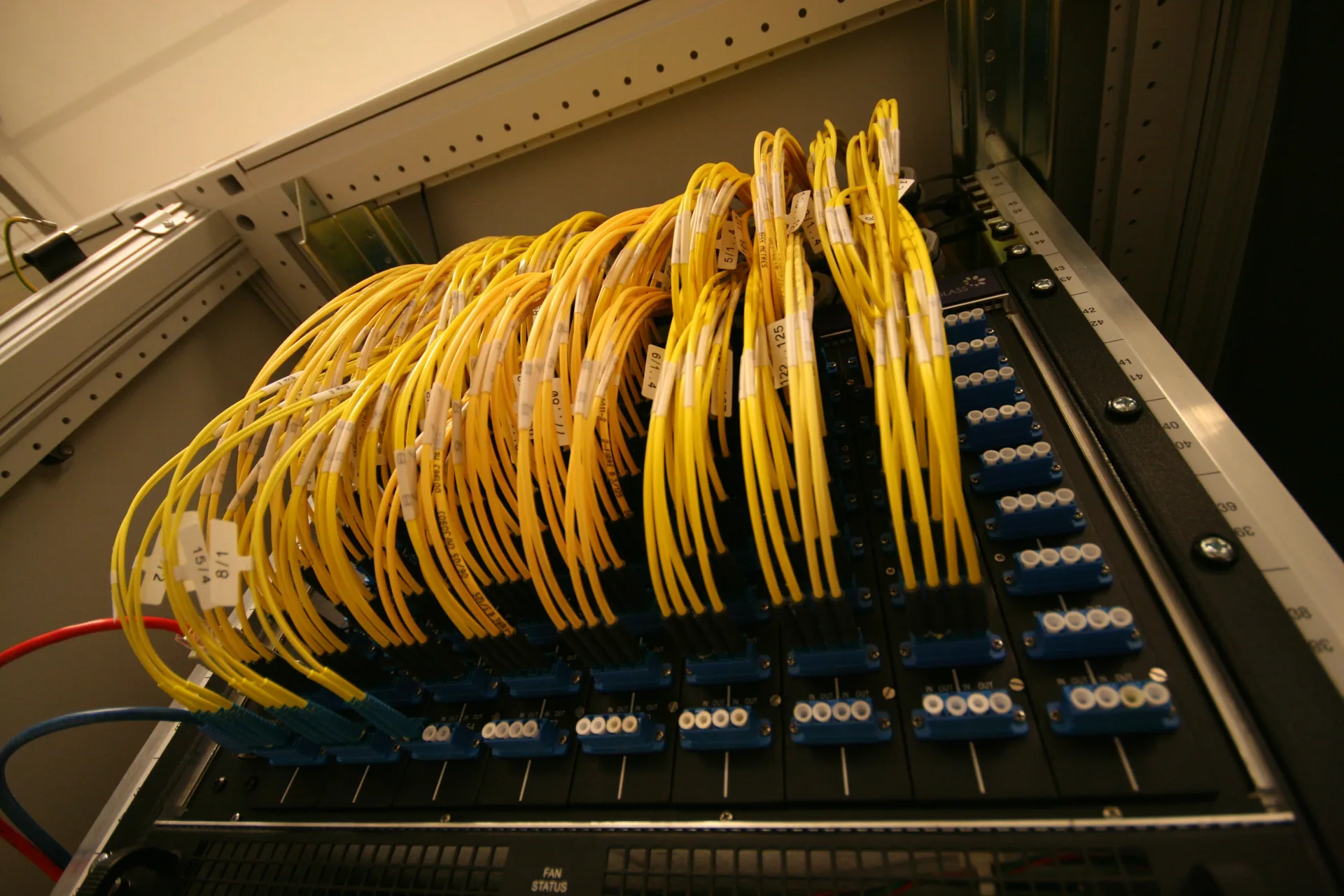
A data centre is only as valuable as the networks it connects. In Kenya, where fibre optic networks are expanding rapidly and submarine cables land at the Mombasa coast, interconnection (the ability to link networks, cloud platforms, and enterprises directly within and between facilities) has become the most important competitive differentiator for data centre operators.
This article explains how data centre interconnection and peering work in Kenya, covering the Kenya Internet Exchange Point (KIXP), cross-connects within facilities, the economics of peering versus transit, and why Kenya is consolidating its position as East Africa's premier interconnection hub.

What Is an Internet Exchange Point (IXP)?
An Internet Exchange Point (IXP) is a physical infrastructure through which internet service providers (ISPs), content delivery networks (CDNs), cloud providers, and other networks exchange internet traffic directly with each other. Instead of traffic between two Kenyan networks (say, Safaricom and Telkom Kenya) travelling out of the country via submarine cables to Europe and back, an IXP allows that traffic to be exchanged locally within the same city.
The benefits are substantial:
- Reduced latency: Local traffic stays local, cutting round-trip times from 150–300 ms (via Europe) to under 10 ms
- Lower costs: Networks avoid paying for international transit capacity on submarine cables
- Improved reliability: Less dependency on undersea cable routes, which can be disrupted by cable cuts
- Better user experience: Faster loading times for locally-hosted content and services
KIXP: Kenya's Internet Exchange Point
History and Growth
The Kenya Internet Exchange Point (KIXP) was established in 2002 by the Telecommunications Service Providers Association of Kenya (TESPOK), making it one of the first IXPs in East Africa. At launch, it handled just a few hundred megabits per second. Today, according to KIXP's published data, the exchange handles peak traffic exceeding 150 Gbps, a growth of several orders of magnitude that reflects Kenya's dramatic internet expansion.
KIXP is a neutral, not-for-profit exchange operated by Packet Clearing House in partnership with TESPOK. It operates from multiple points of presence (PoPs) across Nairobi's major data centre facilities, ensuring that members can connect from whichever facility they operate in.
The 100G Upgrade
In 2024–2025, KIXP completed a significant infrastructure upgrade to 100 Gigabit Ethernet (100GbE) port capabilities at its core switches. This upgrade was essential to accommodate the growing bandwidth demands of mobile network operators, streaming services, and cloud providers. The 100G capability means that large members like Safaricom and Liquid Intelligent Technologies can exchange traffic at much higher volumes without port congestion, and it positions KIXP to handle projected traffic growth as 5G adoption and video streaming increase in Kenya.
KIXP Membership Profile
KIXP's membership has evolved significantly. The current roster includes:
- Mobile network operators: Safaricom, Airtel Kenya, Telkom Kenya
- ISPs and fibre providers: Liquid Intelligent Technologies, Jamii Telecommunications, FAIBA (Wananchi Group), Poea Internet, AccessKenya
- Content providers and CDNs: Google (via Global Cache), Netflix, Meta, Cloudflare
- Cloud and technology platforms: AWS, Microsoft Azure, and others through local PoPs
- Government and education networks: Kenya Education Network (KENET), government data centres
- Enterprise and financial services: Banks and other enterprises with direct IXP connections for low-latency financial applications
This diverse membership is what makes KIXP powerful, the more networks that participate, the more traffic can be kept local.
Peering vs Transit: Understanding the Economics
What Is Peering?
Peering is a mutually beneficial arrangement where two networks agree to exchange traffic directly, typically without charging each other. At KIXP, peering allows a Safaricom customer accessing a Google service hosted locally to have that traffic exchanged directly at the IXP, without either party paying for international transit.
Peering can be:
- Public peering: Exchanging traffic over a shared IXP fabric (like KIXP)
- Private peering: A direct connection between two networks, often via a cross-connect in a shared data centre
What Is Transit?
Transit is a commercial service where one network (the transit provider) agrees to carry another network's traffic to all destinations on the internet. Transit providers charge for this service, typically based on bandwidth capacity (per Mbps or per Gbps). For Kenyan networks, transit connects them to the global internet via submarine cables (EASSy, Seacom, and TiGS) landing in Mombasa.
The Cost Case for Peering in Kenya
The economics are compelling. International transit from Kenya typically costs USD 50–200 per Mbps per month, depending on the provider, capacity commitment, and route. By peering at KIXP, networks can offload a significant portion of their traffic, industry estimates suggest KIXP keeps over 70% of locally-sourced traffic within Kenya.
For a mid-sized ISP with 10 Gbps of total traffic, if 7 Gbps can be peered locally at KIXP, the savings on transit costs alone can amount to USD 350,000–1.4 million per month. These savings flow through to lower retail broadband prices for consumers and more competitive enterprise connectivity offerings.
Data Centre Cross-Connects: Direct Connections Within Facilities
What Is a Cross-Connect?
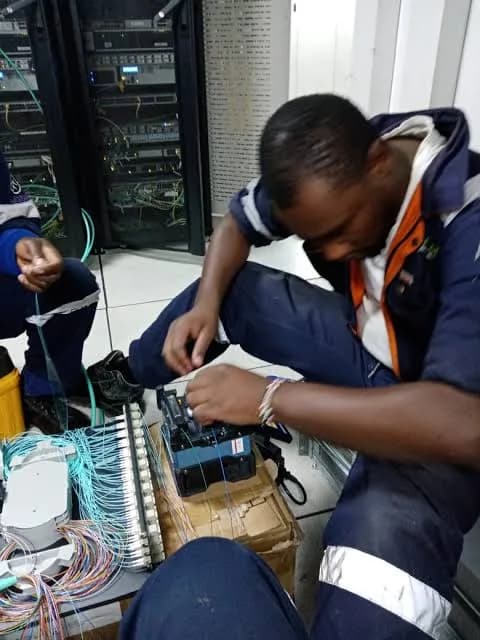
A cross-connect is a physical cable (typically fibre optic or copper) that directly links one party's equipment to another's within the same data centre. Cross-connects are the fundamental building block of data centre interconnection.
In practice, a cross-connect might connect:
- A bank's server rack directly to Safaricom's network equipment for dedicated bandwidth
- An enterprise to AWS Direct Connect for private cloud access
- A content provider to multiple ISPs for optimal content delivery
- Two enterprise partners for secure, low-latency data exchange
Why Cross-Connects Drive Data Centre Value
Data centres with rich interconnection ecosystems command premium pricing for colocation services in Kenya. When a customer can connect to ten different networks, three cloud platforms, and multiple enterprise partners through cross-connects in a single facility, the value proposition is far stronger than a facility with limited connectivity options.
Africa Data Centres, Liquid Intelligent Technologies, and PAIX all market their interconnection capabilities as a key differentiator. The ability to offer direct cloud on-ramps (AWS Direct Connect, Azure ExpressRoute, Google Cloud Interconnect) is particularly important for attracting enterprise customers migrating workloads to the cloud.
Cross-Connect Provisioning in Kenya
Kenyan data centres typically offer cross-connect provisioning within 24 to 72 hours, depending on the complexity and whether the interconnection requires configuration on the network side. Cross-connects are priced as a monthly recurring charge plus a one-time setup fee, with pricing varying by facility and cable type (single-mode fibre, multi-mode fibre, or copper).
Kenya as East Africa's Interconnection Hub
The Geographic Advantage
Kenya's position as an interconnection hub is no accident. Several factors converge:
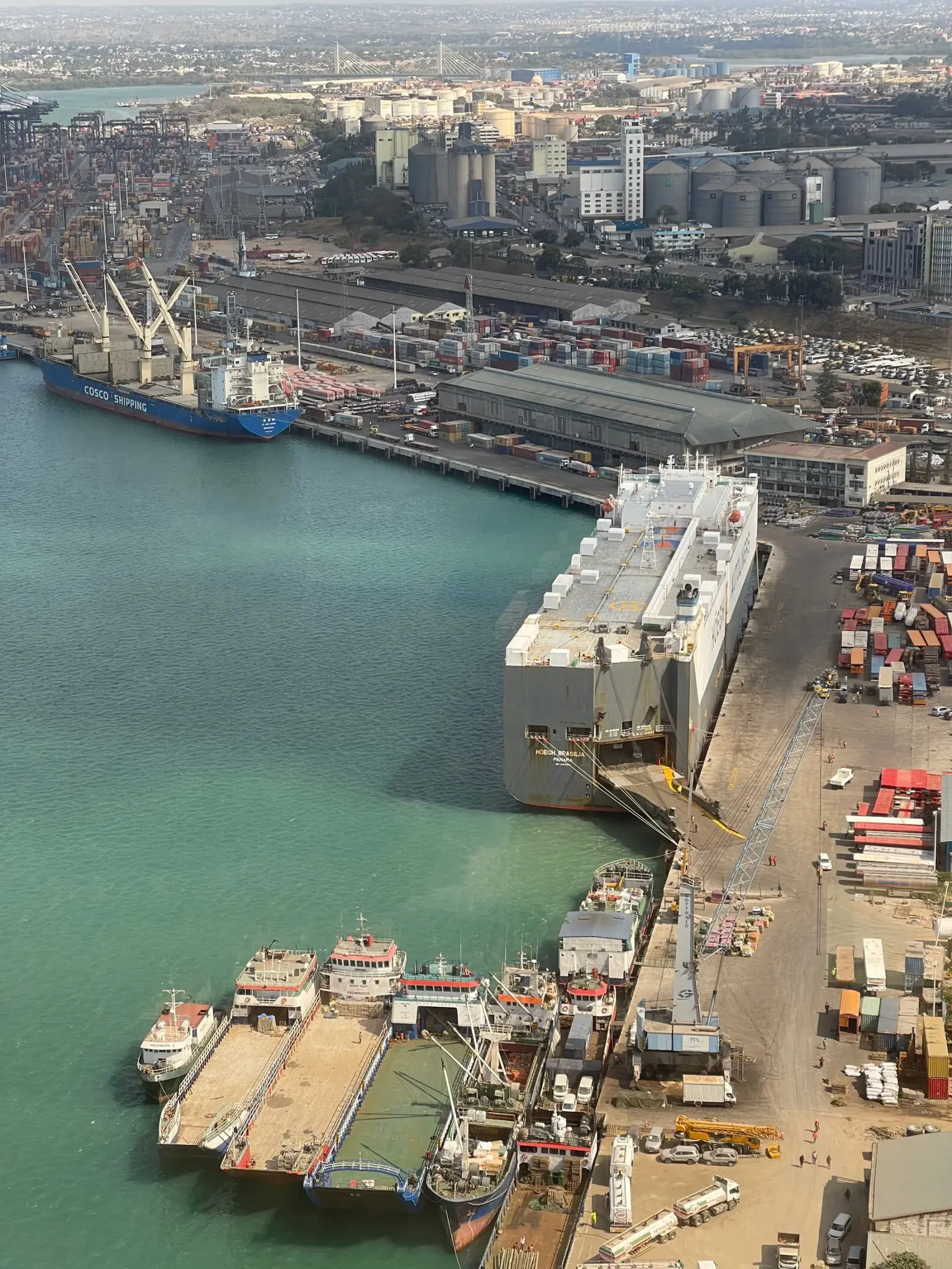
- Submarine cable landing: Mombasa is the landing point for EASSy, Seacom, TiGS, and DARE1, giving Kenya direct connectivity to Europe, Asia, and the rest of Africa. The choice between Nairobi and Mombasa for data centre location often comes down to balancing proximity to cable landing stations (Mombasa) against market proximity and ecosystem depth (Nairobi).
- Regional connectivity: Kenya borders Uganda, Tanzania, Ethiopia, and South Sudan. Cross-border fibre links from these countries terminate in Nairobi, making it a natural aggregation point.
- Market size and sophistication: Kenya has East Africa's largest and most developed digital economy, with the highest internet penetration rate in the region.
KIXP's Regional Role
KIXP's influence extends beyond Kenya's borders. Networks from Uganda, Tanzania, Rwanda, and Burundi peer at KIXP either through direct connections or via their Kenyan upstream providers. This regional role is supported by the East African Backhaul System, which provides high-capacity fibre links between Nairobi and neighbouring capitals.
Major Peering Participants in Kenya's Ecosystem
Telecommunications Operators
Safaricom is by far the largest traffic contributor at KIXP, reflecting its dominance in Kenya's mobile and fixed-line markets. Telkom Kenya and Airtel Kenya are also significant participants, using KIXP to exchange traffic with each other and with content providers.
Liquid Intelligent Technologies plays a dual role, as both a significant traffic source and a carrier providing connectivity between Kenyan data centres and the broader Liquid network spanning over 20 African countries.
Content Delivery Networks and Cloud Providers
The presence of Google, Netflix, Meta, and Cloudflare at KIXP has been transformative. Google's Global Cache nodes, deployed at KIXP and within Kenyan data centres, mean that YouTube, Google Search, and other Google services are served locally. Netflix similarly caches popular content at the exchange, dramatically improving streaming quality for Kenyan users.
AWS and Microsoft Azure have established local interconnection points, enabling Kenyan enterprises to access cloud services with single-digit millisecond latency rather than the 100+ ms latency typical of accessing European cloud regions.
Comparing KIXP with Africa's Other Major IXPs
KIXP vs NAPAfrica (South Africa)
NAPAfrica, operated by INX-ZA, is Africa's largest IXP by a significant margin. With over 300 members and peak traffic exceeding 2 Tbps across its Johannesburg and Cape Town nodes, NAPAfrica benefits from South Africa's larger economy, more mature telecom sector, and the presence of multiple submarine cable systems.
KIXP, while smaller in absolute terms, has grown faster proportionally. The 100G upgrade has narrowed the infrastructure gap, and KIXP's role as the primary IXP for the broader East African market gives it a strategic importance beyond what raw traffic numbers suggest.
KIXP vs IXPN (Nigeria)
IXPN (Internet Exchange Point of Nigeria) handles approximately 100–120 Gbps peak traffic with 60+ members. Nigeria's larger population gives IXPN potential for massive growth, but infrastructure challenges and a more fragmented telecom market have constrained its development relative to KIXP.

Kenya's Competitive Positioning
Kenya's advantage lies in its combination of submarine cable diversity, regulatory environment, and ecosystem maturity. The Communications Authority of Kenya (CA) has been supportive of IXP development, and the competitive telecom market has driven operators to peer rather than rely solely on transit. The Kenya data centre market outlook for 2025–2030 projects that interconnection will be a primary driver of data centre demand, as enterprises and cloud providers seek facilities with the richest network ecosystems.
The Future of Interconnection in Kenya
Several trends will shape Kenya's interconnection landscape in the coming years:
-
5G and edge computing: As 5G networks roll out, the demand for local interconnection at the network edge will increase, driving KIXP expansion into additional data centre facilities and potentially edge PoPs.
-
Cloud-on-ramp proliferation: All major Kenyan data centres are racing to offer direct cloud connections. The facility with the most cloud on-ramps will attract the most enterprise customers.
-
AI and GPU workloads: As AI computing demands grow in Kenya, interconnection between GPU-equipped data centres and cloud AI services will become critical.
-
Regional integration: As cross-border fibre capacity increases, KIXP's role as the East African peering hub will strengthen, potentially leading to formal peering agreements with IXPs in Uganda (UIXP), Tanzania (TIX), and Rwanda (RINEX).
-
Submarine cable expansion: New submarine cable projects planned for the East African coast will further increase international connectivity capacity, making Kenyan interconnection points even more valuable as traffic aggregation nodes.
Conclusion
Data centre interconnection and peering are not technical niceties, they are fundamental to the value proposition of every data centre in Kenya. KIXP has evolved from a small experimental exchange into a critical piece of national digital infrastructure, handling over 150 Gbps of peak traffic and keeping the majority of locally-sourced content within Kenya's borders. Combined with direct cross-connects within facilities and the growing presence of global cloud providers, Kenya's interconnection ecosystem is a powerful reason why the country is becoming East Africa's undisputed digital hub.
For enterprises selecting colocation facilities, for investors evaluating data centre opportunities, and for policymakers shaping the digital economy, understanding interconnection is essential. The facilities and exchanges that invest in connectivity density will be the ones that define Kenya's digital future.
Frequently Asked Questions
What is the difference between peering and transit?
Peering is a reciprocal arrangement where two networks exchange traffic directly at no cost, typically at an Internet Exchange Point (IXP) like KIXP. Both networks benefit by keeping local traffic local. Transit, by contrast, is a paid service where one network (the transit provider) carries another network's traffic to all destinations on the internet, including international routes. For Kenyan networks, peering at KIXP keeps local traffic within the country, while transit connects them to the global internet via submarine cables like EASSy, Seacom, and TiGS. Most Kenyan ISPs and data centre operators use a combination of both, peering for local content delivery and transit for international reach. The cost differential is significant: peering is typically free or involves a small port fee, while international transit can cost USD 50–200 per Mbps per month.
How many members does KIXP have and what traffic does it handle?
As of 2025, KIXP has over 70 connected members spanning ISPs, mobile network operators, content delivery networks, cloud providers, and enterprise networks. The exchange handles peak traffic volumes exceeding 150 Gbps, a dramatic increase from under 1 Gbps a decade ago. KIXP's member base includes Safaricom, Telkom Kenya, Liquid Intelligent Technologies, Jamii Telecommunications, FAIBA (Wananchi Group), and increasingly, global cloud platforms. The exchange operates from multiple points of presence across Nairobi data centres, and its recent upgrade to 100G port capabilities has significantly increased capacity for high-bandwidth members. According to KIXP's published statistics, the exchange keeps over 70% of locally-sourced traffic within Kenya, avoiding expensive international transit.
What is a data centre cross-connect and why does it matter?
A cross-connect is a physical cable link between two different networks or equipment within the same data centre facility. Unlike connections that route through the public internet, cross-connects provide direct, private, and typically low-latency connectivity between a customer's equipment and their service providers, whether that's an ISP, a cloud provider's on-ramp, a financial trading partner, or another enterprise. In Kenyan colocation data centres, cross-connects are a primary value driver because they enable customers to establish direct connections to multiple networks, cloud platforms, and partners from a single facility. Cross-connects are typically provisioned within 24–72 hours, offer guaranteed bandwidth, and eliminate the 'last mile' costs and latency of accessing networks from separate locations.
Which global cloud providers are present at KIXP or interconnected in Kenyan data centres?
AWS (Amazon Web Services) has established a direct presence in Nairobi, interconnecting with Kenyan networks through local points of presence. Microsoft Azure has expanded its Azure regions and edge nodes closer to East Africa, with interconnection through partner data centres. Google has deployed Google Global Cache nodes at KIXP and within Kenyan data centres, dramatically improving local content delivery. Oracle Cloud Infrastructure (OCI) has also been expanding its footprint in Africa with connectivity options for Kenyan customers. These cloud providers interconnect either directly at KIXP or through dedicated fibre optic network connections within data centres operated by Africa Data Centres, Liquid Intelligent Technologies, and PAIX. The presence of these providers at Kenyan interconnection points means local enterprises can access cloud services with significantly lower latency than routing through Europe or South Africa.
How does KIXP compare to NAPAfrica and IXPN?
KIXP, NAPAfrica (South Africa), and IXPN (Nigeria) are Africa's three largest Internet Exchange Points, but they differ significantly in scale and maturity. NAPAfrica, operated by INX-ZA in Johannesburg and Cape Town, is Africa's largest IXP by traffic, handling peak volumes exceeding 2 Tbps with over 300 connected members. It benefits from South Africa's larger internet user base and mature telecom market. KIXP is East Africa's leading IXP and the most significant hub for the wider East African region, handling 150+ Gbps peak traffic with 70+ members, impressive for a market of Kenya's size. KIXP has upgraded to 100G ports, narrowing the infrastructure gap with South Africa. IXPN in Nigeria handles roughly 100–120 Gbps peak traffic with 60+ members. KIXP's strategic advantage lies in Kenya's role as the landing point for multiple submarine cables, making it a natural aggregation point for traffic flowing between East Africa, Southern Africa, and the rest of the world.