
Colocation lets you place your own servers inside a professionally built and managed facility. You bring the hardware; the provider supplies the space, power, cooling, connectivity, and physical security. For companies in Kenya that need control over their infrastructure without the capital outlay of building a data centre, colocation is the standard solution.

Banks, mobile network operators, fintech platforms, and government agencies across Kenya use colocation to house their critical systems. The model has matured significantly in Nairobi over the past decade, with multiple Tier III facilities now offering carrier-neutral space along the Mombasa Road corridor.
What Is Colocation?
Colocation (sometimes shortened to "colo") is an arrangement where a company rents physical space in a data centre to house its own servers, storage, and networking equipment. The company retains full ownership and control of its hardware and software. The data centre operator provides the facility infrastructure: rack space, electrical power, cooling, physical security, fire suppression, and internet connectivity.
Understanding what a data centre is is the first step to understanding colocation. A data centre is a purpose-built facility designed to house IT equipment with reliable power, cooling, and security. Colocation is one of several ways to use that facility.
This model is distinct from both cloud computing and building your own data centre. In cloud computing (IaaS), you rent virtualised compute resources from providers like AWS, Azure, or local providers. You do not see or touch the physical hardware. In a self-built facility, you own and operate everything, the building, the power systems, the cooling, the security. Colocation sits between these two extremes: you own the gear, someone else runs the building.
The term "carrier-neutral" comes up frequently in colocation discussions. A carrier-neutral facility allows you to connect to any internet service provider, cloud platform, or network carrier you choose. You are not locked into the operator's preferred connectivity. This is a critical distinction in the Kenyan market, where connectivity choice directly affects performance and cost.
How Colocation Works in Practice
The basic unit of colocation is the rack, a standard 42U steel enclosure that houses your servers, switches, and storage devices. Providers typically offer space in fractions: a quarter-rack (approximately 10U of space), a half-rack (approximately 20U), or a full rack. Larger deployments may take entire caged areas or private suites within the facility.
When you sign a colocation agreement, you ship your servers to the facility or have your team install them. The provider racks the equipment, connects power cables to their distribution units, and runs network cables from your equipment to a meet-me room where your chosen ISP or carrier terminates their circuits. From that point, your systems are live in a professional facility with redundant power, cooling, and physical security.
You retain full access to your equipment. Most facilities allow 24/7 physical access with appropriate authorisation. For tasks that do not require your presence (cable swaps, hard drive replacements, server reboots) the provider's remote hands team acts on your instructions.
Why Companies Choose Colocation Over Building Their Own
Building a data centre in Nairobi is a capital-intensive undertaking that few organisations can justify. A modest Tier III facility with 1 MW of IT load capacity costs upwards of USD 15–20 million to construct, before factoring in land acquisition in Nairobi's industrial zones. Add ongoing operational costs (dedicated facilities staff, power utility contracts, generator fuel, insurance, compliance) and the total cost of ownership becomes prohibitive for all but the largest enterprises.
Colocation eliminates most of this. The provider has already absorbed the construction and operational capital. You pay a monthly or annual fee for the space and resources you actually use.
Capital expenditure versus operational expenditure
This is the primary financial driver. Building your own facility requires significant upfront capital expenditure (CapEx): land, construction, electrical infrastructure, cooling systems, fire suppression, security systems, and compliance certifications. Colocation converts this to operational expenditure (OpEx), a predictable monthly cost that scales with your needs.
For a Kenyan bank needing to house 50 servers, the choice between spending KES 500 million on a private facility or KES 5–10 million per year on colocation space is straightforward. The bank's capital is better deployed in its core business.
Reliability and redundancy
A properly built colocation facility provides redundancy that is expensive to replicate in-house. Tier III facilities, which represent the standard for Kenyan colocation, offer N+1 redundancy on power and cooling, meaning any single component can fail without affecting operations. This includes dual utility power feeds, diesel generators with automatic transfer switches, UPS systems, and precision air conditioning units.
Building this level of redundancy into a private facility requires specialised engineering and ongoing maintenance that most organisations lack the expertise to manage.
Connectivity and peering
Nairobi's colocation facilities sit at the intersection of multiple fibre networks. The Mombasa Road corridor, where most facilities are concentrated, is the primary route for submarine cable traffic from the coast. Kenya connects to the global internet through submarine cable landing stations in Mombasa, including the EASSy, TEAMS, SEACOM, and DARE1 cables. Traffic from these cables flows north to Nairobi, where the major data centres aggregate it.
Colocation gives you direct access to the Kenya Internet Exchange Point (KIXP), multiple ISPs (Safaricom, Wananchi, Liquid Intelligent Technologies, POA Internet, and others), and direct connections to cloud on-ramps for AWS, Azure, and Google Cloud. Peering at KIXP means your traffic to other Kenyan networks stays local, reducing latency and lowering your bandwidth costs.
A company building its own facility would need to contract and manage these connections independently, running dedicated fibre from the nearest exchange or cable landing point. In colocation, the cross-connect infrastructure is already in place, and multiple carriers compete for your business within the same building.

Data residency and regulatory compliance
The Central Bank of Kenya (CBK) requires financial institutions to maintain data within the country. The National Treasury has issued similar guidance for government data. Colocation provides a straightforward mechanism for compliance: your servers are physically in Kenya, in a known facility, under your control.
This is a significant advantage over public cloud, where data residency depends on the provider's infrastructure decisions. With colocation, there is no ambiguity, your hardware is in your rack, in your chosen facility.
Scalability
Colocation scales with your needs. Start with a quarter-rack. Expand to a half-rack, a full rack, or multiple racks as your infrastructure grows. Most providers can accommodate this without requiring you to relocate. In a self-built facility, you either over-provision (paying for space and power you do not yet use) or face a costly expansion when you outgrow the initial capacity.
Speed to deployment
Building a data centre from scratch takes 18–36 months in Kenya, factoring in land acquisition, regulatory approvals, construction, and commissioning. Provisioning colocation space takes days to weeks, depending on the provider's current availability. For organisations that need to deploy infrastructure quickly (whether responding to a new regulation, launching a service, or recovering from a facility failure) this time difference is decisive.
Access to specialised expertise
Operating a data centre requires skills that fall outside most organisations' core competencies: electrical engineering for power systems, mechanical engineering for cooling, physical security management, and facilities maintenance. Colocation providers employ these specialists. Your team focuses on managing servers and applications, not maintaining diesel generators and UPS batteries.
Colocation Providers in Kenya
Kenya's colocation market is served by several providers, each with different strengths, facility locations, and target customers.
iXAfrica
iXAfrica operates NBOX1.1, a purpose-built Tier III data centre located off Mombasa Road in Nairobi. The facility offers carrier-neutral colocation with connectivity to multiple submarine cable systems, ISPs, and the KIXP. NBOX1.1 is the first facility in East Africa to achieve the Uptime Institute Tier III Design certification, giving it a credibility advantage in enterprise procurement processes where independent verification matters.
The facility has capacity for significant expansion, with plans for additional data halls. This is relevant for organisations evaluating long-term scalability, a provider with expansion plans is more likely to accommodate your growth than one operating at or near capacity.
iXAfrica's colocation offering includes full and half rack options, with power allocations ranging from 2 kW to 10 kW per rack. The facility provides 24/7 remote hands support, biometric access control, and a Network Operations Centre (NOC). Their pricing is competitive for enterprise customers, and their carrier-neutral approach makes them a popular choice for organisations that need connectivity flexibility.
Africa Data Centres
Africa Data Centres, a pan-African operator and subsidiary of the Liquid Intelligent Technologies group, operates multiple facilities across Kenya. Their primary Nairobi facility offers Tier III colocation with the backing of Liquid's extensive fibre network across the continent.
Africa Data Centres differentiates through scale and geographic reach. They operate over 20 facilities across Africa, giving them operational experience and procurement advantages that smaller operators cannot match. For organisations operating across East Africa, they offer consistent colocation environments in multiple countries, simplifying regional deployments.
Their Nairobi facility provides carrier-neutral space, though their Liquid heritage means seamless integration with Liquid's connectivity services for customers who want a bundled solution. This can be an advantage for organisations that want a single contract covering both space and connectivity, but customers who prefer to choose their own carriers should verify that no commercial pressure is applied.
They also operate a facility in Mombasa, positioned near the submarine cable landing stations. This Mombasa facility is particularly relevant for content delivery networks, telecommunications companies, and cloud providers that need proximity to the international cable landing points. Organisations that need both Nairobi and Mombasa presence can negotiate multi-site agreements with Africa Data Centres, simplifying vendor management and potentially securing volume pricing.
Telecom Operator Facilities
Safaricom, Airtel, and the now-merged Telkom Kenya have historically operated their own data centre facilities. While primarily built for internal use, some of these operators offer limited colocation or hosting services to enterprise customers. These arrangements tend to be less carrier-neutral, connectivity is typically skewed toward the operator's own network.
Smaller and Emerging Providers
Several smaller operators provide colocation and hosting services in Nairobi. These include local systems integrators and managed service providers that operate server rooms and small data halls. While useful for cost-sensitive customers or specific use cases, these facilities often lack the formal tier certifications, redundancy, and carrier neutrality of the purpose-built facilities.
Pricing in the Kenyan Market
Colocation pricing in Kenya has become more competitive as new facilities have come online, but it remains higher than equivalent space in markets like South Africa or Europe, reflecting smaller scale, higher power costs, and the relatively limited number of providers.
A full 42U rack in a Nairobi Tier III facility typically ranges from KES 50,000 to KES 150,000 per month, depending on the provider, power allocation, and contract length. Half-rack options generally fall between KES 30,000 and KES 80,000 per month. Quarter-rack space is available from approximately KES 15,000 to KES 40,000 per month.
Power is the largest variable cost. Standard racks include 4–5 kW of power. High-density configurations for GPU workloads or dense compute clusters command significant premiums. Cross-connect fees add one-time costs of KES 10,000 to KES 50,000 per connection, plus potential monthly recurring charges.
Contracts typically run for 1–3 years, with longer commitments attracting better per-rack pricing. Organisations should negotiate power overage rates, remote hands response times, and annual escalation clauses as part of the contract discussion. It is also worth negotiating Service Level Agreements (SLAs) that define guaranteed uptime, response times for support requests, and financial penalties when the provider fails to meet those commitments.
What to Expect During Onboarding
Once you select a provider and sign a contract, the onboarding process typically involves: submitting your equipment list for review, completing security clearance and access registration for your team, scheduling a delivery and installation window, and coordinating cross-connect orders with your network providers. The entire process from contract signature to production deployment usually takes two to six weeks, depending on the complexity of your deployment and the lead times for cross-connects from your chosen carriers.
Reputable providers assign a dedicated account manager or onboarding coordinator who manages this process. If a provider treats onboarding as your problem rather than a shared process, it is a warning sign for how they will handle ongoing support.
Colocation vs Cloud vs Build-Your-Own: A Direct Comparison
The table below compares the three primary approaches to hosting IT infrastructure, specifically for Kenyan organisations.
| Factor | Colocation | Cloud (IaaS) | Build Your Own |
|---|---|---|---|
| Hardware ownership | You own and control | Provider owns | You own and control |
| Upfront capital cost | None (OpEx model) | None (OpEx model) | Very high (CapEx) |
| Monthly cost at scale | Moderate and predictable | High at sustained workloads | Low (after initial build) |
| Control over hardware | Full control | No control | Full control |
| Scalability | Moderate (rack-based) | Very high (elastic) | Limited (requires expansion) |
| Compliance (data residency) | Direct control | Depends on provider region | Direct control |
| Connectivity flexibility | High (carrier-neutral) | Provider-managed | High (you choose) |
| Facility reliability | Provider's tier rating | Provider's responsibility | Your responsibility |
| Staff requirements | Remote hands available | Minimal | Dedicated facilities team |
| Best suited for | Regulated enterprises, banks, telcos | Startups, variable workloads | Very large enterprises, government |
Cloud computing offers unmatched convenience and elasticity, making it ideal for startups and organisations with variable workloads. But at sustained scale (hundreds of servers running 24/7) colocation is almost always more cost-effective than cloud. Banks, mobile operators, and large enterprises with predictable, always-on workloads typically find colocation delivers better performance per shilling spent.
The hybrid model is increasingly common in Kenya. An enterprise might run its core banking platform on owned servers in colocation (for control, compliance, and cost efficiency) while using AWS or Azure for development environments, disaster recovery, and seasonal capacity spikes. This approach gets the benefits of both models without the drawbacks of either alone.
How to Select a Colocation Provider in Kenya
Choosing a colocation provider is a long-term commitment. Relocating servers between facilities is costly, risky, and disruptive. The decision deserves the same rigour as selecting any critical infrastructure partner.
Facility tier and certification
Insist on a minimum of Tier III design, preferably with Uptime Institute certification. This guarantees N+1 redundancy on power and cooling, and concurrent maintainability, meaning the provider can perform maintenance on any single component without shutting down your servers. Ask to see the certification documentation. Several Kenyan facilities claim to be "Tier III" without independent verification.
Power capacity and pricing
Understand exactly how power is billed. Some providers include a fixed power allocation per rack (e.g., 4 kW per rack) in the monthly fee, with additional charges for overage. Others bill power separately based on metered consumption. Clarify whether the quoted price includes utility power, generator backup, and UPS, and what happens during extended outages (how much generator fuel is stored on-site and how long it can sustain full load).
Kenya's power infrastructure affects colocation operations directly. Kenya Power (KPLC) provides utility power, but outages remain common enough that generator runtime matters. Ask providers about their diesel storage capacity and fuel supply agreements. A facility that can run on generators for 48 hours without resupply is significantly more resilient than one designed for 12 hours.
For high-density deployments (AI workloads, GPU clusters), confirm the facility can deliver the per-rack power you need. Standard colocation racks are typically provisioned for 4–8 kW. High-density requirements of 15–30 kW per rack may need specialised arrangements, including high-density cooling and larger power feeds. Not all Kenyan facilities can accommodate these requirements today.
Connectivity and carrier neutrality
A carrier-neutral facility is non-negotiable for most enterprises. Verify that you can connect to your preferred ISPs, cloud providers, and the KIXP without restrictions. Ask about cross-connect fees, some providers charge significant one-time or monthly fees for each connection, which can add up quickly if you need connections to multiple providers.
Confirm the facility's proximity to submarine cable landing stations and the diversity of its fibre entry points. A facility with a single fibre path is vulnerable to a single cut.
Physical security
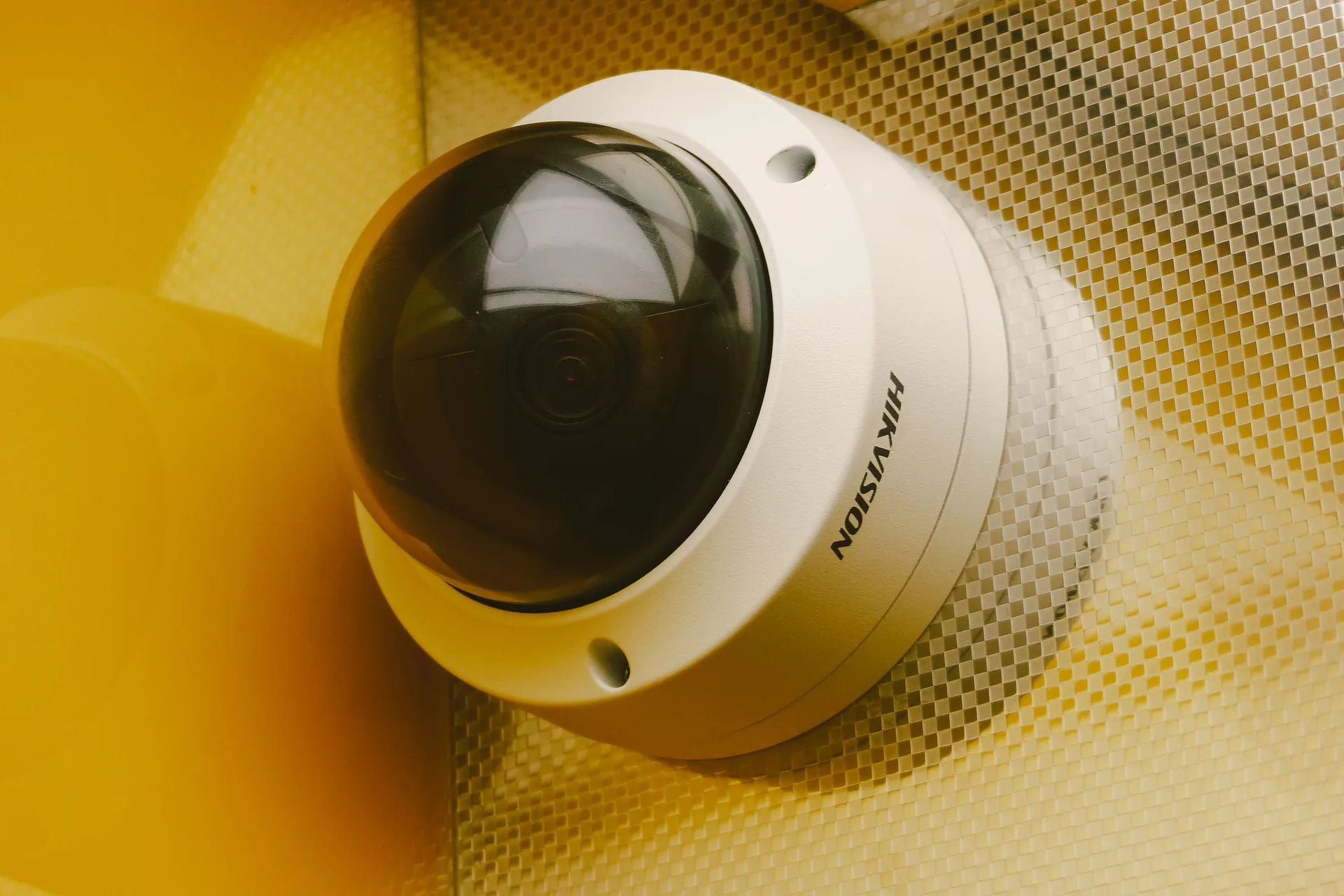
Evaluate the security layers systematically. A robust colocation facility implements security in concentric rings:
- Perimeter: Fencing, barriers, and vehicle access control
- Building: Mantraps at entry points, CCTV with retention policies (typically 90 days minimum), security personnel
- Data hall: Biometric or card-based access restricted to authorised personnel, CCTV covering every row
- Rack level: Individual rack locks (you provide your own padlock), cage options for larger deployments
For financial institutions and government agencies, physical security is a formal procurement requirement aligned with CBK guidelines or other regulatory frameworks. Request the facility's security policy documentation and incident response procedures as part of your evaluation.
Support and remote hands
Remote hands service (the provider's on-site staff performing physical tasks on your equipment at your direction) is essential for organisations that do not maintain permanent staff at the facility. Clarify the scope of remote hands (is it included in the base price or billed hourly?), response times, and the technical competency of the on-site team. Tasks like server reboots, cable management, and hardware replacement should be routine for the provider's staff.
Scalability and contract flexibility
Review the provider's capacity roadmap. Can they accommodate your growth over the next 3–5 years without requiring you to move? Understand the contract terms: minimum commitment periods, notice periods for expansion or contraction, and exit clauses. Avoid long lock-in contracts unless the pricing and terms are significantly favourable.
Compliance and audits
If your organisation is subject to regulatory requirements (PCI-DSS for payment processors, CBK guidelines for banks, ISO 27001 for general information security), confirm that the facility supports your compliance needs. This may include providing audit reports, supporting physical access logs, and maintaining their own compliance certifications.
Location and accessibility
Most Kenyan colocation facilities are concentrated along Mombasa Road in Nairobi's Industrial Area and surrounding zones. This location is not accidental, it sits on the primary fibre route from Mombasa and offers proximity to other technology infrastructure. However, the Mombasa Road corridor is also prone to traffic congestion and, in some sections, flooding during heavy rains.
Consider how your team will reach the facility. If your engineers need to visit regularly for hardware installation or maintenance, a facility 45 minutes from your office versus 15 minutes has real operational implications. Evaluate road access during peak hours and in adverse weather. Some facilities offer shuttle services or are located in business parks with better access infrastructure.
For organisations with staff based outside Nairobi, confirm whether the provider offers remote hands services that can handle routine physical tasks without requiring your presence.
Common Mistakes When Choosing Colocation
Organisations new to colocation often make avoidable errors that prove costly over the life of the contract.
Underestimating power requirements. Servers are becoming more power-dense. A rack that fits 20 servers today may draw 8–10 kW, exceeding the standard allocation. Plan for your next hardware refresh, not just your current deployment.
Ignoring cross-connect costs. The rack price is only part of the total cost. Each network connection, cloud on-ramp, and peering arrangement carries its own fees. A deployment requiring connections to five ISPs, two cloud providers, and the KIXP can accumulate significant cross-connect charges.
Choosing a non-carrier-neutral facility. Locking into a single provider's connectivity limits your negotiating leverage and makes it difficult to switch providers or adopt hybrid architectures. Always confirm carrier neutrality before signing.
Not conducting a physical site visit. Photographs and specifications do not tell the full story. Visit the facility. Inspect the cable management, check the data hall temperature, review the visitor access process, and talk to the on-site engineers. The condition of the facility tells you as much about the operator as their marketing materials.
Signing overly long contracts without exit provisions. Technology needs change. Business requirements shift. Mergers, acquisitions, and technology transitions can dramatically alter your infrastructure needs. A three-year contract with no flexibility to reduce space or exit early can become a liability. Ensure your contract includes reasonable expansion, contraction, and termination provisions.
Failing to plan for hardware refreshes. Servers typically have a 3–5 year lifecycle. When you replace them, you need to decommission old equipment, install new equipment, and potentially reconfigure cabling and power. Discuss hardware refresh procedures with your provider upfront. Some facilities offer staging areas where you can build and test new configurations before cutting over.
The Role of Colocation in Kenya's Digital Economy
Kenya's position as a regional technology hub depends on reliable digital infrastructure. Colocation facilities are a foundational layer of this infrastructure. They host the servers that run Kenya's banking systems, mobile money platforms, e-government services, and enterprise applications. Without colocation, many of these systems would either run in inadequate private facilities or be hosted offshore, undermining data sovereignty and increasing latency for local users.
The licensing framework for data centres in Kenya is evolving to address the growing importance of these facilities. Organisations selecting a colocation provider should verify that the operator holds all required licences from the Communications Authority of Kenya and relevant county government approvals.
The growing demand for colocation reflects broader trends. Kenya's fintech sector continues to expand, with mobile lending platforms, payment gateways, and digital banking services all requiring local server infrastructure. The government's push for digital services creates demand for secure, compliant hosting environments. Kenya's power infrastructure, while improving, still makes self-generation and backup power a necessity, colocation providers absorb this complexity and cost.
The arrival of hyperscale cloud providers in Nairobi (through on-ramps at colocation facilities) creates new hybrid deployment models where organisations use colocation for core systems and cloud for burst capacity. This hybrid approach is becoming the default architecture for mid-to-large enterprises in Kenya: keep regulated and high-performance workloads on owned hardware in colocation, and use cloud for development, testing, and variable workloads.
The data centre tier ratings that define facility reliability are directly relevant to colocation selection. Organisations evaluating colocation providers should understand what each tier guarantees and why it matters for their specific workloads.
Kenya's colocation market will continue to grow as more organisations recognise that owning servers does not require owning the building that houses them. The Kenya data centre directory provides a comprehensive listing of facilities and providers to support your evaluation. For most Kenyan enterprises, the question is not whether to use colocation, but which provider and which facility best matches their requirements for reliability, connectivity, scalability, and cost.