The 5G Revolution Arrives in Kenya
Kenya's telecommunications landscape entered a new era when Safaricom launched commercial 5G services in October 2022, making the country one of the first in Sub-Saharan Africa to roll out the next-generation wireless technology. The initial deployment covered strategic locations in Nairobi, Mombasa, and Kisumu, with the telco investing heavily in new base station infrastructure to support the technology. Airtel Kenya has also signalled ambitious 5G plans, positioning itself as a competitor in the race to connect Kenya's growing digital economy.
What many observers outside the infrastructure sector may not realise is that 5G is not just a network upgrade, it is a fundamental shift in how computing resources are distributed. The ultra-low latency and massive bandwidth that 5G promises cannot be delivered by the network alone. Behind every 5G cell tower, there is an growing need for data processing capacity that sits as close to the end user as physically possible. This is creating a significant and largely unrecognised surge in demand for data centre infrastructure across Kenya. (New to 5G itself? Start with our plain-language guide: what is 5G, from 1G to 6G, and why it matters in Kenya.)

The Communications Authority's 5G Spectrum Framework
The Communications Authority of Kenya (CA) has been developing a spectrum allocation framework specifically designed to support 5G deployment across the country. The framework addresses the allocation of mmWave and mid-band spectrum, which are essential for 5G's high-speed, low-latency performance.
According to the Communications Authority of Kenya, the regulatory body is working to balance the interests of existing 4G operators with new market entrants, while ensuring that spectrum pricing does not become a barrier to deployment in underserved areas. The CA's approach has been compared favourably to other African regulators, with a phased allocation model that ties spectrum licences to specific rollout obligations.
This regulatory clarity is crucial for the data centre industry because spectrum allocation directly determines where 5G infrastructure will be built, and consequently where edge computing capacity will be needed. Operators receiving spectrum in specific frequency bands will have technical requirements that dictate the density and placement of their base stations, and by extension, their MEC nodes.
Why 5G Drives Data Centre Demand
Multi-Access Edge Computing: The Core Driver
The single biggest factor linking 5G to data centre demand is Multi-Access Edge Computing (MEC). To understand why, consider the physics of 5G: the technology promises end-to-end latency as low as 1 millisecond. However, light travels through fibre at approximately 200 kilometres per millisecond. If a user in Nairobi has to round-trip data to a centralised data centre 50 kilometres away, the network alone consumes 0.5ms, and that is before any processing time, protocol overhead, or queuing delays are factored in.
MEC solves this problem by placing compute resources within 10-20 km of users. Each MEC node is functionally a small data centre, typically housing anywhere from 10 to 100 kW of IT load. For a nationwide 5G deployment, this translates into hundreds of new facilities that need power, cooling, security, and connectivity, the core requirements of any data centre.
This represents a paradigm shift for the edge computing ecosystem in East Africa. Traditionally, Kenya's data centre market has been concentrated in Nairobi and, to a lesser extent, Mombasa. 5G demands a distributed model where compute capacity follows population density and economic activity.
Increased Bandwidth and Cloud Demand
5G networks deliver significantly more bandwidth than their 4G predecessors. Safaricom's 5G network has demonstrated speeds exceeding 700 Mbps in test environments, compared to typical 4G speeds of 15-30 Mbps. This dramatic increase in available bandwidth changes user behaviour: people and businesses consume more data-hungry services, including high-definition video streaming, cloud gaming, and real-time analytics.
All of these services ultimately depend on backend infrastructure housed in data centres. As 5G drives higher data consumption, it creates proportional demand for cloud services, content delivery networks (CDNs), and the data centres that host them. The GSMA's 5G in Sub-Saharan Africa report projects that mobile data traffic in East Africa will grow by a factor of five between 2023 and 2030, with 5G being a primary catalyst.
IoT Backend Processing
Kenya's Internet of Things (IoT) ecosystem is expanding rapidly, driven by applications in agriculture, logistics, manufacturing, and utilities. 5G is designed to support up to one million connected devices per square kilometre, a massive increase over 4G's capabilities. Each of these devices generates data that needs to be collected, processed, stored, and analysed, all functions performed in data centres.
In Kenya's agricultural sector alone, IoT sensors for soil monitoring, precision irrigation, and livestock tracking could generate terabytes of data daily at scale. This data needs local processing to be actionable in real time, further reinforcing the need for edge data centre infrastructure.
Infrastructure Implications of 5G Edge Computing
Technical Requirements for MEC Nodes

Each MEC node in a 5G network has specific infrastructure requirements that distinguish it from both a traditional data centre and a simple cell tower:
- Power: 10-100 kW per node, requiring reliable grid connections and battery or generator backup
- Cooling: Precision cooling systems to maintain 18-27°C operating temperatures for IT equipment
- Fibre Backhaul: Dedicated high-capacity fibre optic networks connecting each node to core data centres and the wider internet
- Physical Space: 50-500 square metres depending on capacity, typically housed in purpose-built enclosures or small buildings
- Proximity: Located within 10-20 km of the users they serve to maintain sub-5ms latency
- Security: Physical security systems including access control, CCTV, and environmental monitoring
These requirements mean that every MEC node is, by definition, a data centre, albeit a small one. The capital expenditure for building a single 50 kW edge node in Kenya is estimated at KES 50-150 million, depending on location, existing infrastructure, and the level of redundancy required.
The Economic Model: Who Builds Edge Nodes?
The question of who finances and operates 5G edge data centres is one of the most significant strategic decisions facing Kenya's telecom and infrastructure sectors. Three models are emerging:
Telco-owned MEC: Safaricom and Airtel Kenya can build and operate their own edge computing infrastructure at cell tower sites. This gives them full control over performance and service quality but requires massive capital investment and operational expertise in data centre management.
Colocation at the edge: Established colocation providers like Africa Data Centres, PAIX (Pan-African Internet Exchange), and local operators can extend their footprint to edge locations, offering shared infrastructure that multiple tenants (including telcos, cloud providers, and enterprises) can use. This model offers better economics through multi-tenancy.
Neutral host infrastructure: Third-party companies build edge data centre facilities and lease capacity to multiple operators. This model, already common in mature 5G markets like the United States and South Korea, maximises infrastructure sharing and reduces redundant investment.
In Kenya, the colocation and neutral host models are likely to gain traction because they align with the country's push for infrastructure efficiency and the Communications Authority's open access principles.
5G Use Cases Driving Edge Demand in Kenya
Smart Agriculture

Agriculture contributes approximately 22% of Kenya's GDP and employs over 40% of the population. 5G-enabled IoT devices can transform this sector through precision agriculture: soil moisture sensors, drone-based crop monitoring, automated irrigation systems, and livestock health trackers. Each of these applications generates real-time data that requires local processing to deliver actionable insights to farmers.
Remote Healthcare
Kenya's healthcare system serves a population of over 50 million people, many in remote areas with limited medical infrastructure. 5G's low latency enables telemedicine applications including remote surgical consultations, real-time diagnostic imaging, and AI-assisted diagnosis. These applications require edge computing nodes in or near healthcare facilities to ensure reliable, low-latency connectivity.
Smart City Applications in Nairobi
Nairobi County has been pursuing smart city initiatives, including intelligent traffic management, public safety surveillance, waste management optimisation, and digital government services. 5G provides the connectivity layer, while edge data centres provide the compute layer. For example, real-time traffic analysis from hundreds of cameras across Nairobi requires significant processing power that must be located within the city to be effective.
Autonomous Vehicles and Logistics
While fully autonomous vehicles may still be years away in Kenya, the logistics sector is already adopting semi-autonomous systems including connected fleet management, automated warehouse operations, and drone delivery, particularly in areas with challenging road infrastructure. These systems depend on ultra-reliable, low-latency communication (URLLC), which is a core 5G capability that requires edge computing support.
Projecting the Scale: How Many Edge Nodes Will Kenya Need?
Estimating the number of MEC nodes required for Kenya's 5G rollout requires benchmarking against more mature markets and adjusting for local conditions:
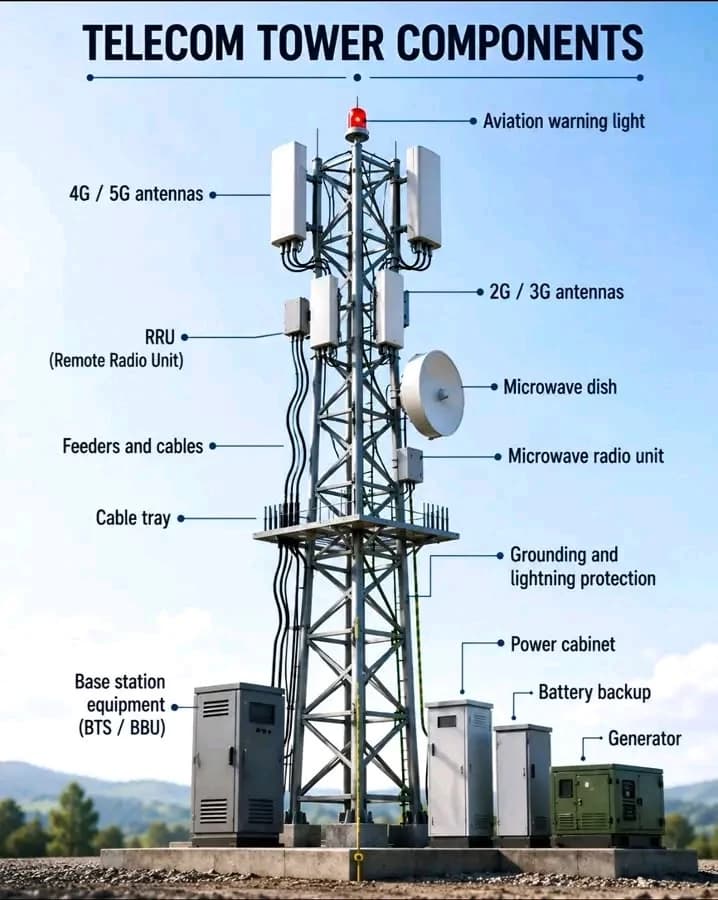
South Korea, one of the world's most advanced 5G markets with a population of 52 million, has deployed an estimated 1,500-2,000 edge computing nodes to support its nationwide 5G network. The United States, with its vast geography, has seen major operators like Verizon and AT&T deploy edge nodes in over 100 cities, with thousands of nodes planned.
For Kenya, a reasonable projection accounts for:
- Population of approximately 55 million
- High urbanisation rate (28% living in urban areas, but growing)
- Initial 5G focus on major cities (Nairobi, Mombasa, Kisumu, Nakuru, Eldoret)
- Rural 5G deployment expected from 2027 onwards
Based on these factors, Kenya will likely need between 500 and 2,000 MEC edge nodes for meaningful nationwide 5G coverage. Even the lower end of this range represents a massive expansion of Kenya's data centre footprint, which currently consists of approximately 20-30 significant facilities.
The Interplay Between 5G Edge and Centralised Data Centres
It is important to understand that edge data centres do not replace centralised facilities, they complement them. The architecture that 5G demands is hierarchical:
- MEC edge nodes (10-100 kW): Handle real-time, latency-sensitive processing within 10-20 km of users
- Regional data centres (1-10 MW): Aggregate and process data from multiple edge nodes, host larger applications and databases
- Core data centres (10+ MW): Provide the primary compute, storage, and cloud services that underpin the entire ecosystem
Nairobi will remain the natural location for Kenya's core data centres, given the city's role as the country's economic and telecommunications hub. However, the growth of edge nodes creates a new tier of demand that extends far beyond the capital. This is why the Kenya data centre market outlook projects significant growth in both centralised and edge facility capacity over the next five years.
Revenue Opportunities for Data Centre Operators
The 5G-driven expansion of Kenya's data centre infrastructure creates multiple revenue streams for operators:
- Edge colocation: Leasing space, power, and cooling in MEC nodes to telcos, cloud providers, and enterprises
- Managed edge services: Operating edge computing infrastructure on behalf of customers who lack the expertise
- Interconnection: Providing fibre connectivity between edge nodes, regional facilities, and core data centres
- Hybrid cloud services: Enabling seamless workloads distribution between edge and core facilities
For existing data centre operators in Nairobi, the 5G opportunity represents both a threat and an opportunity. Those who extend their footprint to the edge will capture new revenue; those who remain centralised risk losing customers who require distributed infrastructure.
Conclusion
Kenya's 5G rollout is not merely a telecommunications upgrade, it is a catalyst for a fundamental transformation of the country's data centre landscape. The demands of Multi-Access Edge Computing, driven by ultra-low latency requirements, will necessitate the construction of hundreds of new edge data centre facilities across the country. Combined with increased bandwidth consumption and the explosion of IoT devices, 5G is poised to make Kenya one of Africa's most dynamic data centre markets.
For infrastructure investors, colocation operators, and technology companies, the message is clear: the 5G edge opportunity in Kenya is real, quantifiable, and approaching fast. Those who position themselves now (whether through strategic partnerships, infrastructure investment, or regulatory engagement) will be best placed to capture the value that 5G and edge computing will create.
Frequently Asked Questions
How does 5G increase data centre demand in Kenya?
5G's ultra-low latency (as low as 1ms) and massive bandwidth require compute resources to be placed close to end users through Multi-Access Edge Computing (MEC) nodes. Each MEC node is essentially a small data centre consuming 10-100 kW, creating hundreds of new facilities needed nationwide. Additionally, 5G drives cloud adoption, IoT backend processing, and content delivery demand, all of which require expanded centralised data centre capacity.
Where has Safaricom launched 5G in Kenya so far?
Safaricom launched commercial 5G services in October 2022, initially covering parts of Nairobi (Westlands, CBD, Kilimani, and surrounding areas), Mombasa, and Kisumu. The rollout has since expanded to additional counties including Nakuru, Uasin Gishu, and Kakamega, with plans for nationwide coverage as spectrum allocation and infrastructure investment continue.
What is Multi-Access Edge Computing (MEC) and why does it matter for data centres?
MEC places compute, storage, and networking resources at the edge of the network, typically within 10-20 km of end users. For 5G to deliver its promised 1ms latency, processing cannot happen in distant centralised data centres. MEC nodes are essentially micro data centres co-located with or near 5G base stations, each requiring 10-100 kW of power, dedicated cooling, and fibre backhaul connectivity.
Who will build and operate 5G edge data centres in Kenya?
Three models are emerging: telcos like Safaricom and Airtel building their own MEC infrastructure at cell tower sites; colocation providers like Africa Data Centres and PAIX extending to edge facilities; and neutral host companies that build shared edge infrastructure leased to multiple operators. The colocation and neutral host models are likely to dominate as they offer economies of scale and multi-tenant flexibility.
How many edge nodes will Kenya need for nationwide 5G coverage?
Based on Safaricom's existing base station footprint and projected 5G densification, estimates suggest Kenya will need between 500 and 2,000 MEC edge nodes for meaningful nationwide coverage. This projection draws from benchmarks in South Korea, which deployed approximately 1,500 edge nodes for a comparable population density, adjusted for Kenya's urban-rural distribution and lower initial 5G penetration.