
Every millisecond matters more than it used to. A decade ago, a 200-millisecond delay between a user in Mombasa and a server in Nairobi was acceptable for almost every application. Today, applications like autonomous vehicles, real-time video analytics, augmented reality, remote surgery, and industrial automation require responses in under 10 milliseconds, delays that are physically impossible to achieve over a 500-kilometre round trip to a Nairobi data centre. This is the problem that edge computing solves, and it is a problem that is becoming increasingly relevant in East Africa.
Edge computing is the practice of placing data processing capabilities closer to where data is generated and consumed, rather than routing all data to centralised facilities. The concept is not new, content delivery networks (CDNs) have been doing a form of edge computing for two decades by caching web content in servers distributed around the world. What is new is the range of applications that now require edge capabilities, the sophistication of the computing hardware that can be deployed at the edge, and the economic case for building edge infrastructure in emerging markets like East Africa.
Why Edge Computing Matters Now
Three technological shifts are driving edge computing from a niche concept to a mainstream infrastructure requirement.
5G Networks
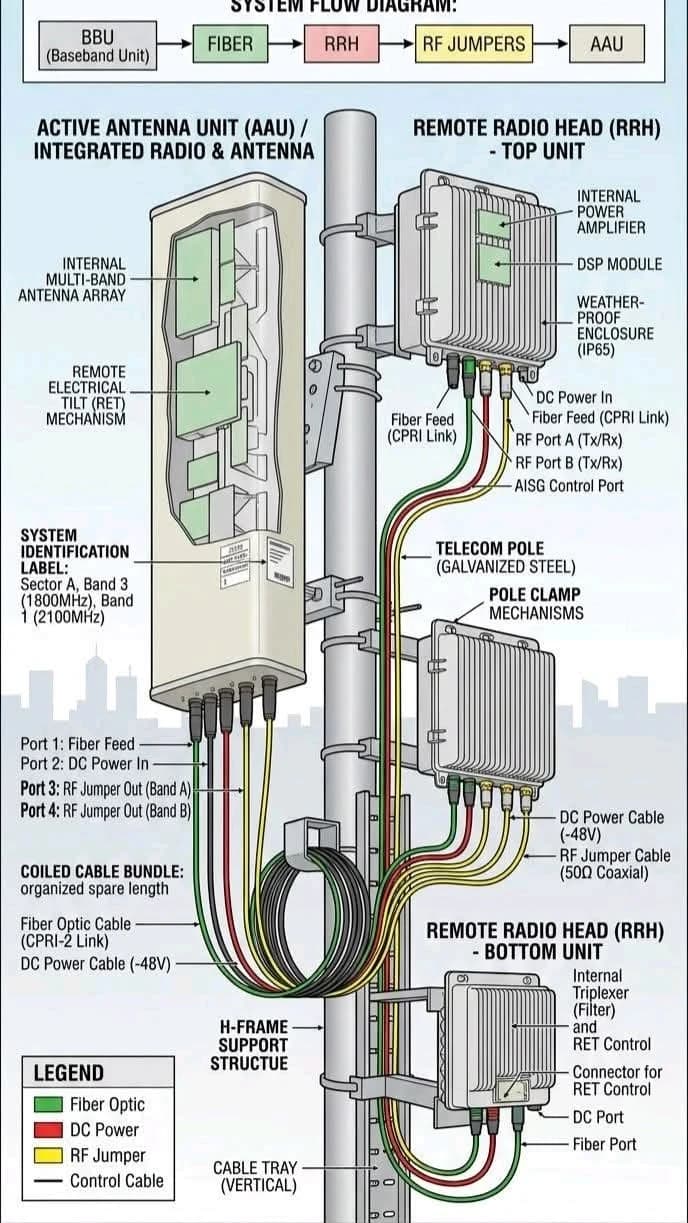
5G networks, being deployed by Safaricom and Airtel across Kenya, are designed with edge computing built in. The 5G standard (specifically the Multi-Access Edge Computing or MEC framework) allows computing resources to be placed at or near the base station, enabling ultra-low-latency applications that would not be possible if traffic had to travel back to a central data centre. Every 5G base station is, in effect, a potential edge computing node.
For Safaricom, which is Kenya's largest 5G operator, this creates both an opportunity and a requirement. The operator is already deploying edge computing resources at selected 5G sites to support enterprise applications, and this capability will expand as 5G coverage grows. For data centre operators, 5G edge computing represents a new type of customer (the telecom operators themselves) and a new model for distributed infrastructure.
Internet of Things (IoT)
IoT devices (sensors, cameras, industrial controllers, connected vehicles) generate enormous volumes of data that often needs to be processed in real time. A smart traffic management system in Nairobi cannot wait 200 milliseconds for camera footage to travel to a data centre and back before deciding whether to change a traffic light. An industrial automation system at a manufacturing plant in Thika cannot tolerate latency when a safety system needs to trigger an emergency stop.

IoT drives edge computing because it creates data at the periphery of the network, in locations that may be far from traditional data centres, and it often requires real-time processing of that data. Edge computing places the processing where the data is, reducing latency, reducing bandwidth costs (by processing data locally and only sending summaries or alerts to the central facility), and improving reliability (by continuing to function even if the connection to the central data centre is interrupted).
AI at the Edge
Artificial intelligence is moving to the edge. Rather than sending all data to a central facility for AI processing, increasingly capable AI models are being deployed on edge devices, cameras that can detect anomalies locally, sensors that can predict failures without cloud connectivity, and smartphones that run language models on-device. This trend reduces latency, improves privacy (data does not leave the device), and reduces bandwidth costs.
In the Kenyan context, edge AI has particularly compelling applications. Agricultural sensors can run crop disease detection models locally without requiring internet connectivity. Security cameras at remote facilities can perform person detection and alert generation without sending video feeds to Nairobi. Mobile money systems can perform real-time fraud detection at the edge, reducing the round-trip to central fraud detection systems.
Edge Computing in East Africa: Current State
Edge computing in East Africa is in its early stages, with most deployments driven by specific use cases rather than general-purpose infrastructure.
Content Delivery Edge
The most established form of edge computing in East Africa is content delivery. CDN providers like Cloudflare, Akamai, and Google have caching nodes in Nairobi and Mombasa (and sometimes in other East African cities) that store copies of popular web content, video, and software updates. When a user in Dar es Salaam requests a YouTube video, the video is served from a local cache rather than from Google's servers in South Africa or Europe, dramatically reducing latency and improving the user experience.
These CDN nodes are technically edge computing infrastructure, they process and serve data at the edge of the network. However, they are specialised for content delivery and cannot run general-purpose computing workloads. They represent the first wave of edge infrastructure, and they demonstrate that the economic model for distributed computing in East Africa works.
Telecom Edge
Safaricom's 5G deployment is driving the second wave of edge computing. 5G base stations in Nairobi, Mombasa, and other major towns are being equipped with computing resources that can handle latency-sensitive applications. These resources are primarily used for Safaricom's own network functions (mobile core processing, video optimization) and for enterprise customers who contract for edge computing services.

Enterprise Edge
The third wave (enterprise-owned or enterprise-leased edge computing facilities) is still emerging. A bank might place a small computing facility in Mombasa to process coastal branch transactions locally. A logistics company might place edge computing at the port of Mombasa to process container tracking and customs documentation in real time. A manufacturing company might place edge computing at its factory in Athi River to run industrial automation systems.
These enterprise edge deployments are typically small, a rack or two of equipment in a dedicated room, a shelter, or even a containerised data centre. They connect to the organisation's central systems in Nairobi (or to cloud services) via fibre or microwave links, sending processed data and receiving updates and configuration changes.
Edge Computing Form Factors
Edge computing facilities come in various form factors, each suited to different deployment scenarios.
Micro Data Centres
A micro data centre is a self-contained computing unit, typically a rack or half-rack of equipment housed in a secure, weatherproof enclosure with integrated power, cooling, and connectivity. Micro data centres can be deployed outdoors, in locations where a traditional data centre room is not available or practical. They are used for edge computing at cell towers, industrial sites, and remote offices.
Containerised Data Centres
Shipping containers converted into data centres have been used by the military and oil and gas industry for years. In the East African context, containerised data centres offer a way to deploy computing capacity quickly in locations where building a traditional facility would take years. A 40-foot container can house 10–20 racks of equipment with integrated power and cooling, and can be deployed on a concrete pad in a matter of weeks.
Colocation Edge
Some colocation providers are developing smaller facilities specifically designed for edge computing, facilities of 100–500kW in secondary cities that serve as regional hubs for distributed computing. In Kenya, this could mean small colocation facilities in Mombasa, Kisumu, Nakuru, or Eldoret that provide professional data centre infrastructure (redundant power, cooling, security, connectivity) at a scale appropriate for edge workloads.
Challenges Specific to East Africa
Edge computing in East Africa faces challenges that differ from those in mature markets.
Power Reliability

The most significant challenge is power reliability. Edge sites are often in locations where grid power is less reliable than in Nairobi's industrial zones. A micro data centre at a cell tower in a rural area may depend on a single power source, with battery and generator backup adding cost and complexity. Power reliability is the primary factor that determines whether an edge deployment is practical at a given location.
Physical Security
Small computing facilities in remote or less secure locations are vulnerable to theft, vandalism, and unauthorised access. Securing a containerised data centre at a remote site is more difficult and more expensive per rack than securing a large, staffed facility in Nairobi. Innovative approaches (solar-powered surveillance cameras, remote monitoring, and rapid-response security partnerships with local police) are being developed to address this challenge.
Connectivity
Edge sites need reliable, high-bandwidth connectivity to central data centres and to each other. While fibre connectivity is expanding across Kenya through NOFBI and operator investments, many potential edge locations still depend on microwave links, which have lower bandwidth, higher latency, and are more vulnerable to weather disruption than fibre.
Skills and Operations
Who maintains an edge computing site in Kisumu or Mombasa? The skills required (network engineering, server management, power systems maintenance) are concentrated in Nairobi. Edge computing requires either decentralising these skills (hiring and training local technicians) or developing remote management capabilities that allow centralised teams to monitor and manage distributed edge sites.
The Outlook
Edge computing in East Africa will grow, driven by 5G deployment, IoT adoption, and the increasing need for real-time processing. The timeline is measured in years, not months, the infrastructure, skills, and business models are still developing. But the direction is clear: the future of computing in East Africa is not just centralised data centres in Nairobi, but a distributed architecture where processing happens where it is needed, at the edge of the network, close to users and data sources.
For Kenya, edge computing extends the country's digital infrastructure influence beyond Nairobi. If Kenyan operators build edge infrastructure in Mombasa, Kisumu, and other towns (and if these edge nodes connect back to Nairobi's central data centres via the expanding fibre network) Kenya's data centre industry becomes a national infrastructure platform rather than a Nairobi-specific one. This is the long-term vision, and edge computing is how it becomes reality.
Latency is the reason edge matters, and our guide to reducing cloud latency for users in Kenya shows how CDNs, the AWS Local Zone in Nairobi and local hosting shorten the round trip in practice.