
A Kenyan shop launches its online store. The design is sharp, the photos are light, the internet bundle is generous. Yet every tap takes a beat too long, and customers quietly drift away. The usual suspect is not the design or the bandwidth. It is distance: the server answering those taps sits in Europe or America, and every single click has to cross the equator, the Indian Ocean and back before anything happens on screen.
This guide explains what latency is, why it punishes Kenyan apps hosted abroad, and the practical fixes available in 2026, from CDNs with Nairobi presence to an AWS Local Zone in the city and good old local hosting. Every technical term is unpacked in plain language as we go, because you should not need a networking degree to make an app feel fast.
Latency, explained like a road trip
Latency is the time a small piece of data takes to travel from a user's device to a server and back. It is measured in milliseconds (a millisecond is one thousandth of a second, so these are genuinely tiny numbers that add up fast).
The key idea is the round trip. When a user taps a button, the phone sends a request to the server, the server thinks, and an answer comes back. That full there-and-back journey is what latency measures, the way you would time a motorbike sent to the shop and back. The motorbike is fast; the road is long.
What decides the length of the road? Two things. First, physical distance: data in fibre optic cables moves at roughly two-thirds the speed of light, so thousands of kilometres simply cost time no engineer can delete. Second, hops: data passes through routers and switches (think of them as junctions) on the way, and every junction adds a small pause. Nairobi to London crosses tens of junctions and a submarine cable. Nairobi to Nairobi crosses a handful of junctions in one city.
This is why fast internet and fast apps are not the same thing. Bandwidth, the number people see in internet adverts, is how much data can move at once, the width of the road. Latency is how long one round trip takes, the length of the road. Widen the road all you like; if the destination is far away, every trip still takes its time. Our guide to Kenya internet speeds and what they mean covers that distinction in more depth.
Why Kenyan apps hosted abroad feel slow
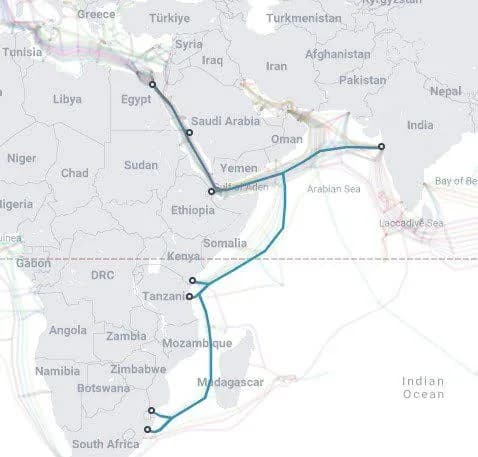
When your server sits in Europe, every user action pays the distance tax again and again. Modern apps do not make one trip per page; they make dozens. Load the page, fetch the images, check the login, query the database, send the analytics. If each round trip costs, say, 150 milliseconds, thirty of them stack up into seconds of pure waiting, even on a full-bar fibre connection. That is the "international latency" feeling Kenyan users know too well.
Three structural facts shape this in Kenya. One, our international traffic rides on submarine cables that land in Mombasa, which is excellent, but the destination still matters more than the pipe. Two, the local half of the journey is in good shape: fibre has pushed deep into Nairobi, so trips inside the city are short and quick. Three, the fixes have finally arrived locally: content delivery networks keep copies of your files in Nairobi, and cloud infrastructure now exists in the city itself.
Fix one: put copies of your content in Nairobi (a CDN)
A CDN, short for content delivery network, is a company with buildings full of servers in hundreds of cities. You point your website at the CDN, and it keeps copies of your static files (images, videos, style sheets, scripts) in cities near your users. Those stored copies are called a cache, and the buildings are called edge locations, edge because they sit at the edge of the network, close to users rather than close to your main server.
The savings are direct. If your images load from Nairobi instead of Frankfurt, the user's phone collects them in a few milliseconds instead of a long round trip. Only the first user in a city pays the full journey; everyone after that gets the local copy. For most Kenyan websites, a CDN is the cheapest, fastest latency win available, and it does not require moving your application at all.
The Kenyan edge map is real now. CDNPlanet's Kenya listings (fetched 16 September 2026) show Cloudflare with points of presence in Nairobi and Mombasa, Amazon CloudFront with an edge location in Nairobi, EdgeNext in Nairobi, and CDNetworks around Nairobi and Kiambu. Cloudflare's own blog records adding Nairobi to its network back in June 2021. What that means in practice: the big global CDNs can serve your Kenyan users from inside Kenya today, and switching one on is usually a settings change, not a rebuild.

Fix two: run the app itself closer (Local Zones and local hosting)
A CDN accelerates files, but the application still thinks wherever its server lives. For apps where every millisecond counts (chat, gaming, trading tools, anything with a database in the loop), the fix is to run the application close to the user. Two roads lead there from Kenya.
The first is an edge cloud. AWS defines Local Zones as small outposts that extend a cloud region into a metro city, running core services like compute, storage and databases near users, with a design goal of single-digit millisecond latency (AWS, 2020). AWS announced Nairobi among 32 new Local Zone metros in February 2022 (Business Wire, 16 February 2022; Data Center Dynamics, 17 February 2022), and its official locations page lists the Nairobi, Kenya Zone today, attached to the Africa (Cape Town) region as its parent (fetched 16 September 2026). In plain terms: part of AWS now sits in Nairobi, close enough for the snappy round trips that used to require hosting in Europe. If your workloads already run on AWS, this is the road of least change. There is also a private pipe option: in September 2025 AWS opened a Direct Connect location inside East African Data Centres NBO1 near Nairobi (AWS announcement, 3 September 2025). Direct Connect is AWS's dedicated private link between your own equipment and AWS, bypassing the public internet entirely, which buys predictable latency and bandwidth for hybrid setups where part of the workload sits in Kenya and the rest in a full AWS region.
The second road is Kenyan hosting outright: rent a VPS in a Nairobi data centre, or place your own servers in one. A VPS (virtual private server) is a slice of a machine you rent monthly, and our guide to VPS hosting in Kenya paid with M-Pesa lists verified local providers. Hosting fully inside Nairobi keeps the entire round trip local, and it pairs naturally with peering and interconnection in Kenya, where networks exchange traffic directly inside the same buildings instead of detouring abroad. This is the deeper story of edge computing in East Africa: compute moving toward users, one facility at a time.
Measure first, then fix
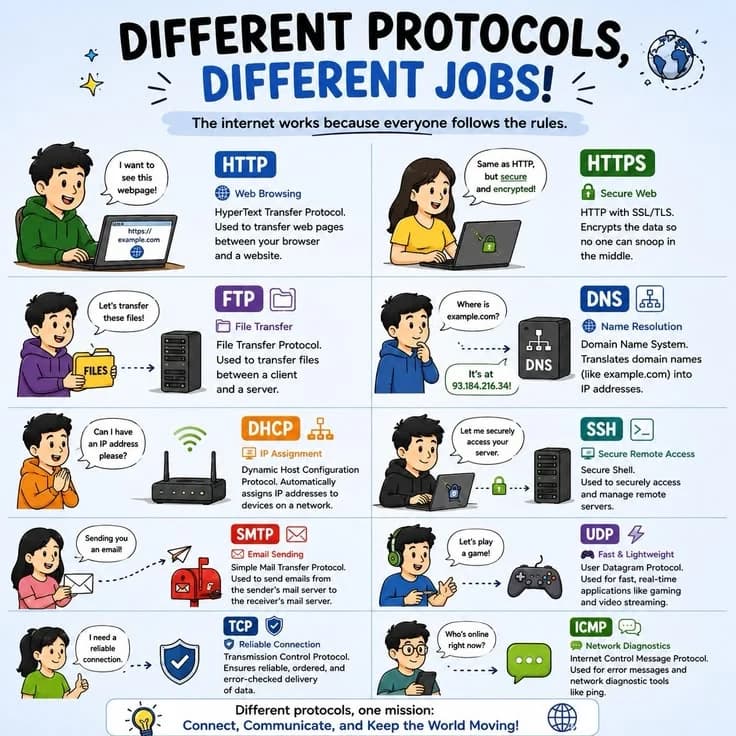
Before spending money, spend ten minutes finding out where the delay actually lives. Three free tools do this, and all of them run from a laptop or even a phone app.
Ping sends one tiny packet to a server and times the round trip. It answers the basic question: how long is the road? Run it against your current server from a Kenyan connection and write the number down.
Traceroute lists every hop between you and the server, one line per router, with the time each hop took. It answers where the delay appears: inside Kenya, at the submarine cable landing, or at the destination's door. Sudden jumps tell you which leg of the journey is the expensive one.
MTR (a blend of the two, short for my traceroute) runs continuously and sums the pattern, which exposes the hop that is consistently slow rather than occasionally busy.
The comparison that matters: ping your European server, then ping a Nairobi edge location or a local VPS. The gap between those two numbers is exactly what edge hosting buys you. If your users complain about slowness and the numbers show a long international round trip, you have your answer in writing.
A practical order of attack
For most Kenyan teams, the cheapest wins come first. Switch on a CDN with Nairobi presence and let it cache your images and files; this alone can transform perceived speed, and it usually costs little more than the bandwidth you already pay for. Second, move anything genuinely latency-sensitive closer, either onto the Nairobi Local Zone if you are already on AWS, or onto a local VPS or colocation slot if you are not. Third, trim the round trips themselves: fewer redirects, fewer third-party scripts, database queries that need one trip instead of ten. Distance is the tax you cannot repeal; the number of trips is the tax you control.
Latency used to be an unsolvable tax for Kenyan builders, a price of geography. In 2026 it is a design choice: cache in Nairobi, host in Nairobi where it counts, and measure the difference. The ocean is still far away, but the edge is no longer.
Frequently asked questions
What is latency in simple terms?
Latency is the time it takes for a small piece of data to travel from a user's device to a server and back again. It is measured in milliseconds (thousandths of a second), and it is mostly decided by distance and the number of network devices the data passes through. A round trip from Nairobi to a server in Europe crosses thousands of kilometres plus submarine cables, so it collects far more delay than a trip to a server in Nairobi.
Why does my app feel slow in Kenya even with fast internet?
Because bandwidth and latency are different things. Bandwidth is how much data can move at once, like the width of a pipe. Latency is how long each round trip takes, like the length of the pipe. A fast fibre connection can still feel sluggish if every tap has to travel to a server in Europe and back before anything happens on screen. The fix is to shorten the trip, not just buy more bandwidth.
Does AWS have servers in Kenya?
AWS lists a Local Zone in Nairobi on its official Local Zones locations page (fetched 16 September 2026), with Cape Town as the parent region. A Local Zone is a small AWS outpost in a metro city that runs core services like compute and storage close to users, with a design goal of single-digit millisecond latency. AWS announced Nairobi among 32 new Local Zone metros in February 2022. Since September 2025 there is also an AWS Direct Connect location inside East African Data Centres NBO1 near Nairobi, a private network pipe straight into AWS. For bigger workloads, the nearest full AWS regions remain outside Kenya, so many teams mix Local Zones, Direct Connect or local hosts with a main region.
What is a CDN and does it help in Kenya?
A CDN (content delivery network) is a company that keeps copies of your static files, images, videos and pages, in many cities at once. Those copies are called a cache, and the buildings they sit in are edge locations. When a Kenyan user opens your site, the files come from Nairobi instead of Europe, which saves the whole long round trip. CDNPlanet lists Cloudflare with points of presence in Nairobi and Mombasa, Amazon CloudFront in Nairobi, EdgeNext in Nairobi and CDNetworks around Nairobi and Kiambu (fetched 16 September 2026), so yes, CDNs now have real Kenyan presence.
How can I measure my own latency?
Three free tools cover it. Ping sends one small packet to a server and reports the round-trip time in milliseconds. Traceroute lists every hop, every router, between you and the server, so you can see where delay appears. MTR combines both and keeps running, which makes patterns obvious. Run them from Kenya against your server, then against a Nairobi edge or a local VPS, and compare the numbers. The difference is what edge hosting would save you.