Airtel Kenya has paid $65 million (about KSh 8.4 billion) for 100 MHz of spectrum in the 3500 MHz band, securing the frequencies on a 25-year licence approved by the Communications Authority of Kenya. Parent company Airtel Africa disclosed the purchase in its half-year results published on 30 October 2026. On its own, that is a telecom story. It becomes a data centre story because of what sits inside the same capital spending cycle: Nxtra by Airtel Africa, the group's data centre arm, is building a 44 MW hyperscale facility at Tatu City near Nairobi, and every dollar spent on 5G capacity is a bet on traffic that eventually has to land in a facility like it.
What Airtel Actually Bought
The numbers are straightforward, and they are bigger than a routine licence renewal.
| Item | Detail |
|---|---|
| Spectrum | 100 MHz in the 3500 MHz band, the mid-band carriers use for 5G |
| Price | $65 million, about KSh 8.4 billion |
| Term | 25-year licence |
| Approval | Communications Authority of Kenya, subject to standard conditions |
| Disclosed | Airtel Africa half-year results for the period ended 30 September 2026, published 30 October 2026 |
| Kenya spectrum spend since July 2022 | $105 million, including an earlier $40 million for 60 MHz at 2600 MHz |
Spectrum is the invisible raw material of a mobile network: the licensed radio frequencies a carrier transmits on. More spectrum at 3500 MHz means each Airtel 5G site can carry far more traffic, which is what makes 5G faster than 4G in practice. Airtel has not disclosed a rollout timetable or the infrastructure spending attached to the new spectrum yet, and that gap matters for judging the demand signal, a point this piece returns to below.
Why Spectrum Spending Shows Up in Data Centre Demand
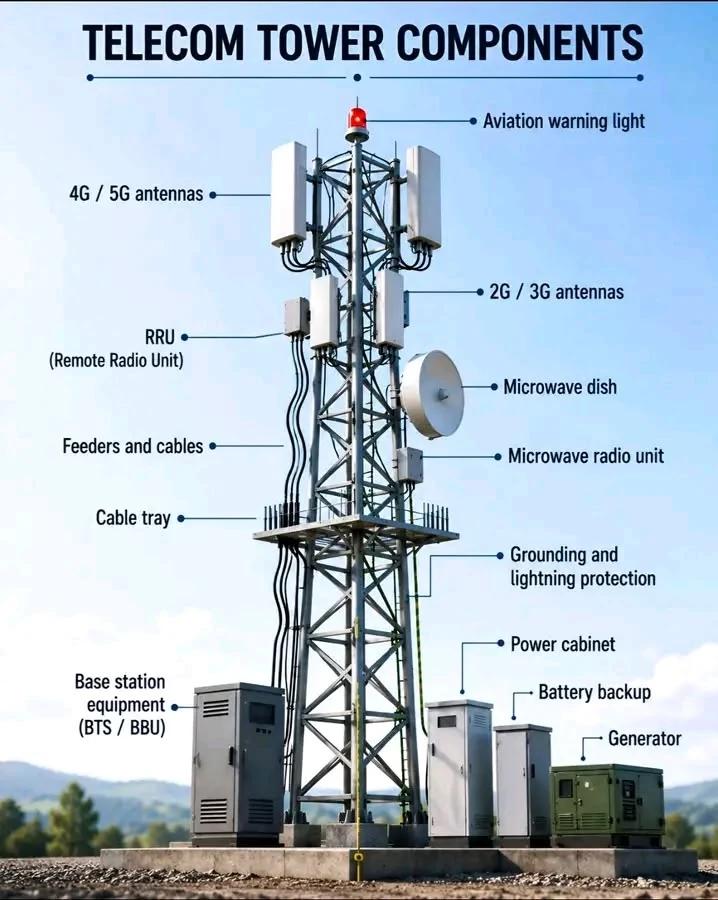
The mechanism runs in four steps. First, new spectrum raises the capacity of each 5G site. Second, operators densify: more sites, each feeding more traffic into backhaul networks that ride terrestrial fibre from the regions toward Nairobi, where Kenya's international bandwidth arrives from the coast. Third, 5G services multiply: fixed wireless home broadband, enterprise connectivity and latency-sensitive applications all ride the same frequencies. Fourth, that traffic concentrates on hosting: core networks, content caches, enterprise cloud workloads and the edge computing nodes that 5G architectures assume. How 5G networks drive data centre demand in Kenya is the long-form version of that chain.

The Kenyan demand numbers behind the purchase make the bet legible. According to Communications Authority figures, Kenya's 5G subscriptions rose 68.6% year on year to 2.1 million in June 2026, and average data consumption per 5G subscription reached 64.4 GB in the April to June quarter, more than four times the 15.8 GB recorded on 4G. The base is still small against 48.3 million 4G subscriptions, which is precisely why operators are buying capacity now: the growth headroom is the point.
There is also a competitive edge to the spending. Airtel controlled 31.9% of Kenya's mobile broadband subscriptions at the end of June 2026, against Safaricom's 64.6%. A challenger carrying a third of the market does not spend $105 million on Kenyan spectrum since July 2022 to stand still. Capacity is how the gap gets contested, first on the network and then in the home broadband and enterprise accounts that generate the steadiest hosting demand.
Nxtra's Tatu City Build Is the Concrete Half of the Story
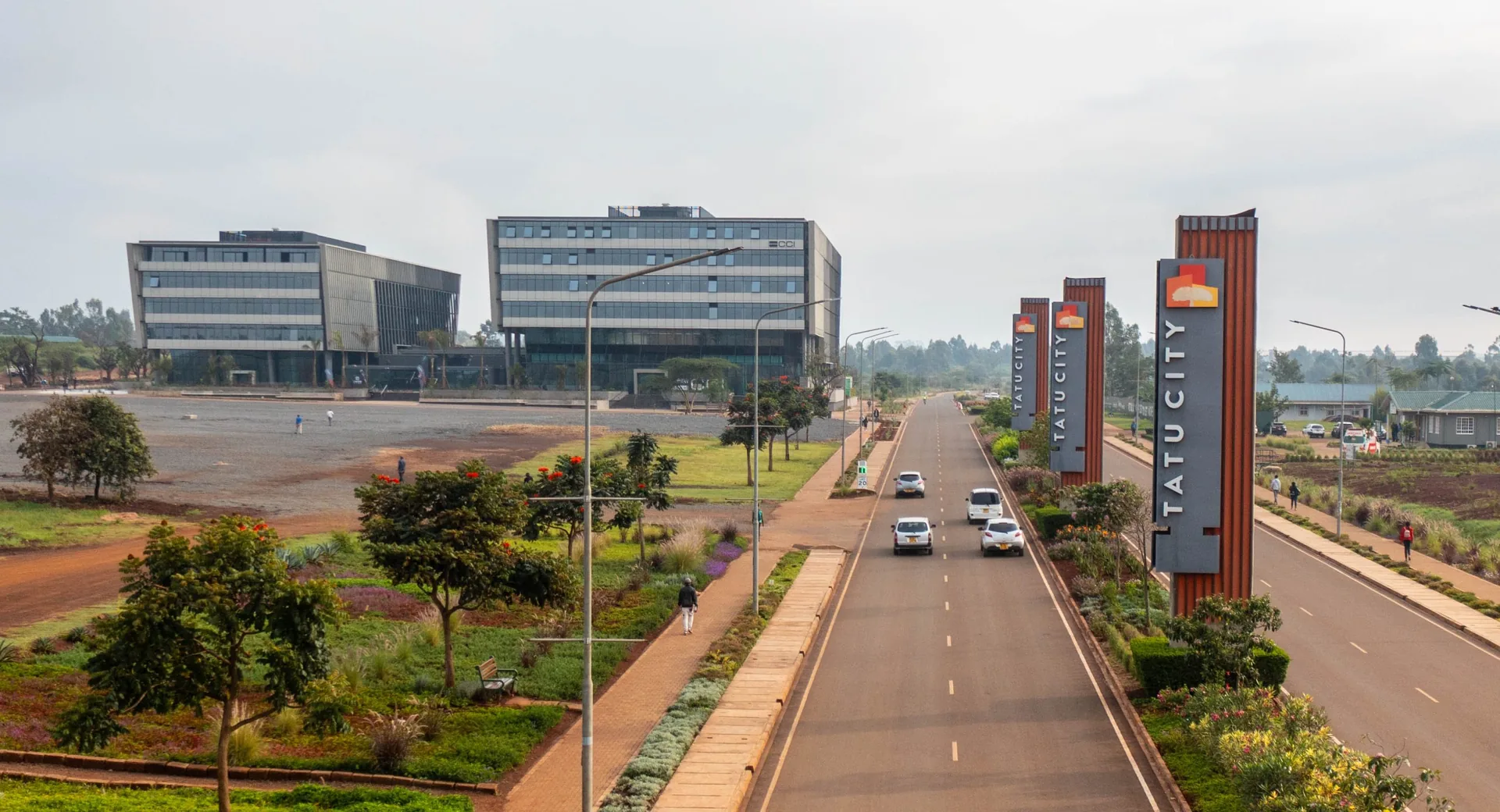
The spectrum purchase is the abstract half of Airtel's Kenya infrastructure bet. The concrete half stands at Tatu City. Nxtra by Airtel Africa announced the start of construction of a 44 MW hyperscale data centre there on 9 September 2025, billed as the largest facility of its kind in East Africa, with commissioning expected in the first quarter of 2027. It is the second hyperscale build in Nxtra's African programme, after a 38 MW facility under construction in Eko Atlantic City, Lagos.
The wider capex context explains why the two halves belong in one analysis. Airtel Africa's capital expenditure across its East Africa operations nearly doubled to $247 million in the half year ended 30 September 2026, from $124 million a year earlier, while group capex rose to $657 million from $318 million. East African mobile services revenue grew 18.2% year on year in constant currency over the same period. The company is pulling investment forward into coverage and capacity, and Kenya's data centre pipeline is where a meaningful share of that capacity physically lands. Airtel's own data centre pages describe the Tatu City facility as positioned for cloud and AI workloads in the region.
What Would Turn a Signal Into Demand
People assume a spectrum purchase means a data centre boom is confirmed. It does not, and honest coverage should say so. Spectrum is a licence to transmit; a data centre is a building full of servers, power and cooling, and what a data centre actually is has not changed. Airtel has disclosed no rollout timetable for the new spectrum and no capacity, cost or completion detail beyond the broad outlines for Tatu City. The signal is directional, not delivered. Five markers would show whether it hardens into demand:
- A 5G rollout plan. Site counts and a timetable from Airtel Kenya that put the 100 MHz to work.
- Tatu City milestones. Commissioning progress toward the expected first quarter of 2027 date, and disclosed anchor tenants.
- Edge placement. Where Airtel puts multi-access edge computing nodes, and which colocation partners host them.
- Home broadband growth. Fixed wireless subscriber numbers, since home broadband is where 5G capacity converts into always-on hosting demand.
- CA statistics. The quarterly 5G subscription and per-subscriber data use series, which will show whether 64.4 GB per quarter is a plateau or a floor.
The DC254 Read
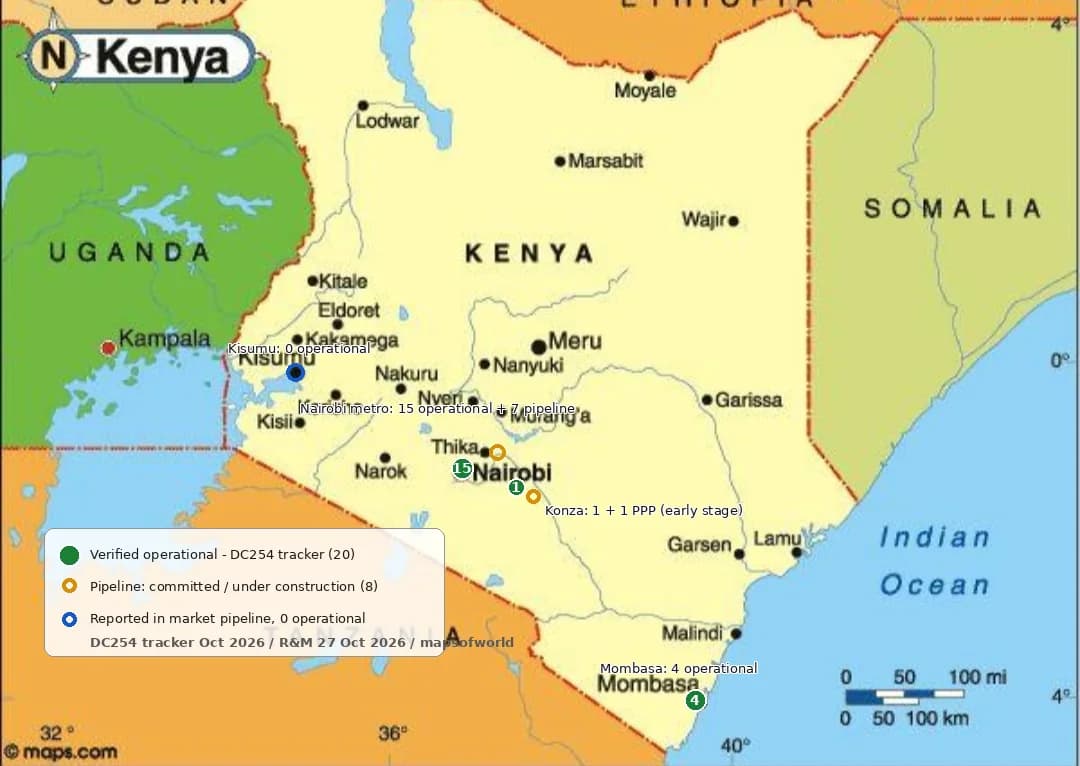
Spectrum purchases are among the earliest hard indicators of network investment you can get, because they are expensive, public and non-refundable. Airtel's $65 million purchase, layered on top of a doubling of East African capex and a 44 MW facility rising at Tatu City, points the same direction as everything DC254 tracks: Kenya's connectivity growth is converting into domestic hosting demand, one capex cycle at a time. The proof will arrive on construction and rollout timelines, not in results releases, and those timelines are exactly what the Kenya data centre pipeline tracks as it moves.