Electricity is the single largest operating cost for a data centre. In a well-run facility, power accounts for 30–40% of total operating expenditure, more than staff, more than connectivity, more than insurance, maintenance, and property costs combined. For a 2-megawatt data centre running 24 hours a day, the annual electricity bill can exceed KES 250 million ($1.6 million). Understanding how Kenya Power structures its tariffs, what drives costs up or down, and how data centre operators can negotiate and optimise their power costs is therefore not an optional exercise, it is a core business competency.
Kenya's power sector is regulated by the Energy and Petroleum Regulatory Authority (EPRA), which approves the tariff structure that Kenya Power applies to different customer categories. Data centres, as large industrial consumers, fall into specific tariff categories that include both energy charges (per kilowatt-hour consumed) and demand charges (per kilovolt-ampere of maximum demand). The interaction between these two charge components, plus various levies and pass-through costs, determines the final bill.
The Tariff Structure Explained
Energy Charges
The energy charge is the cost per unit of electricity consumed, measured in kilowatt-hours (kWh). For large commercial and industrial customers, Kenya Power applies time-of-use (TOU) pricing, which means the rate varies depending on when the electricity is consumed. TOU pricing reflects the reality that electricity is cheaper to generate during off-peak hours (when demand is low and base-load generators like geothermal plants can meet demand) and more expensive during peak hours (when demand is high and more expensive generation sources may be needed).
The typical TOU structure for large commercial customers in Kenya includes three periods. Peak hours (typically 18:00 to 22:00) carry the highest rate, reflecting the evening surge in demand as residential and commercial consumers use electricity simultaneously. Shoulder hours (typically 06:00 to 18:00) carry a mid-range rate. Off-peak hours (typically 22:00 to 06:00) carry the lowest rate, as demand drops and surplus geothermal capacity is available.
The specific rates vary by tariff category and are adjusted periodically by EPRA. As of 2025, indicative energy charges for large commercial customers range from approximately KES 10 per kWh during off-peak hours to KES 18 per kWh during peak hours. For a data centre that runs at constant load 24 hours a day (which is the normal operating pattern), the blended average energy charge (weighted across peak, shoulder, and off-peak consumption) is typically KES 13–16 per kWh.
Demand Charges
The demand charge is based on the maximum power demand recorded during the billing period, measured in kilovolt-amperes (kVA). This is different from energy charges in a crucial way: the demand charge reflects the peak power draw, not the total energy consumed. A data centre that draws a steady 1,000 kVA all month pays a lower demand charge (per kVA) than one that normally draws 800 kVA but occasionally spikes to 1,500 kVA, even if both consume the same total energy.
Demand charges for large commercial customers typically range from KES 300 to KES 500 per kVA per month. For a data centre with a contracted demand of 2,000 kVA (2 MVA), the monthly demand charge alone is KES 600,000 to KES 1,000,000. For a large facility with 5,000 kVA of contracted demand, the demand charge can exceed KES 2 million per month, a significant cost that must be managed.
Pass-Through Costs and Levies
Beyond the basic energy and demand charges, the electricity bill includes several additional components. The Fuel Energy Cost Charge (FECC) covers the cost of thermal generation fuel. The Inflation Adjustment Charge accounts for inflation in operating costs. The Forex Adjustment Charge reflects the impact of currency fluctuations on equipment and fuel costs (since many components are imported). The Renewable Energy Levy funds the development of renewable energy sources. Each of these is a small per-kWh addition, but collectively they can add 15–25% to the base energy charge.
Power Usage Effectiveness and the Bill
Data centres consume power at two levels: the IT load (the power used by servers, storage, and network equipment to do actual computing work) and the facility load (the power used by cooling systems, lighting, and supporting infrastructure). The ratio of total facility power to IT load is expressed as the Power Usage Effectiveness (PUE). A PUE of 1.0 would mean every watt of facility power goes to IT equipment (impossible in practice). A PUE of 1.5 means for every 1 watt of IT power, 0.5 watts are used for cooling and overhead.
Kenyan data centres typically achieve PUE values of 1.4–1.7, depending on the facility's age, cooling technology, and ambient conditions. Nairobi's moderate climate (average temperature 18–25°C, altitude 1,795m) is favourable for cooling, allowing many facilities to use free cooling (outside air) for significant portions of the year, which reduces the energy consumed by mechanical chillers.
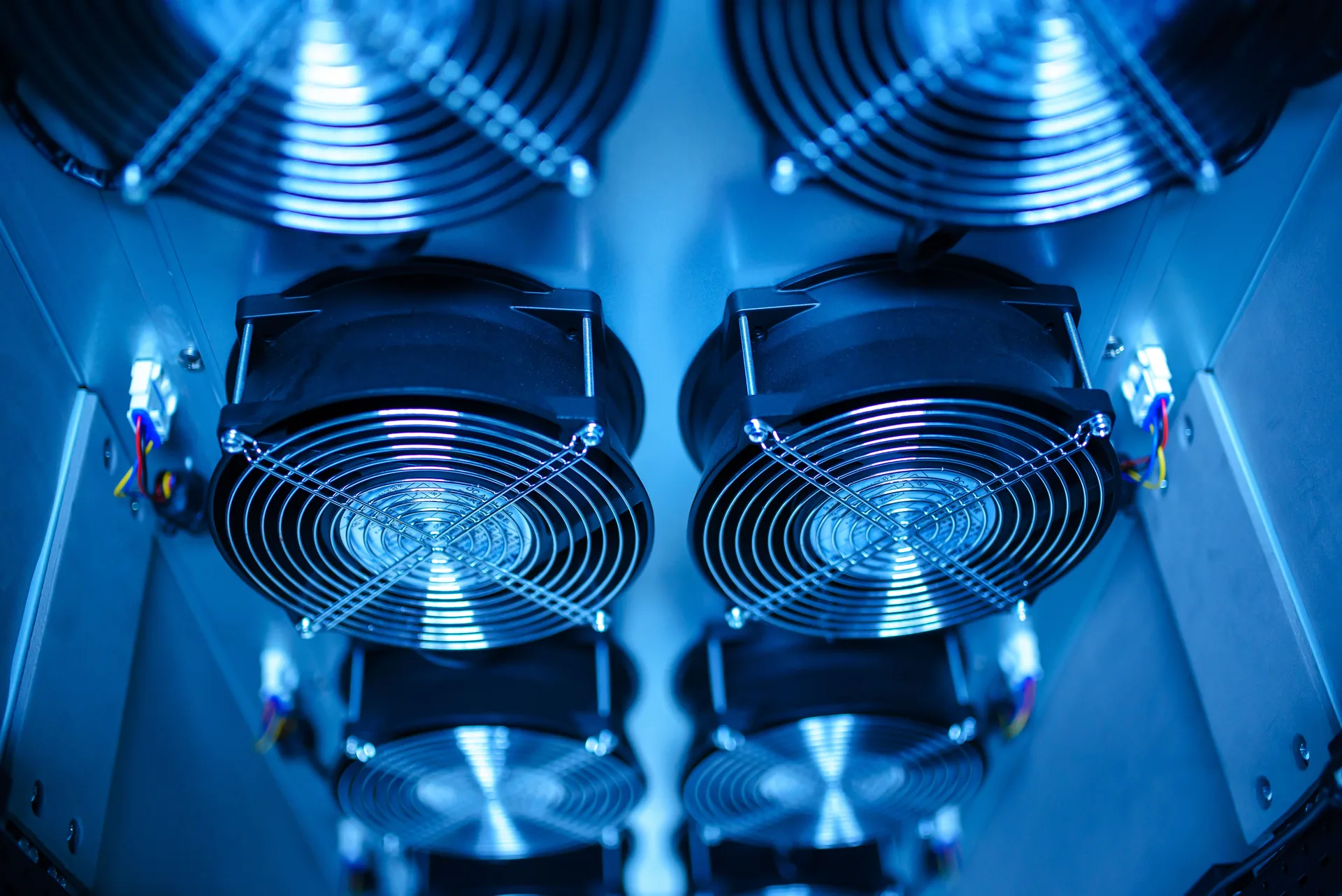
The PUE directly affects the electricity bill. A 1MW IT load at a PUE of 1.5 requires 1.5MW of total facility power, meaning 500kW is consumed by cooling and overhead. At a blended rate of KES 15/kWh, the monthly energy cost for the IT load alone is KES 10.8 million, while the cooling and overhead adds KES 5.4 million, a 50% increase. Improving PUE from 1.5 to 1.3 would save KES 2.16 million per month for a 1MW IT load, KES 26 million per year. How that ratio is measured, what typical Kenyan facilities achieve, and which improvements pay back fastest are covered in our data centre PUE guide.
Negotiation Strategies
Large data centre operators do not simply pay the published tariff. Kenya Power, like most utilities, is willing to negotiate bespoke agreements for large, creditworthy customers who can commit to significant consumption volumes over multi-year periods. The key elements of a data centre power negotiation include the following.
Committed Volume
The most important negotiating lever is committed consumption volume. A data centre operator that can commit to a minimum monthly consumption (say 500,000 kWh or 1,000,000 kWh) provides Kenya Power with predictable revenue, which the utility values for its own planning and procurement. In exchange, the operator can negotiate lower energy rates, reduced demand charges, or both.
Contract Duration
Longer contract durations (5, 10, or even 15 years) provide greater value to Kenya Power and justify better rates. Data centres, unlike most businesses, are inherently long-term, a facility is designed to operate for 20+ years, and the power connection is a fundamental part of the infrastructure. Aligning the power contract duration with the facility's operational life makes sense for both parties.
Dedicated Feeders and Power Quality

Data centres require high-quality power with minimal voltage fluctuations, frequency deviations, or momentary interruptions. Standard Kenya Power distribution feeders serve multiple customers and may experience voltage sags, momentary outages, and frequency variations that are acceptable for residential or commercial customers but problematic for sensitive data centre equipment. As part of a negotiated agreement, a data centre operator can request a dedicated feeder (a power line serving only the data centre) which provides better power quality and isolation from other customers' load patterns.
Demand Charge Management
The demand charge structure can be negotiated in several ways. Operators can request a lower per-kVA demand charge in exchange for a higher committed demand level. They can negotiate "ratcheted" demand charges that average peak demand over multiple months rather than billing based on a single month's peak. And they can include provisions for demand response, agreeing to reduce their load during grid emergencies in exchange for reduced demand charges.
Regional Cost Comparison
Kenya's power costs for data centres are competitive within the African context, though not the lowest on the continent. Here is how Kenya compares to other major African data centre markets.
Nigeria's power costs are the highest among major African markets. Grid power costs KES 20–35 per kWh, and because the grid is unreliable, data centres must run diesel generators for significant portions of each day, adding another KES 30–50 per kWh in fuel costs. The effective all-in power cost for a Nigerian data centre can exceed KES 50 per kWh, roughly three times the Kenyan cost.
South Africa's power costs are broadly similar to Kenya's at KES 15–22 per kWh, but load shedding (scheduled power outages implemented by Eskom to manage supply shortages) adds significant costs in generator fuel, battery wear, and operational complexity. When these additional costs are included, South African data centre power is 20–40% more expensive than the published tariff would suggest.
Egypt benefits from subsidised natural gas for power generation, resulting in some of the lowest industrial electricity prices in Africa at KES 8–12 per kWh. Ethiopia, with abundant hydroelectric power, offers rates as low as KES 6–10 per kWh, though grid reliability and connectivity limit its appeal for international operators.
Kenya's competitive position is strengthened by its renewable generation mix. With over 90% of grid power coming from geothermal, hydro, wind, and solar, Kenya's electricity is both low-cost and low-carbon. As environmental sustainability becomes a more important factor in data centre site selection, this combination of cost and greenness gives Kenya a genuine competitive advantage.
The Path to Lower Costs

For data centre operators in Kenya, the path to lower power costs runs through three channels: negotiation with Kenya Power for better rates and terms, operational efficiency improvements (lower PUE, better demand management), and on-site generation (particularly solar PV as discussed in our solar power guide). The operators who combine all three (negotiate well, operate efficiently, and generate their own clean power) will achieve the lowest all-in power costs and the strongest competitive position in Kenya's growing data centre market.
Power costs are not going to decrease. As Kenya's economy grows and electrification expands, demand for grid power will increase, and tariffs will adjust accordingly. Data centre operators who invest now in efficiency, negotiation capability, and on-site generation will be the ones who maintain their cost advantage as the market matures and competition intensifies.