A quiet milestone is arriving in global electricity. The International Energy Agency expects renewable generation to overtake coal as the world's largest source of electricity in 2026, after reaching near parity in 2025, with renewables forecast to grow more than eight percent this year and lift their share of global generation from 33 percent in 2025 to 37 percent by 2027. The same IEA outlook expects global electricity demand to grow 3.6 percent in 2026, and it names the drivers explicitly: industry, electric vehicles, and expanding data centres. For the first time, the world's most talked-about new load (the data hall) is growing into an electricity system that is itself going green.
Kenya enters that moment with an unusual hand. More than 90 percent of the country's electricity already comes from renewable sources (geothermal, hydro, wind, and solar) and the government targets a fully renewable system by 2030. A commentary published in The Standard on 31 August 2026 argues the country must now convert that clean-power advantage into factories, exports, and jobs before someone else captures the value. For Kenya's data centre community, the argument lands squarely on home turf, because data centres are simultaneously named among the demand drivers of this new era and positioned to be among its most discriminating buyers of green power.
This article unpacks what the global crossover means for siting decisions, audits the opinion column with appropriate editorial distance, maps the industrial pipeline now forming around Kenya's renewable zones, and asks the question our readers actually care about: where do data centres fit in Kenya's green industrial push?
The Global Crossover: Clean Power Meets Compute Demand
The IEA's numbers describe a collision of two curves that data centre operators should track closely. On one side, renewable generation keeps compounding at high single-digit rates and is set to become the world's dominant source of electricity within the year. On the other, electricity demand is accelerating after a long plateau, with data centres contributing a visible share of new load for the first time in the agency's demand outlooks alongside industry electrification and EV charging.
The intersection of those curves changes how sites get chosen. In a coal-heavy grid, a hyperscaler that wants clean operations must assemble its own solution (renewable PPAs, on-site solar, batteries, and certificate accounting) and each layer adds cost, complexity, and reputational risk if the accounting is challenged. In a grid that is already over 90 percent renewable, the carbon story is structural rather than assembled. A colocation operator in Nairobi can point to the national generation mix and credibly market low-carbon capacity without buying a single extra certificate, an advantage our geothermal energy explainer examines in detail.
That advantage compounds as AI workloads grow. Training clusters draw sustained, gigawatt-scale power, and every megawatt-hour consumed carries a carbon number that someone upstream will eventually scrutinise. Markets that can supply round-the-clock clean electrons (which Kenya can, because geothermal provides baseload rather than daylight-only generation) are making a claim that solar-heavy markets cannot yet match without storage. Kenya's grid, long framed as a reliability liability, is quietly becoming a siting asset for exactly the workloads now driving global demand.
Kenya's Renewable Foundation, in Numbers
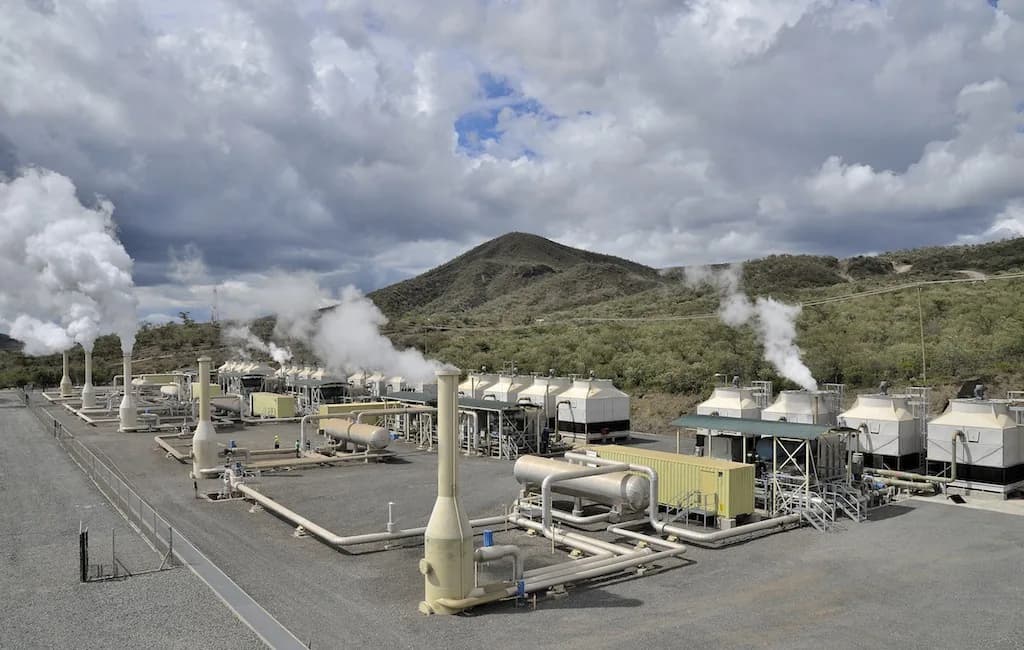
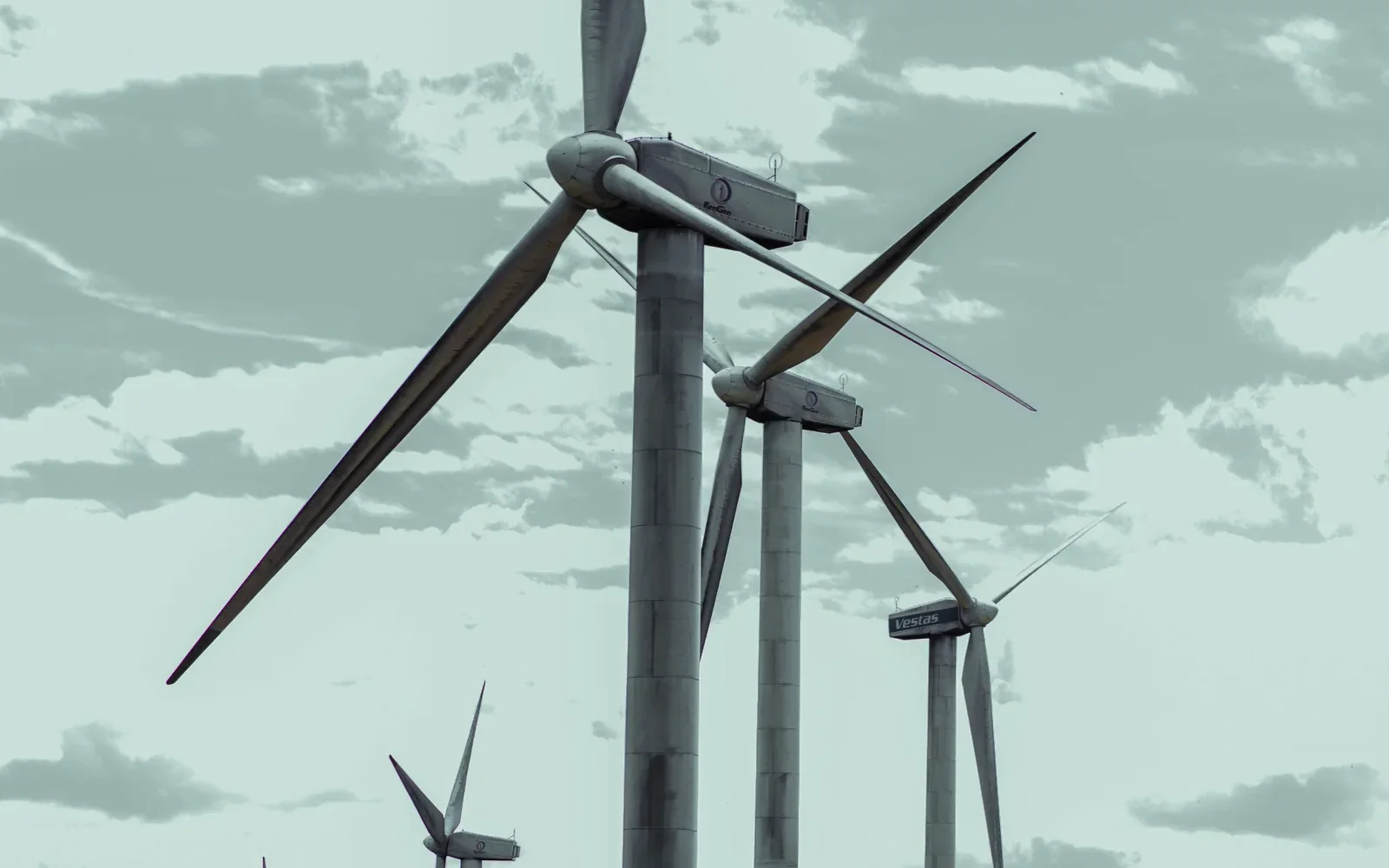
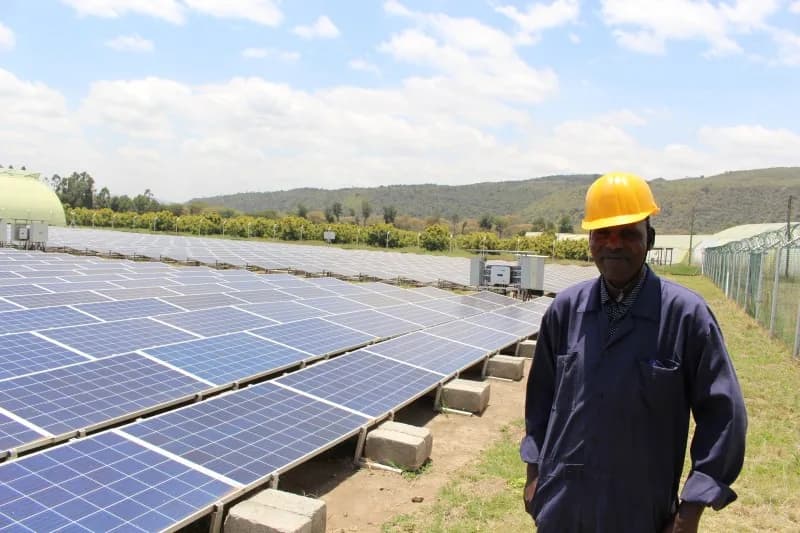
The foundation is real. Geothermal supplies roughly 45 percent of Kenya's electricity generation, with around 950 megawatts installed across the Rift Valley, anchored by the Olkaria complex in Naivasha, the largest geothermal installation in Africa. Lake Turkana Wind Power adds East Africa's largest wind farm at 310 megawatts, expanding solar installations keep scaling across the arid belts, and hydro continues to provide seasonal flexibility. Together they push the renewable share of generation above 90 percent, among the highest of any significant economy in the world.
Two properties of that mix matter for digital infrastructure. First, geothermal's baseload character means the grid's cleanest source is also its most dependable, which is why our analysis of Kenya Power tariffs for data centres keeps returning to generation economics as the sector's structural advantage. Second, the resource is nowhere near exhausted, KenGen and the Geothermal Development Company continue to prove additional steam fields, meaning Kenya can grow its clean supply as demand arrives rather than choosing between growth and decarbonisation.
An Opinion Column, Read Carefully
The immediate trigger for this analysis is a commentary in The Standard titled "Kenya must turn renewable energy advantage into industrial power", authored by a global communications strategist and former business and technology editor. Readers should know what that piece is: advocacy, written persuasively, with a clear pro-partnership framing, Dubai features as the story's hero, and the column reads like it was placed to support a commercial narrative. That does not make it wrong, but it does mean its deal values deserve the same scrutiny we apply to data centre announcements on this site.
Separating the persuasive from the verifiable, the verifiable scaffolding is solid. The IEA figures check out against the agency's published outlooks. The named projects are real and independently reportable: the Sleeping Warrior Special Economic Zone at Elementaita is being developed around renewable power; Dubai-based Aquilastor announced a 150-million-dollar electric and hybrid vehicle assembly plant at the Olkaria Green Energy Park targeting 50,000 vehicles a year and more than 3,000 direct jobs; DP World has agreed with GulfCap Africa to develop a 222-hectare Mombasa Industrial Park near the port; and at COP28 Kenya announced an 800-million-dollar partnership with AMEA Power for a proposed 200-megawatt development at Paka, alongside the UAE's 4.5-billion-dollar Africa green energy package. The Kenya Green Investment Fund, seeded with 40 million dollars through the Kenya Development Corporation and seeking another 160 million from institutional investors, is genuine policy architecture.
What remains unproven is the thesis itself, that these threads will weave into industrial transformation, and that foreign partnerships will deliver local value rather than extracted returns. That is precisely the test our market applies to data centre announcements, so the column's central question is one we are well equipped to track.
The Industrial Pipeline Taking Shape Around Kenya's Green Power
Zoom out and a pattern emerges: Kenya's green electrons are starting to attract industrial tenants, not just residential meters. The Sleeping Warrior zone near Elementaita is the clearest example, a special economic zone designed around renewable power from the ground up, courting tenants from agro-processing to clean manufacturing. The Aquilastor plant at Olkaria goes further, siting manufacturing directly inside a geothermal park, essentially co-locating a factory with its power plant. The Mombasa Industrial Park pairs cheap coastal land with port logistics and, though the column does not say it, with the submarine cables that land on the coast, a detail that matters enormously for any digital tenant.
For data centres, this pipeline is both opportunity and competition. Opportunity, because green industrial parks normalise the idea that power-hungry facilities should locate where clean energy is cheapest, and because each successful tenant proves the delivery model (land, power agreements, incentives, workforce) that a data centre development would follow. Competition, because every megawatt committed to an EV assembly line or a processing plant is a megawatt the grid does not have headroom to hand to a compute campus, and because industrial policy prioritises export jobs when allocating scarce infrastructure. Efficiency sharpens that competition: a facility that improves its data centre PUE converts more of its allocation into billable compute instead of overhead. The 200-megawatt scale of the AMEA Power project is instructive: it is roughly the size of a mid-sized data centre campus, and exactly the kind of generation addition that compute-hungry projects wait for.
Where Data Centres Fit in Kenya's Green Industrial Push
The honest answer is that data centres fit in three places, each with a different value proposition. The first is Nairobi, where the existing cluster, the operators catalogued in our facility directory, sits on dense fibre, the KIXP peering point, and enterprise demand. The green-grid story strengthens Nairobi's hand in regional comparisons, giving Kenyan operators a marketing claim their counterparts in diesel-dependent markets cannot match, and it aligns neatly with the national ambition our market outlook tracks.
The second is field-adjacent compute. As AI training decouples workloads from cities, the economics of building near Olkaria or Menengai (buying power near generation cost, dropping transmission exposure, accepting a latency hit) keep improving. The vehicle plant at the Olkaria Green Energy Park proves the concept; a training-focused AI data centre is the same trade with different tenants. The obstacle is not power but connectivity and operations, which is why field-adjacent projects will most likely arrive as purpose-built AI campuses rather than general colocation.
The third is Mombasa, where the new industrial park adds a logistics anchor to the coast's existing advantage: the submarine cable landing stations that carry most of East Africa's international bandwidth. A coastal green industrial zone with subsea connectivity is a credible edge-computing and content-delivery location, and if the park's masterplan reserves space for digital infrastructure, Mombasa's long second-fiddle role in Kenya's data centre geography could begin to change. Placing data centres inside special economic zones would also raise interesting tax questions our incentives analysis will be watching.
The Value-Capture Test, Applied to Data Centres
The opinion column's sharpest line is its warning that Kenya "cannot afford to remain an exporter of raw potential while others capture the investment, technology and industrial value generated from it". Strip away the Dubai framing and that warning applies verbatim to data centres, because a data hall can be just another form of exporting raw potential: electrons out, compute services in, with the high-value engineering done elsewhere. Whether Kenya's green power produces industrial value or simply hosts imported value is a policy choice, not a market inevitability.
The practical test is jobs and skills per megawatt. A hyperscale campus can be built with a handful of long-term staff and flown-in specialists, or it can be anchored in local operations, security, mechanical and electrical trades, and a talent pipeline that feeds the region, the difference our careers coverage documents facility by facility. It shows up in procurement too: whether local contractors win the fit-out and maintenance scopes, whether training programmes attach to project approvals, and whether operators publish the energy and employment data that lets the public hold them to their promises. Kenya's emerging green industrial policy gives the government leverage to ask for those things at approval stage; data centre developers should expect the questions, and the serious ones will welcome them.
There is also a defensive reason to get this right. If Kenya positions data centres as part of its industrial future (rather than as mere power consumers) the sector earns a seat in the conversations that allocate grid headroom, SEZ slots, and incentives. If it does not, compute projects will find themselves queued behind factories, and rightly so in political terms.
What to Watch Next
Four markers will tell us whether this narrative converts. Watch Kenya Power and the regulator for commercial mechanisms (green tariffs or corporate PPA frameworks) that would let large digital buyers contract renewable supply directly; the grid's carbon mix is already an asset, but contracting structures decide who can monetise it. Watch tenant announcements at Sleeping Warrior and the Mombasa Industrial Park, and whether any digital-infrastructure name appears among them. Watch execution on the Olkaria Green Energy Park, where the vehicle plant will demonstrate whether power-park industrialisation actually delivers in Kenya. And watch whether the Microsoft and G42 flagship project re-emerges with a green-power story attached, because a one-gigawatt commitment wrapped in the world's newest renewable-crossover narrative would recalibrate the entire region's positioning, the scenario our Kenya digital hub analysis laid out.
The global context is now formally favourable: the world's electricity system is going green in the same decade its demand growth went digital. Kenya holds an early, real advantage at that exact intersection. Turning it into energised data halls, skilled jobs, and retained value is the same test the opinion column sets for factories, and it is the test this site exists to score honestly.