
The phrase "Silicon Savannah" has been applied to Kenya for over a decade, and while it sometimes feels more aspirational than descriptive, the underlying reality is that Kenya has built a genuine and growing digital infrastructure ecosystem that serves not just its own 55 million people but the broader East African region. Data centres are the physical foundation of this ecosystem, the buildings full of servers that make every digital service possible. Understanding Kenya's position as East Africa's digital hub requires understanding the infrastructure that makes it possible.
Kenya's emergence as a regional digital hub is not the result of a single policy decision or a single infrastructure project. It is the cumulative effect of decades of investment in connectivity, energy, human capital, and regulatory reform, much of it unplanned and driven by private sector initiative rather than government direction. The result is an ecosystem that, while imperfect, offers the most comprehensive digital infrastructure in East Africa.
The Connectivity Foundation
Kenya's most fundamental advantage is connectivity. The country's geographic position (with a long Indian Ocean coastline south of the Horn of Africa) made it the natural landing point for submarine cables serving the East African coast. Four submarine cable systems land in Mombasa: SEACOM (2009), TEAMS (2009), EASSy (2010), and DARE1 (2022). Together, these cables provide multiple terabits per second of international bandwidth, connecting Kenya to Europe, Asia, the Middle East, Southern Africa, and the rest of the world.
No other East African country has four submarine cable landing stations. Tanzania has two (in Dar es Salaam), and landlocked countries like Uganda, Rwanda, Burundi, and South Sudan depend entirely on cross-border fibre connections to reach submarine cables. Kenya's direct cable access means lower latency to international destinations, more routing options, and competitive bandwidth pricing.

The terrestrial fibre network that distributes this connectivity inland is equally important. Kenya has an estimated 15,000–20,000 kilometres of fibre optic cable, connecting all 47 county headquarters through the National Optic Fibre Backbone Infrastructure (NOFBI) and through operator-owned networks from Liquid Intelligent Technologies, Safaricom, Telkom Kenya, and others. Cross-border fibre links connect Kenya to Uganda, Tanzania, Ethiopia, and South Sudan, making Kenya a transit hub for regional internet traffic.
The Kenya Internet Exchange Point (KIXP) reinforces this connectivity advantage. KIXP allows networks within Kenya to exchange traffic locally rather than routing through South Africa or Europe, reducing latency and cost for domestic traffic. KIXP is one of the largest and most active internet exchange points in sub-Saharan Africa, and its presence in Nairobi is both a cause and a consequence of the city's position as a regional hub.
The Energy Advantage
Kenya's energy mix is a structural advantage that most discussions of digital infrastructure understate. Over 90% of the country's electricity is generated from renewable sources: geothermal energy from the Rift Valley (the largest source), hydroelectric power from dams, wind energy from the Lake Turkana wind farm, and a growing contribution from solar PV. This renewable mix gives Kenya some of the lowest carbon-intensity electricity in the world and competitive industrial power costs.
For data centres, this matters in two ways. First, cost: at KES 12–18 per kilowatt-hour ($0.08–0.12), Kenya's industrial electricity is cheaper than Nigeria ($0.20–0.35 including generator costs), competitive with South Africa ($0.10–0.15 plus load shedding costs), and only slightly more expensive than Egypt ($0.05–0.07, subsidised). Second, sustainability: as global companies face increasing pressure to reduce the carbon footprint of their digital infrastructure, Kenya's renewable grid offers a genuine green advantage that no amount of on-site solar can fully replicate in a country dependent on fossil fuel generation.
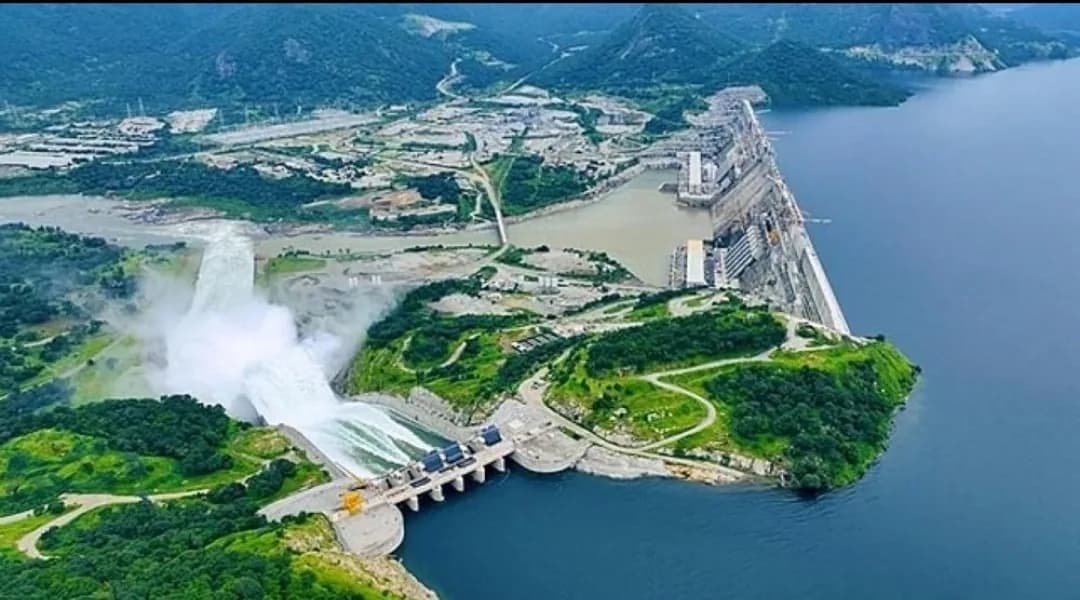
The energy advantage also now has a cross-border dimension. Kenya imports up to 200 MW of Ethiopian hydropower over the 1,069 km, 500 kV HVDC interconnector that was energised commercially in 2022, with the volume scheduled to double to 400 MW from December 2026. The imports add system headroom during dry hydrology years and peak hours, and they reinforce the regional integration that makes Kenya's hub position durable rather than purely domestic.
The Talent Pool
Kenya's human capital is a critical component of its digital hub positioning. The country produces approximately 50,000 university graduates annually, with significant numbers in engineering, computer science, mathematics, and related fields. The University of Nairobi, Strathmore University, Jomo Kenyatta University of Agriculture and Technology (JKUAT), and Kenyatta University all have established computer science and engineering programmes.
Beyond formal education, Kenya has a vibrant self-taught and community-trained technology culture. Developer communities, coding bootcamps, and technology hubs (like iHub, Nairobi Garage, and Nailab) have produced thousands of software developers, designers, and product managers who work for local companies, international technology firms, and remote-first companies based in the US and Europe.
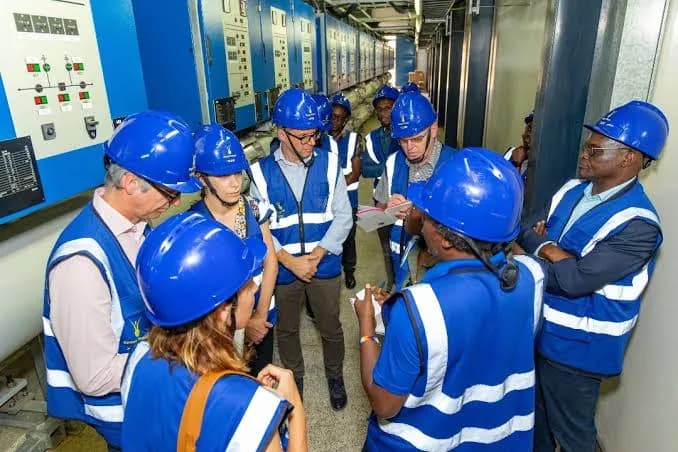
Microsoft's Africa Development Centre (ADC) in Nairobi, employing hundreds of engineers working on global products, is both a symbol and a driver of Kenya's talent position. Google, IBM, Intel, and other technology companies have research or development presences in Nairobi, attracted by the talent pool and the opportunity to build products for African markets. The presence of these companies, in turn, attracts more talent and creates a virtuous cycle.
The Financial Services Engine
Kenya's financial services sector is the engine that drives much of the demand for digital infrastructure. M-Pesa, the world's most successful mobile money platform, processes transactions equivalent to over 50% of Kenya's GDP annually. Every M-Pesa transaction (every payment, every transfer, every withdrawal) requires data processing in data centres. Safaricom's investment in data centre capacity has been driven primarily by the needs of M-Pesa and its broader mobile network, and the colocation market has grown to serve the banks, insurers, and fintech companies that form the financial ecosystem around M-Pesa.
The banking sector is equally significant. Kenya's banks have been among the most aggressive in Africa in adopting digital channels. Mobile banking, USSD banking, agent banking, and internet banking have become the primary customer interaction channels for most banks, shifting transaction processing from bank branches to data centres. The Central Bank of Kenya's promotion of digital financial services and its regulatory framework for fintech have further accelerated this shift.
Serving the Region
Kenya's digital infrastructure does not serve Kenya alone. Organisations across East Africa (in Uganda, Tanzania, Rwanda, Burundi, South Sudan, and the eastern Democratic Republic of Congo) connect to services hosted in Kenyan data centres. The reasons are practical: Kenya has the most data centre capacity, the best connectivity, and the most service providers in the region. A bank in Kampala may choose to host its disaster recovery systems in a Nairobi data centre because the connectivity, expertise, and competitive pricing available in Kenya are superior to what is available domestically.
This regional role is self-reinforcing. As more regional organisations use Kenyan data centres, the data centre operators invest in more capacity, more connectivity, and more services, making Kenya even more attractive. The data centre market outlook projects continued growth driven in part by this regional demand.

The Challenges

Kenya's digital hub position is not unassailable. Rwanda's government has been more aggressive and intentional in its digital transformation policies, offering aggressive tax incentives, fast-track business registration, and regulatory simplicity. Tanzania has been investing in connectivity and has a larger population than Kenya (65 million). Ethiopia, with 120 million people, is opening its telecommunications market and could become a significant digital economy if it manages the transition effectively.
Domestically, the challenges include power reliability in some areas, a skills gap in specialised data centre roles, currency volatility that complicates investment planning, and the fact that much of Kenya's digital infrastructure advantage was built by private sector initiative rather than coordinated government strategy. The Konza Technopolis project, intended to be the physical embodiment of Silicon Savannah, has been delayed repeatedly, illustrating the gap between aspiration and execution.
The Path Forward
Kenya's position as East Africa's digital hub is real but not guaranteed. Maintaining and strengthening it requires continued investment in data centre capacity (as the licensing framework provides regulatory clarity), expansion of connectivity to underserved areas, development of specialised skills, and policy coherence that supports rather than impedes digital infrastructure investment.
The data centres being built today (iXAfrica's expansion, Africa Data Centres' growth, and the next wave of facilities currently in planning) are the physical manifestation of Kenya's digital hub positioning. They are the buildings that make the digital economy possible. And they are the reason that, when a company anywhere in East Africa needs to decide where to host its servers, Nairobi remains the first and most logical choice.
The clearest statement of that ambition now sits at the top of government. In a September 2026 essay, the Principal Secretary for ICT and the Digital Economy, Eng. John Kipchumba Tanui, argued that Kenya has already built the cables and that the next national assignment is compute: cloud regions, AI-ready capacity and the services built on top of them. We unpacked the full plan and fact-checked its claims against our directory in Kenya's data centre and compute hub plan, explained. If the state executes even part of it, the hub positioning this guide describes stops being a description and becomes a strategy.