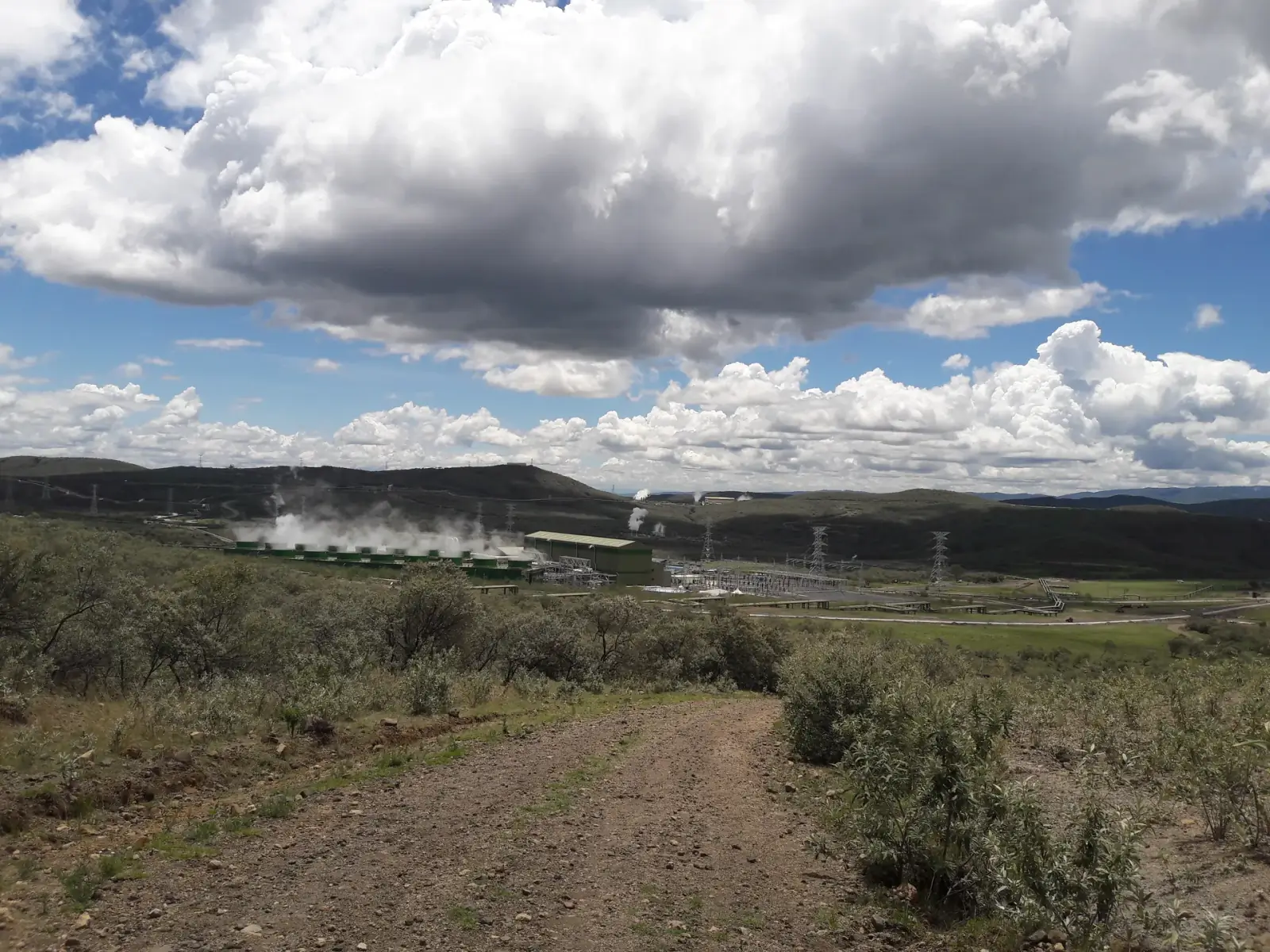
Deep beneath the floor of the Great Rift Valley, water seeping into fractures in the Earth's crust encounters rock heated by magma chambers lying only a few kilometres below the surface. This water becomes superheated (reaching temperatures of 200–350 degrees Celsius) and rises to the surface as steam through geological faults. For millions of years, this process occurred unseen and unutilised. Today, it powers approximately 45% of Kenya's electricity and, through the national grid, powers every data centre in Nairobi.
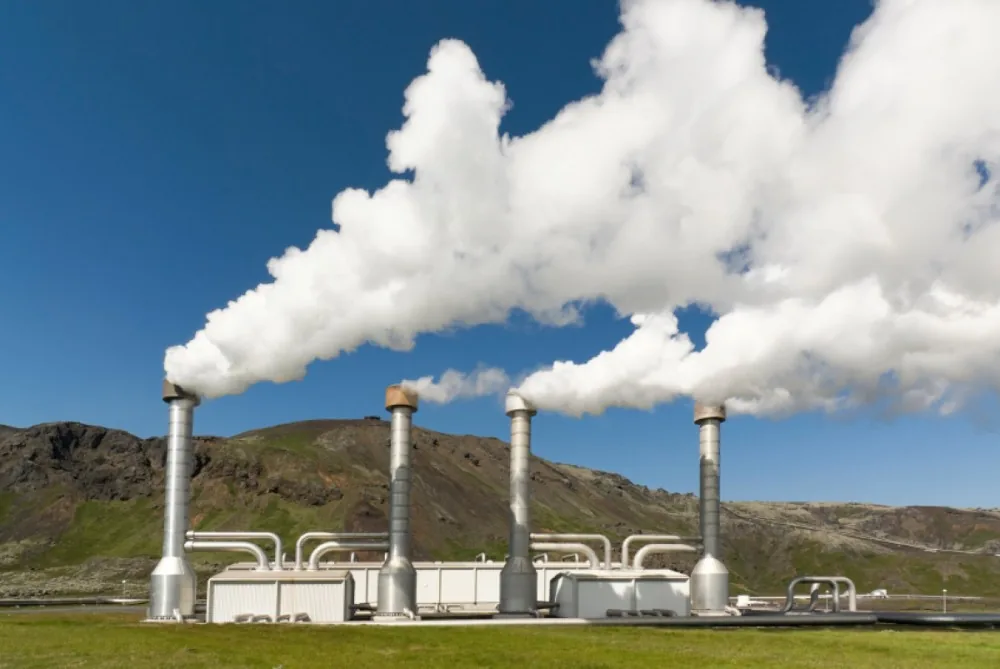
Geothermal energy is Kenya's most important energy asset for data centres, and it is an advantage that no amount of solar panels, wind turbines, or policy incentives can fully replicate in other markets. Understanding how geothermal power works, why it is so well-suited to data centre loads, and what its limitations are, is essential for anyone evaluating Kenya as a data centre location or investment destination.
Kenya's Geothermal Resources
Kenya sits astride the East African Rift System, a tectonic plate boundary that extends from the Afar Triangle in the northeast through the Rift Valley to Mozambique in the south. This geological feature, which is slowly splitting the African continent apart, creates the conditions for geothermal energy by bringing heat close to the Earth's surface and providing pathways for water to circulate through hot rock.
Kenya's geothermal potential is estimated at 7,000 to 10,000 megawatts, enough to power the entire country several times over. Only a fraction of this potential has been developed. The country's current installed geothermal capacity is approximately 950 megawatts, generated primarily from the Olkaria geothermal complex in Naivasha, about 120 kilometres northwest of Nairobi. Additional development is ongoing at Menengai (near Nakuru), Suswa, and other Rift Valley sites.
The Olkaria complex is the largest geothermal installation in Africa. It includes multiple power stations (Olkaria I, II, III, IV, and V) operated by the Kenya Electricity Generating Company (KenGen), with a combined capacity of approximately 800 megawatts. The Geothermal Development Company (GDC), a state-owned enterprise, was established to develop geothermal resources and provide steam to independent power producers, broadening the investment base beyond KenGen.
How Geothermal Power Reaches Data Centres
Geothermal power does not flow directly from Olkaria to data centres. The journey involves several steps.
Generation
At the geothermal field, production wells (typically drilled to depths of 1,500–3,000 metres) tap into the geothermal reservoir. Steam and hot water are brought to the surface through these wells and directed to a power plant. In a typical geothermal power plant, the steam drives a turbine connected to a generator, producing electricity. After passing through the turbine, the steam is condensed back into water and reinjected into the geothermal reservoir through injection wells, maintaining the reservoir's pressure and sustainability.
Transmission
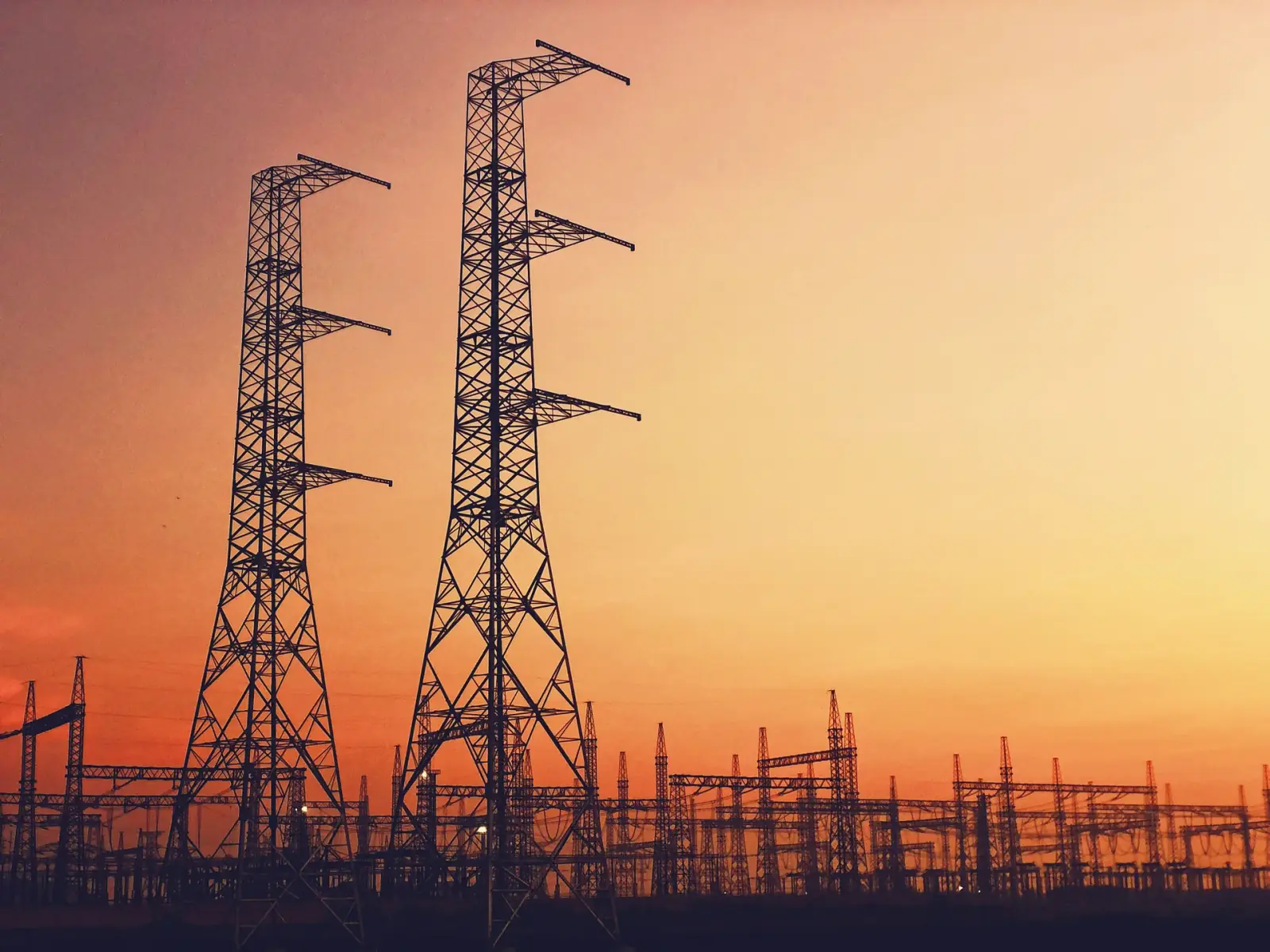
The electricity generated at Olkaria enters the national grid through high-voltage transmission lines operated by Kenya Electricity Transmission Company (KETRACO). The primary transmission corridor from Olkaria to Nairobi runs through Naivasha, Limuru, and into the city, where it connects to the distribution network operated by Kenya Power. This transmission infrastructure was originally built to serve general national demand, but the growth of data centre loads along Nairobi's Mombasa Road corridor has created concentrated demand nodes that benefit from this geothermal backbone.
Distribution
Kenya Power distributes the electricity from the transmission network to end customers through its distribution network. Data centres, as large industrial consumers, typically receive power at high voltage (11kV or 33kV) through dedicated feeders, which provide better power quality and reliability than the shared low-voltage feeders serving residential and small commercial customers.
Why Geothermal Is Ideal for Data Centres
Baseload Reliability
The most important characteristic of geothermal energy for data centres is its reliability as a baseload power source. Unlike solar panels that generate electricity only when the sun shines, or wind turbines that generate only when the wind blows, geothermal power plants generate electricity 24 hours a day, 365 days a year. Geothermal plants in Kenya achieve capacity factors of 90–95%, meaning they produce electricity at or near their rated capacity almost all the time.
This baseload reliability aligns perfectly with data centre loads, which are constant and unrelenting. A 1-megawatt data centre draws approximately 1 megawatt of IT power (plus cooling overhead) every hour of every day. It does not reduce its power consumption at night or on cloudy days. A power source that matches this constant demand profile (without the need for battery storage or backup generation to bridge gaps) is inherently more valuable for data centres than intermittent sources.
Low Carbon Intensity
Geothermal energy produces approximately 38 grams of CO2 per kilowatt-hour of electricity generated. This is among the lowest carbon intensities of any power source, including other renewables (solar PV produces approximately 40–50 g/kWh over its lifecycle, wind produces 10–15 g/kWh). For comparison, coal-fired power produces 900–1,100 g/kWh, and natural gas produces 400–500 g/kWh.
Kenya's overall grid carbon intensity, dominated by geothermal and hydro, is approximately 50–100 g/kWh. This means that a data centre running on Kenya's grid is already operating with a carbon footprint that is 5–10 times lower than a comparable facility in a coal-dependent market like South Africa or India. This is not a trivial advantage, it is a genuine, measurable, and marketable sustainability credential that Kenyan data centres can leverage.
Cost Stability
Geothermal power has another advantage that is often overlooked: cost stability. Once a geothermal plant is built, its ongoing fuel cost is essentially zero, the "fuel" is heat from the Earth's interior, which is freely and perpetually available. This means that the cost of geothermal electricity is driven primarily by capital costs (drilling wells, building power plants) and operating costs (maintenance, staffing), which are relatively predictable and stable over time.
This stability contrasts sharply with fossil fuel-dependent power systems, where electricity costs fluctuate with global oil, gas, and coal prices. A data centre operator in Kenya can forecast its power costs with more confidence than one in Nigeria (where diesel costs vary with global oil prices) or South Africa (where Eskom's tariff increases are unpredictable).
The Geothermal-to-Data-Centre Direct Connection
One of the most interesting concepts in Kenyan data centre energy is the possibility of building data centres directly at or near geothermal fields, bypassing the transmission and distribution network and accessing power at or near generation cost. This idea has been discussed in industry circles and has genuine technical and economic merit.
A data centre at the Olkaria geothermal complex would have several advantages. Power costs could be 30–40% lower than in Nairobi (bypassing transmission losses and distribution margins). The facility would have direct access to a renewable baseload source. And the cooler climate of the Rift Valley floor (Olkaria sits at approximately 2,000 metres altitude) could provide some natural cooling benefit.
The challenges are equally significant. Olkaria is 120 kilometres from Nairobi, the primary market for data centre services. Connectivity would require building or extending high-capacity fibre links to a location that currently does not have the dense metro fibre network available in Nairobi. The skilled workforce required for 24/7 data centre operations is concentrated in Nairobi. And the data centre would need to attract customers willing to accept the latency and accessibility trade-offs of a remote location.
For certain use cases, particularly AI training clusters that need massive amounts of cheap power but do not need low-latency connectivity to end users, a Rift Valley data centre could be compelling. For general-purpose colocation serving Nairobi-based enterprises, the location is less practical. The concept remains an opportunity for the future, potentially as part of the Konza Technopolis development or as a specialised facility for compute-intensive workloads.
Geothermal Development Pipeline
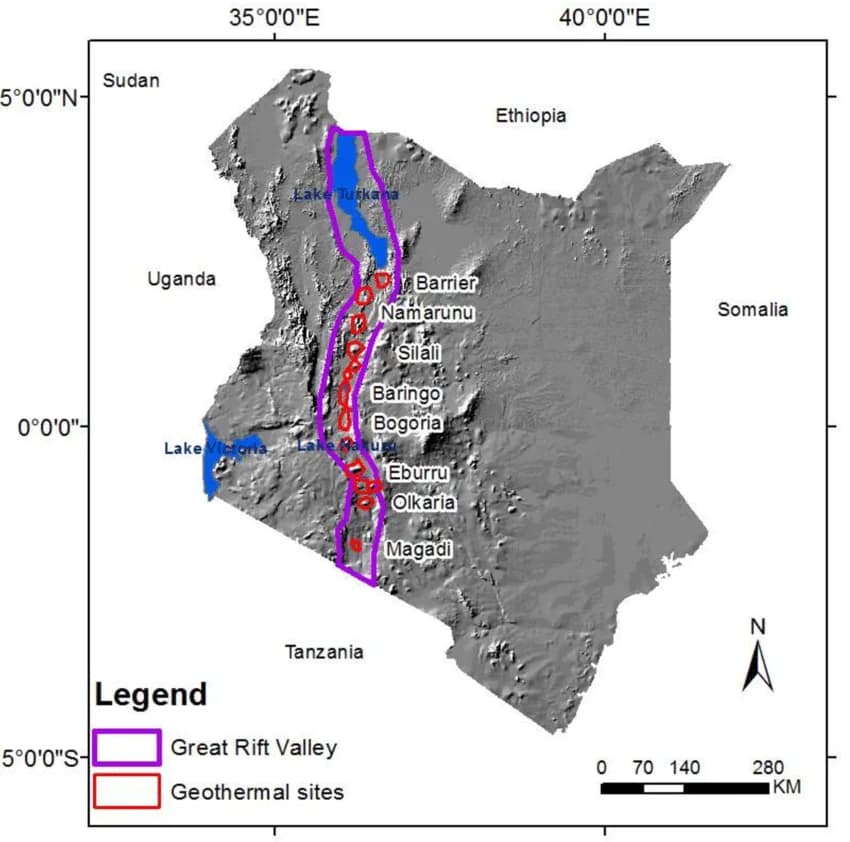
Kenya's geothermal development is ongoing, with several projects that will increase capacity and reinforce the power supply available to data centres.
The Menengai geothermal project, located near Nakuru, is being developed by GDC and is expected to add approximately 160 megawatts of capacity. Independent power producers (IPPs) are being invited to build power plants at the Menengai field using steam provided by GDC, creating a model where the state develops the resource and private companies build and operate the power plants.
Additional prospects at Suswa, Baringo, Silali, and other Rift Valley sites are at various stages of exploration and development. The Kenyan government's target is to increase geothermal capacity to approximately 1,600 megawatts by 2030, which would further strengthen the renewable baseload that data centres depend on.
The Competitive Advantage
Kenya's geothermal resource is not just an energy supply, it is a competitive advantage in the global data centre market. As environmental sustainability becomes a criterion for data centre site selection, as ESG reporting requirements drive companies to reduce their carbon footprint, and as customers (particularly international enterprises) demand green infrastructure, Kenya's geothermal grid becomes a marketable asset.
No amount of on-site solar panels at a data centre in South Africa can match the carbon intensity of running on Kenya's geothermal-dominated grid. No amount of corporate renewable energy certificates can substitute for the measurable, verifiable reality of drawing power from a grid that is 90%+ renewable. This is a structural advantage that will become more valuable over time, and Kenyan data centre operators should be communicating it aggressively to domestic and international customers.
National policy has caught up with this argument. The Principal Secretary for ICT and the Digital Economy, writing in September 2026, made additional geothermal capacity for green computing an explicit national ask: dedicated renewable megawatts along the Naivasha, Nakuru and Baringo corridor, built new for computing rather than reallocated from households and existing industry. His essay, fact-checked in Kenya's data centre and compute hub plan, explained, also cites the geothermal corridor as the anchor of the Microsoft and G42 discussions near Naivasha, evidence that green baseload power is now the opening card in Kenya's hyperscale pitches.
The Rift Valley's heat, rising through fractures in the Earth's crust to turn turbines and generate electricity, is an unlikely hero in Kenya's digital economy story. But it is the foundation on which the country's data centre industry is built, and it is the reason that Kenya can credibly position itself as home to Africa's greenest data centres.