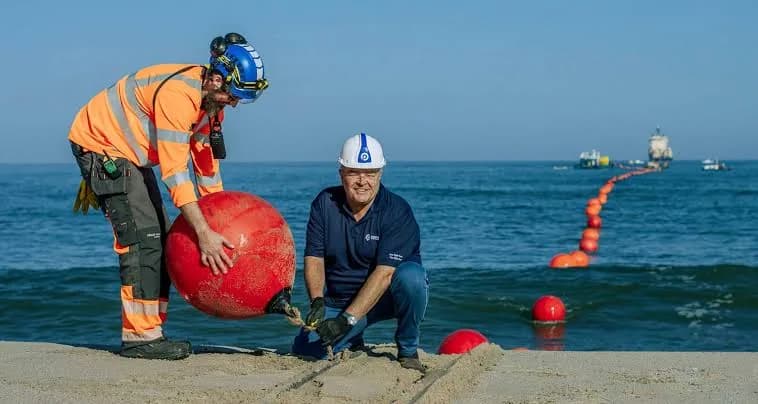
Liquid Intelligent Technologies is not a data centre company. That distinction matters, because understanding who Liquid is and what they do is essential to understanding how data works in Kenya and across East Africa. Liquid is a connectivity company, a fibre infrastructure builder, and an enterprise technology services provider. They happen to sit at the centre of Kenya's data centre ecosystem because every rack, every cloud region, and every submarine cable landing in Mombasa ultimately relies on the kind of terrestrial fibre infrastructure that Liquid has spent two decades building across the continent.
As a subsidiary of Cassava Technologies, the pan-African technology group founded by Strive Masiyiwa, Liquid operates over 100,000 kilometres of fibre spanning more than 13 African countries. In Kenya, their network forms the critical link between submarine cable landing stations on the coast and data centre clusters in Nairobi, while also extending connectivity to landlocked East African nations that depend on Kenya as their gateway to the global internet.
This profile examines Liquid's origins, their infrastructure in Kenya, their relationship to Africa Data Centres, and why their connectivity-first model makes them fundamentally different from pure-play data centre operators competing in Nairobi.
From Econet to Liquid: The Origins
Liquid Intelligent Technologies traces its roots to Econet Wireless, the mobile telecommunications group that Strive Masiyiwa founded in Zimbabwe in 1993. Masiyiwa, one of Africa's most prominent entrepreneurs, spent years battling regulatory barriers before successfully launching Econet as Zimbabwe's first private mobile network. The company later expanded across multiple African markets.
The data infrastructure story began to take shape in the early 2000s when Econet started building terrestrial fibre networks to connect its own mobile towers and operations. What started as internal infrastructure gradually evolved into a wholesale connectivity business. By 2013, the operation had been rebranded as Liquid Telecom, reflecting a pivot towards becoming a dedicated pan-African fibre and data services provider.
The rebrand to Liquid Intelligent Technologies in 2021 signalled a further evolution. The company was no longer just a telecoms carrier. It was positioning itself as a full-stack technology company offering cloud computing, cybersecurity, collaboration tools, and managed IT services alongside its core fibre infrastructure. This broader ambition led to the creation of Cassava Technologies as the parent group, with Liquid Intelligent Technologies serving as the connectivity and enterprise services arm alongside sister companies like Africa Data Centres and Liquid Datapoint.
The Fibre Network: 100,000 Kilometres Across Africa
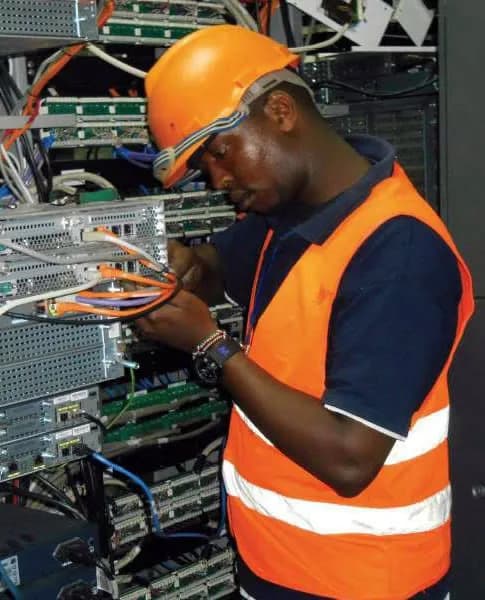
Liquid's single most important asset is its fibre network. At over 100,000 kilometres, it is the largest independently owned fibre infrastructure on the African continent. The network spans more than 13 countries, including South Africa, Zimbabwe, Zambia, Kenya, Tanzania, Uganda, Rwanda, Burundi, the Democratic Republic of Congo, Mozambique, Lesotho, Botswana, and Nigeria.
The network's architecture is designed around a principle that matters enormously for data centre operators: redundancy through geographic diversity. Rather than relying on a single route between any two points, Liquid's fibre follows multiple paths. In East Africa, this means that traffic between Nairobi and Mombasa can travel along separate physical routes, reducing the risk that a single cable cut will take down connectivity to the submarine cable landing stations.
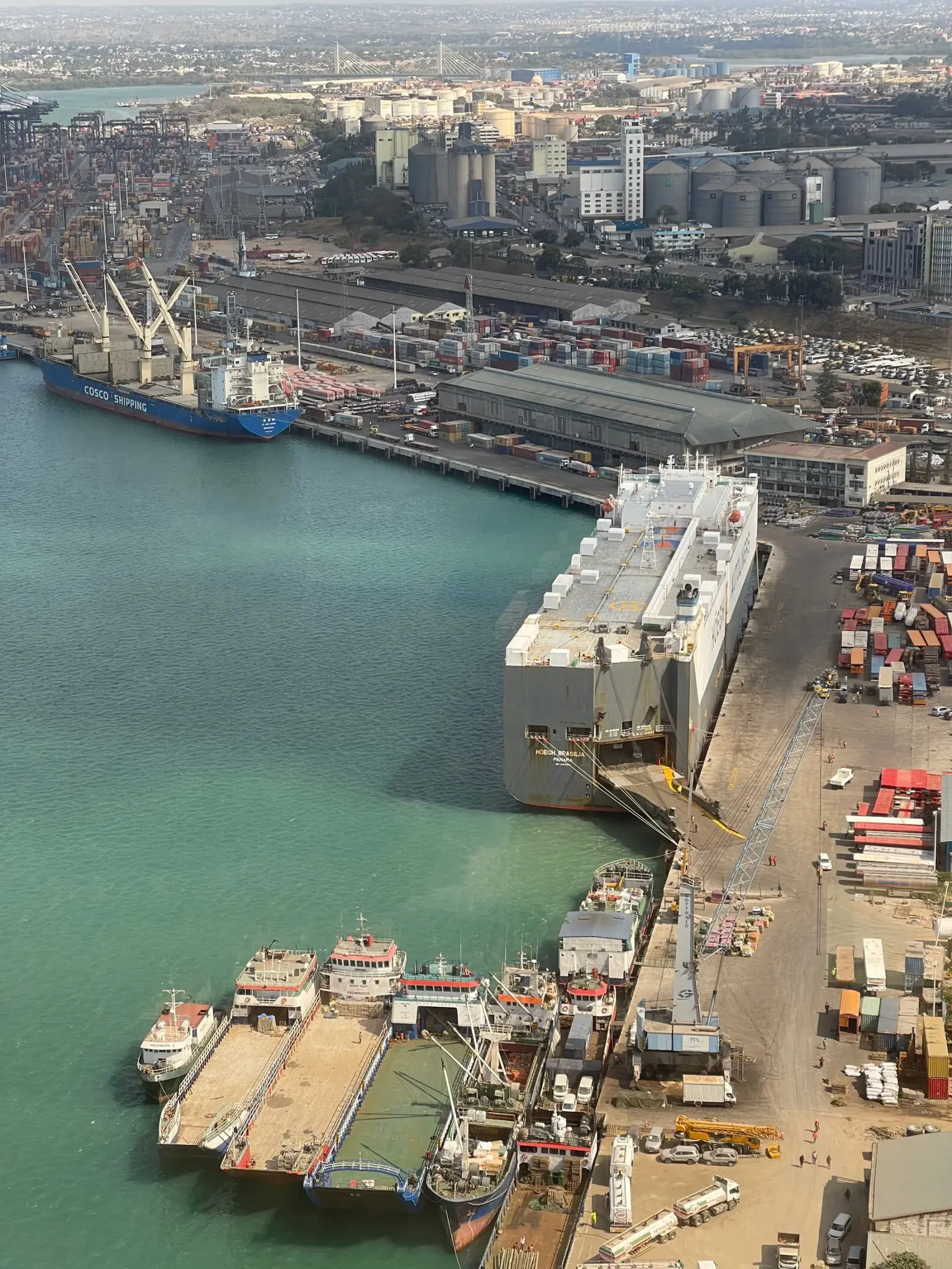
For Kenya's data centre industry, Liquid's network serves several critical functions. First, it provides the terrestrial backhaul that connects Nairobi's data centre cluster along Mombasa Road to the submarine cable systems landing at the coast. Kenya is served by multiple submarine cables including SEACOM, TEAMS, EASSy, DARE1, and others, all of which land in Mombasa. Without robust terrestrial fibre linking Mombasa to Nairobi, those cables would be of limited value to the data centres where the actual compute and storage happens.
Second, Liquid's network extends beyond Kenya's borders to connect landlocked countries. Uganda, Rwanda, Burundi, South Sudan, and eastern DRC all rely on transit through Kenya to reach submarine cable bandwidth. Liquid's cross-border fibre routes mean that a data centre in Nairobi can serve customers across the entire East African region, with connectivity delivered over Liquid's own infrastructure rather than a patchwork of third-party providers.
Liquid's Kenya Operations
Liquid's Kenyan operations are headquartered in Nairobi and form a critical part of the company's East African strategy. The company holds licences from the Communications Authority of Kenya to operate as a network facilities provider and telecommunications services operator. Their Kenyan fibre network runs from Mombasa through Nairobi and extends westwards towards Uganda.
In Nairobi, Liquid maintains a significant enterprise presence, providing dedicated fibre links, MPLS networks, SD-WAN solutions, and internet transit to banks, government agencies, multinational corporations, and technology companies. Many of these customers house their IT infrastructure in Nairobi data centres, creating a natural link between Liquid's connectivity services and the colocation facilities where their servers reside.
Liquid also provides wholesale bandwidth and transit services to other operators, internet service providers, and mobile network operators in Kenya. This wholesale business is less visible to end users but is foundational to how the internet works in the country. Smaller ISPs that cannot justify building their own submarine cable capacity or long-haul fibre rely on purchasing bandwidth from operators like Liquid who have that infrastructure in place.
The Nairobi Data Centre and Liquid Datapoint
Liquid's own data centre presence in Kenya operates primarily through Liquid Datapoint, a subsidiary focused on providing data centre, cloud, and managed IT services. Liquid Datapoint offers colocation, managed hosting, and cloud computing services from facilities that are connected to Liquid's fibre backbone.
Liquid Datapoint occupies a distinct position in the Kenyan market. Unlike Africa Data Centres, which positions itself as a carrier-neutral colocation platform, Liquid Datapoint tends to serve customers already using Liquid's connectivity services who want an integrated solution combining network, compute, and managed services from a single provider.
In practice, this means Liquid Datapoint competes less aggressively on pure colocation pricing and more on the value of integrated service delivery. A bank that wants dedicated fibre connectivity, MPLS links to branches, and a managed data centre environment can procure all of this from the Liquid group, simplifying procurement, support, and contract management.
The Cassava Technologies Family: Liquid vs Africa Data Centres
The relationship between Liquid Intelligent Technologies and Africa Data Centres is a source of frequent confusion in the Kenyan market, and clarifying it is important for anyone evaluating data centre options.
Both companies are subsidiaries of Cassava Technologies. Before the Cassava rebrand, the entire group operated under the Liquid Intelligent Technologies name, which is why you will still encounter references to "Liquid data centres" in older materials. The corporate restructure separated the business into focused entities.
Africa Data Centres is the dedicated data centre infrastructure company. It builds and operates carrier-neutral colocation facilities, including two in Nairobi and one in Mombasa. These facilities are designed to host multiple connectivity providers, and Liquid Datapoint is one of several carriers available within them.
Liquid Intelligent Technologies is the connectivity and enterprise technology services company. It builds and operates fibre networks, provides internet and private network services, and offers cloud, cybersecurity, and collaboration tools. Liquid Datapoint is its data centre and managed services subsidiary.
The practical implication for Kenyan customers is that you can colocate in an Africa Data Centres facility and connect to Liquid's network from there, or you can colocate directly with Liquid Datapoint and get an integrated connectivity and hosting package. The two paths serve different customer preferences. The carrier-neutral route offers more flexibility and competitive pricing on connectivity. The integrated route offers simplicity and a single point of accountability.
Connecting Landlocked Countries: Kenya as a Regional Hub
One of Liquid's most strategically important roles in East Africa is connecting landlocked countries to the global internet through Kenya's submarine cable infrastructure. This function is central to understanding why Kenya's data centre market is larger than its domestic population and economy would suggest.
Uganda, Rwanda, and Burundi have no coastline and no direct access to submarine cables. All their international internet traffic must transit through a neighbouring country with landing stations. Kenya, through Mombasa, is the primary gateway, and Liquid's cross-border fibre network is one of the main arteries carrying that transit traffic.
Liquid's fibre routes from Nairobi westwards to Kampala, Kigali, and Bujumbura mean a data centre in Nairobi can serve customers across the entire East African Community with low-latency connectivity. This regional reach makes Nairobi a more attractive location for data centre investment, because a single facility can address a market of over 200 million people across multiple countries.
The transit business generates significant revenue for Liquid's Kenyan operations. Every megabit of bandwidth flowing from Mombasa to Kampala or Kigali over Liquid's fibre contributes to the economics that justify continued investment in network expansion and reliability.
Enterprise Services and Cloud Partnerships
Liquid's enterprise business in Kenya extends well beyond basic fibre connectivity. The company has positioned itself as a full-service technology partner for large organisations, offering a portfolio that includes software-defined wide-area networking (SD-WAN), cybersecurity services, unified communications and collaboration tools, cloud migration support, and managed IT services.
On the cloud partnership front, Liquid is a Microsoft Cloud Solution Provider and has partnerships with AWS, Google Cloud, and Oracle Cloud. For Kenyan data centre customers, these partnerships affect how hybrid cloud architectures are built. An enterprise running workloads in a Nairobi colocation facility can connect to Microsoft Azure, for example, over Liquid's network with lower latency and more predictable performance than traversing the public internet.
Liquid's cybersecurity offerings are also relevant to the data centre conversation. As Kenyan organisations digitise and move critical workloads into data centre environments, the security of connectivity between those environments and the outside world becomes paramount. Liquid provides next-generation firewall services, distributed denial-of-service (DDoS) protection, and secure access service edge (SASE) solutions that complement the physical security measures within data centre facilities.
How Liquid Differs from Pure-Play Data Centre Operators
Understanding Liquid's positioning requires distinguishing between connectivity-first companies and pure-play data centre operators. Companies like Africa Data Centres, PAIX, iXAfrica, and Wingu Africa are fundamentally in the business of building and operating physical data centre facilities. Their core product is space, power, cooling, and physical security.
Liquid, by contrast, is fundamentally in the business of moving data. Their core product is bandwidth, connectivity, and network services. The data centre assets they operate through Liquid Datapoint exist primarily to support and extend their connectivity and enterprise services offering.
This distinction has practical implications. When a pure-play operator builds a new data centre, the investment thesis is based on filling that facility with colocation customers. When Liquid extends its network, the thesis is broader, encompassing increased network utilisation, new enterprise service contracts, and the strategic benefit of controlling more of the end-to-end connectivity path.
For customers, this means Liquid's data centre offering appeals most to organisations wanting an integrated technology partner. Banks, telecoms operators, government agencies, and large enterprises that buy connectivity, cloud, and security services from Liquid will naturally find Liquid Datapoint's integrated data centre services compelling. Startups and cloud-native companies that prefer to mix and match connectivity providers may be better served by carrier-neutral facilities.
East Africa Strategy and Kenya's Hub Role
Liquid's East Africa strategy positions Kenya as the regional hub for both connectivity and data centre services. Kenya has the largest economy in East Africa, the most developed submarine cable infrastructure, the most mature internet exchange point (KIXP), and the deepest pool of technology talent in the region.
From Liquid's perspective, Kenya serves as the anchor for their East African network topology. The fibre routes connecting Mombasa's landing stations to Nairobi and onwards to Uganda, Rwanda, and beyond create a hub-and-spoke pattern with Nairobi at the centre. Data centre facilities in Nairobi benefit because they sit at the junction where international bandwidth meets regional distribution networks.
Liquid has invested heavily in network reliability and redundancy in Kenya, maintaining diverse fibre routes between Mombasa and Nairobi. This redundancy is a prerequisite for the uptime guarantees that enterprise and hyperscale customers demand, and it is one reason Nairobi has emerged as the preferred data centre location in East Africa.
As enterprise customers demand more sophisticated technology solutions, including AI and machine learning workloads, Liquid is positioning itself to provide the high-bandwidth, low-latency connectivity these workloads require, as well as the hybrid cloud infrastructure to support them.
Future Plans and Outlook
Looking ahead, Liquid's trajectory in Kenya and East Africa will be shaped by continued growth in data demand driven by cloud adoption, mobile internet usage, and increasingly by AI workloads. Liquid has signalled ambitions to expand both the geographic reach and capacity of its fibre network, with additional routes for redundancy and higher-capacity links to support growing bandwidth demands.
The relationship between Liquid and Africa Data Centres will also continue to evolve. As Cassava Technologies matures as a group, there may be greater coordination between the connectivity and data centre businesses, potentially offering customers more seamless integrated solutions that combine carrier-neutral colocation with Liquid's network and enterprise services.
Kenya's regulatory environment, managed by the Communications Authority of Kenya, will shape Liquid's investment decisions. The government's digital transformation agenda, including Konza Technopolis and the national broadband strategy, aligns with Liquid's infrastructure-first approach and could create opportunities for public-private partnerships.
The emergence of AI as a driver of data centre demand could further elevate Liquid's role. AI training and inference workloads require massive bandwidth and low-latency connectivity, exactly the kind of infrastructure that Liquid provides. If Kenya becomes a meaningful location for AI infrastructure in Africa, Liquid's fibre network will be the critical enabler connecting that infrastructure to data sources, cloud platforms, and end users across the continent.
Why Liquid Matters for Kenya's Data Centre Industry
Liquid Intelligent Technologies may not be a data centre company in the traditional sense, but no serious analysis of Kenya's data centre landscape can ignore them. They own and operate the terrestrial fibre infrastructure that makes data centres in Nairobi viable. They connect Kenya to the global internet through Mombasa's submarine cables and to the regional market through cross-border fibre links. Through Liquid Datapoint, they operate their own data centre facilities serving customers who want integrated solutions.
For organisations evaluating data centre and connectivity options in Kenya, understanding Liquid's role is essential. Whether you end up colocating in an Africa Data Centres facility with Liquid as your connectivity provider, placing your infrastructure directly with Liquid Datapoint, or choosing an entirely different path, Liquid's network is almost certainly part of the infrastructure chain that connects your data to the world. In Kenya's data centre ecosystem, Liquid Intelligent Technologies is not just another operator. They are the backbone.
To explore data centre facilities and connectivity providers across Kenya, visit our data centre directory. For a deeper look at the terrestrial infrastructure connecting Kenya's data centres, see our guide to fibre optic networks in Kenya. To understand the submarine cable systems that deliver international bandwidth to Kenya's shores, read our overview of submarine cables in Mombasa.