
Not every data centre in Kenya needs to be a multi-megawatt hyperscale campus. As the country's digital economy matures, a significant and growing portion of infrastructure demand comes from organisations that need something different: proximity to users, fast access to cloud platforms, flexible deployment terms, and carrier-neutral connectivity without the cost and complexity of a large-scale facility. Wingu Africa was built to serve precisely this segment, positioning itself as Nairobi's dedicated edge data centre for cloud on-ramp, content delivery, and enterprise workloads.
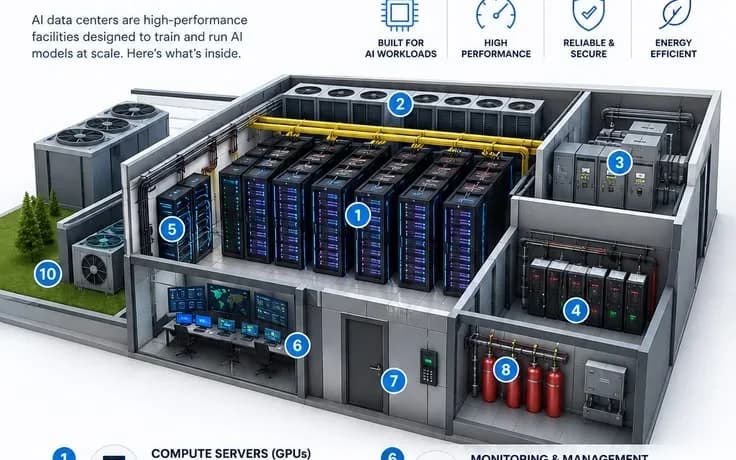
This profile examines Wingu Africa's origins as a Kenyan-born company, its edge computing focus, how it differentiates from larger operators in the market, and its role in the broader Kenyan digital ecosystem.
Who Is Wingu Africa?
Wingu Africa is the data centre operating arm of the Wingu Group, a Kenyan technology company founded and headquartered in Nairobi. The name Wingu is a Swahili word meaning cloud, a deliberate choice that signals the company's core mission of bridging local enterprises and content providers to global cloud platforms.
Unlike several of Kenya's data centre operators that are backed by international private equity or are subsidiaries of multinational groups, Wingu Group was established by Kenyan entrepreneurs with deep experience in the local technology and connectivity market. This domestic origin is significant. It means Wingu's approach to facility design, pricing, customer engagement, and service delivery is shaped by an understanding of the Kenyan market that comes from operating within it, not from importing a playbook developed for other continents.
The Wingu Group encompasses several related businesses spanning connectivity, cloud services, and managed IT, with Wingu Africa focused on the physical data centre infrastructure layer. This integrated structure gives the company an advantage in understanding the full stack of customer requirements, from network provisioning to cloud interconnection to ongoing management.
The Nairobi Edge Data Centre

Wingu Africa operates a carrier-neutral edge data centre facility located in Nairobi. The facility is designed and positioned as an edge computing node rather than a large-scale campus, meaning it prioritises low-latency access to end users, flexible deployment sizes, and rapid provisioning over the massive power capacity and rack counts that define hyperscale facilities.
An edge data centre in the Nairobi context serves a specific function. Kenya's internet users generate traffic that is best served from infrastructure within the city rather than routed through facilities further afield or from platforms hosted in Europe or South Africa. By placing compute and content caching infrastructure in Nairobi, Wingu Africa reduces round-trip times and materially improves the end-user experience for mobile banking, streaming, and SaaS applications.
The facility's design reflects this edge-oriented philosophy. Key characteristics include:
-
Carrier-neutral operation: Multiple network providers can deliver connectivity to the facility, ensuring tenants are not locked into a single telecom operator. This is particularly important in Kenya, where the choice of connectivity provider directly affects both cost and performance.
-
Cloud-on-ramp capability: The facility provides direct, low-latency connectivity to major cloud platforms. For Kenyan enterprises migrating workloads to AWS, Microsoft Azure, Google Cloud, or Oracle Cloud, Wingu offers a local point of presence that eliminates the need to backhaul cloud traffic to distant interconnection points.
-
Flexible deployment sizes: Rather than requiring customers to commit to large rack deployments or multi-year contracts for significant power allocations, Wingu accommodates smaller footprints. This makes the facility accessible to SMEs, startups, and content providers whose infrastructure needs do not justify a hyperscale deployment.
-
Content delivery optimisation: The facility is specifically designed to host content delivery network (CDN) nodes and caching infrastructure, making it a natural home for content providers and media companies that need to serve the Kenyan and East African market with minimal latency.
Edge Computing and Cloud-On-Ramp Focus
Wingu Africa's positioning around edge computing and cloud on-ramp services reflects a deliberate strategic choice. Globally, the growth of edge computing, driven by real-time applications, IoT, 5G, and content delivery, has created demand for smaller facilities positioned closer to users.
Kenya is experiencing a compressed version of this evolution. The country is simultaneously building its first hyperscale facilities, like iXAfrica's NBOX1, and developing demand for edge infrastructure. These are complementary rather than competing approaches. Hyperscale facilities handle large, centralised workloads including AI training and regional cloud regions. Edge facilities like Wingu handle the last-mile compute, content caching, and cloud access that directly serve end users.
The cloud-on-ramp function is particularly important in the Kenyan context. Enterprises are migrating to cloud platforms, driven by the need for scalability, reduced capital expenditure, and regulatory requirements around data protection and sovereignty. The Kenya Data Protection Act, enacted in 2019, creates a concrete regulatory incentive to use local infrastructure rather than hosting workloads in foreign jurisdictions.
Wingu's facility serves as the local entry point to global cloud platforms, allowing enterprises to maintain a physical presence in Kenya while accessing the full range of cloud services. This hybrid model, where compute and data reside locally but connect to global cloud platforms, is becoming the dominant architecture for Kenyan enterprises navigating performance and regulatory requirements.
CDN and Content Delivery Role
Content delivery is a significant and growing use case for data centre infrastructure in Kenya. As streaming services, digital media platforms, and e-commerce sites expand across East Africa, demand for locally cached content has increased. Content served from a Nairobi facility reaches Kenyan users in a fraction of the time required to fetch it from Europe or South Africa.
Wingu Africa has positioned itself to capture this demand. The facility is designed to host CDN edge nodes, streaming caches, and other content delivery infrastructure. This makes it an attractive proposition for:
-
Global CDN operators looking to establish or expand their East African presence with a local point of presence in Nairobi.
-
Streaming and media companies serving the Kenyan and wider East African market that need low-latency content delivery.
-
E-commerce platforms whose performance depends on fast page loads and responsive application behaviour for users across the region.
-
Over-the-top (OTT) service providers delivering video, music, and other media content to mobile subscribers in Kenya and neighbouring markets.
The content delivery role is closely linked to Wingu's carrier-neutral model. CDN operators benefit from connecting to multiple networks within a single facility, ensuring cached content reaches users regardless of which telecom operator they subscribe to. In Kenya's competitive telecom market, where Safaricom, Airtel, and others each serve significant subscriber bases, this multi-network accessibility is essential.

Target Market: SMEs, Cloud Providers, and Content Companies
Wingu Africa's customer base is distinct from the hyperscale-focused operators in the Kenyan market. The company targets three primary segments.
Small and medium enterprises. Kenya has a vibrant SME sector that accounts for a significant share of economic activity. These businesses are increasingly digitising their operations, adopting cloud applications, and requiring reliable infrastructure to host their workloads. However, most SMEs do not need and cannot justify the scale or cost of deployment at a hyperscale facility. Wingu's flexible, smaller-scale offering addresses this gap directly, providing enterprise-grade infrastructure with terms and deployment sizes that are accessible to mid-market organisations.
Cloud service providers and systems integrators. Kenya's growing cloud ecosystem includes local and regional cloud service providers, managed service providers, and systems integrators that need infrastructure from which to deliver their own services. These companies often require carrier-neutral facilities where they can connect to multiple upstream providers and deliver services to their own customers across different networks. Wingu's model is well-suited to this channel, serving as the physical infrastructure platform for a broader ecosystem of cloud and IT service providers.
Content providers and media companies. As discussed, the content delivery segment represents a natural fit for Wingu's edge-oriented facility. Content providers benefit from Nairobi's position as the connectivity hub for East Africa and from the low-latency access to end users that an edge facility provides.
How Wingu Differs from iXAfrica and Africa Data Centres
Understanding Wingu Africa's position in the Kenyan market requires recognising how it differs from the two largest alternative colocation providers.
Scale and capacity. iXAfrica's NBOX1 campus targets 16 MW of IT load capacity across multiple phases, with plans for an additional 53 MW at a second campus. Africa Data Centres operates multiple facilities across Nairobi and Mombasa as part of a Pan-African network of 40-plus facilities. Wingu, by contrast, operates a smaller, purpose-built edge facility. The scale difference is not a deficiency but a reflection of a different market segment. Wingu is not competing for the same hyperscale deployments that iXAfrica and ADC target.
Power density. iXAfrica has engineered its facility for rack densities of 40 to 50 kW per rack, designed to serve GPU clusters and AI workloads. Wingu's edge facility is designed for standard enterprise and content delivery workloads that typically require 3 to 10 kW per rack. These are the workloads that make up the vast majority of enterprise and CDN deployments in Kenya.
Capital structure. iXAfrica is backed by Actis and Helios Investment Partners, while Africa Data Centres is a subsidiary of Cassava Technologies, listed on the London Stock Exchange. Wingu Group is a Kenyan-born company with local ownership and investment. This gives it operational flexibility and a decision-making structure that can respond quickly to local market conditions without the governance overhead of multinational ownership.
Target customer. iXAfrica is actively pursuing global hyperscale cloud providers and large enterprise customers. Africa Data Centres serves a broad enterprise market across its Pan-African platform. Wingu focuses on the mid-market: SMEs, cloud providers, content companies, and regional enterprises that need reliable, flexible colocation without hyperscale overhead.
These differences make Wingu a complementary player in the ecosystem. The Kenyan market is large and diverse enough to support multiple facility types, and a dedicated edge operator expands the overall market rather than cannibalising demand from larger facilities.
Carrier-Neutral Model
Carrier neutrality is a foundational principle of Wingu Africa's offering. In a carrier-neutral facility, tenants choose their own connectivity providers rather than being limited to the facility operator's preferred network. This model has become the global standard for professional colocation, and its importance in Kenya cannot be overstated.
Kenya's connectivity market features multiple competing providers, including Safaricom, Airtel Kenya, Jamii Telecommunications, WIOCC, SEACOM, Liquid Datapoint, and others. Each provider has different network characteristics, pricing structures, and geographic strengths. An enterprise customer's choice of connectivity provider affects latency to different destinations, resilience through diverse path routing, and total cost of ownership.
Wingu's carrier-neutral model means customers select the provider or combination of providers that best meets their requirements. A content delivery company might connect to multiple telecom networks to ensure cached content reaches users on every mobile network. A cloud service provider might choose one provider for international connectivity and another for local last-mile delivery. This flexibility is valuable in Kenya, where interconnection quality between networks can vary and where regulatory and commercial dynamics create distinct advantages for different providers.
Sustainability Approach
Sustainability in Kenya's data centre sector benefits from a structural advantage that is unique among African markets: the country's electricity grid is approximately 93 percent renewable, dominated by geothermal energy from the Olkaria geothermal fields in the Rift Valley. This means any data centre operating on Kenya's national grid, including Wingu Africa's facility, starts with a significantly lower carbon footprint than equivalent facilities in markets dependent on coal, gas, or diesel-generated electricity.
Wingu has incorporated sustainability through practical efficiency measures rather than aspirational commitments. Facility-level efficiency remains important for controlling operating costs and demonstrating environmental responsibility to customers who increasingly include sustainability criteria in their vendor evaluations. The company employs energy-efficient cooling systems appropriate for its edge facility and power management practices that minimise waste. As international customers impose more stringent ESG requirements on their supply chains, Wingu's position on Kenya's predominantly green grid provides a natural sustainability advantage.
Partnerships and Ecosystem
Wingu Africa operates within a broader ecosystem of technology and connectivity partners. The Wingu Group's integrated structure, spanning connectivity, cloud services, and managed IT alongside the data centre operation, creates natural partnerships with technology vendors, network operators, and cloud platforms.
Connectivity partnerships with multiple network providers enable the carrier-neutral model. Technology partnerships with cloud platforms and infrastructure vendors ensure the facility supports modern enterprise workloads. Relationships with systems integrators and managed service providers create a channel through which Wingu's infrastructure reaches end customers who may not directly engage with a colocation provider.
This ecosystem approach suits the Kenyan market, where enterprise technology adoption often involves intermediaries including systems integrators, value-added resellers, and managed service providers. By positioning itself as the infrastructure platform these intermediaries use, Wingu extends its market reach beyond customers who would directly engage with a colocation provider.
Future Plans
Wingu Africa's growth trajectory will follow the demand it serves. As Kenya's digital economy expands, the need for edge infrastructure in Nairobi and potentially other Kenyan cities will increase. The continued migration of enterprises to cloud platforms will sustain demand for cloud-on-ramp infrastructure. The growth of content consumption, driven by affordable smartphones, expanding broadband access, and new streaming services, will increase demand for CDN and content caching infrastructure. Regulatory developments around data protection and potential data localisation requirements could create additional demand for local data centre capacity.
Wingu's natural expansion path would involve increasing capacity at its existing Nairobi facility and potentially establishing additional edge nodes in other locations within Kenya or the wider East African region. The edge computing model is inherently distributed, meaning growth for Wingu is more likely to take the form of additional, smaller facilities in strategic locations rather than a single massive campus expansion.
Role in Kenya's Digital Ecosystem
Wingu Africa occupies a specific and valuable niche in Kenya's data centre landscape. It is not trying to be the largest facility or to attract the biggest hyperscale deployments. Instead, it serves as the accessible, flexible, locally-owned infrastructure option for the broad middle of the Kenyan digital market.
This role matters. It provides infrastructure access to SMEs and mid-market enterprises that are the backbone of Kenya's economy but are often underserved by facilities designed for large corporate and hyperscale customers. It provides a local platform for cloud service providers and content companies that need Nairobi-based infrastructure without hyperscale overhead. As a Kenyan-born company, it contributes to local expertise and ownership in a sector increasingly attracting international capital.
The presence of operators like Wingu, alongside iXAfrica and Africa Data Centres, signals the maturation of Kenya's data centre market. A healthy ecosystem requires providers at different scales, serving different customer segments, with different ownership structures and strategic orientations. Wingu Africa's edge-focused, carrier-neutral, locally-rooted approach is a necessary and complementary part of that ecosystem.
For a full list of data centre operators and facilities in Kenya, visit our data centre directory. To learn more about the demand driving edge infrastructure, see our article on edge computing in East Africa. If you are new to colocation, our guide to colocation in Kenya covers the fundamentals.