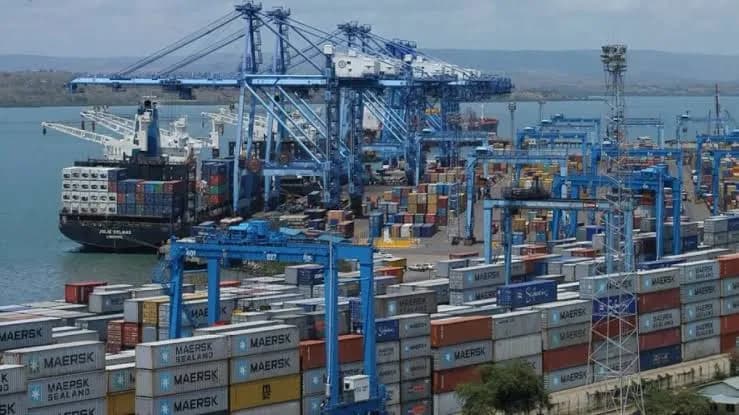
One of the biggest numbers ever attached to Kenya's technology sector arrived from an unexpected direction: Greece. In August 2026, Amaco Energy Group, a Greek multinational energy and infrastructure firm, proposed a $1.5 billion (about Sh194.2 billion) artificial intelligence data centre for Mombasa (Business Daily, 17 August 2026). No data centre proposal in Kenya has carried a bigger price tag, and if it is ever built, it would do something no Kenyan facility has done before: make its own electricity from a floating power plant instead of buying it from the national grid.
The story has moved quickly from idea to paperwork. In September 2026, Amaco announced a cooperation agreement with GE Vernova, the world's largest manufacturer of large gas turbines, to supply equipment for the project's power barge (Business Daily, 10 September 2026). The company's founder and chief executive, Theodore Theodoropoulos, has met officials in Nairobi, including ICT Cabinet Secretary William Kabogo. But almost everything that decides whether this project becomes real, the financing, the customers, the final size, the approvals, has not been settled.
So this article does what DC254 always does: it collects what is confirmed, explains the technology in plain language, and separates the parts of the story that are solid from the parts that are still a pitch.
What is actually proposed
Amaco calls the project HERCULES, short for Molecules-to-Electrons Offshore AI Smart Power and Data Center (Construction Review Online, 10 September 2026). The name is a mouthful, but the idea is simple. A normal data centre buys electricity from the grid, then spends a large share of it on cooling its servers. HERCULES bundles the three pieces, power generation, cooling, and computing, into one design that sits near the Port of Mombasa and runs independently of Kenya's grid.
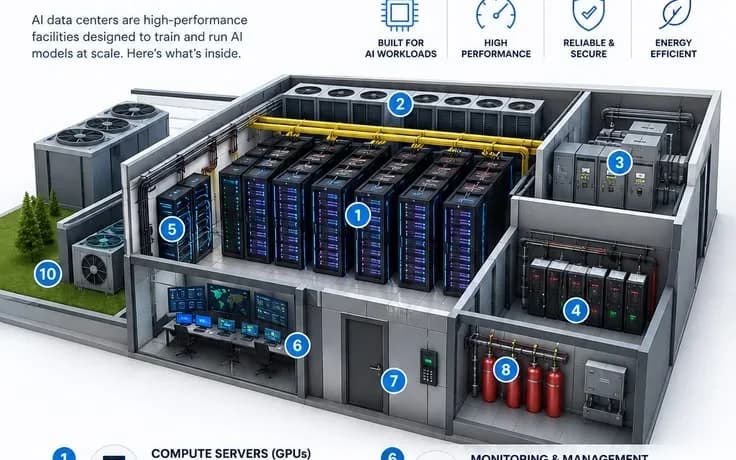
The computing part would be an AI data centre: a facility packed with servers arranged to train and run AI models. AI facilities are power-hungry in a way ordinary data centres are not. A conventional facility might draw a few megawatts, while a large AI campus can draw 100 MW or more, roughly the electricity used by 100,000 households (TechCabal, 20 August 2026). Globally, data centres consumed about 415 terawatt-hours of electricity in 2024, a figure the IEA expects to approach 945 terawatt-hours by 2030, with AI the main driver. At that scale, where the power comes from stops being a detail and becomes the design decision, which is exactly the problem Amaco is proposing to solve.
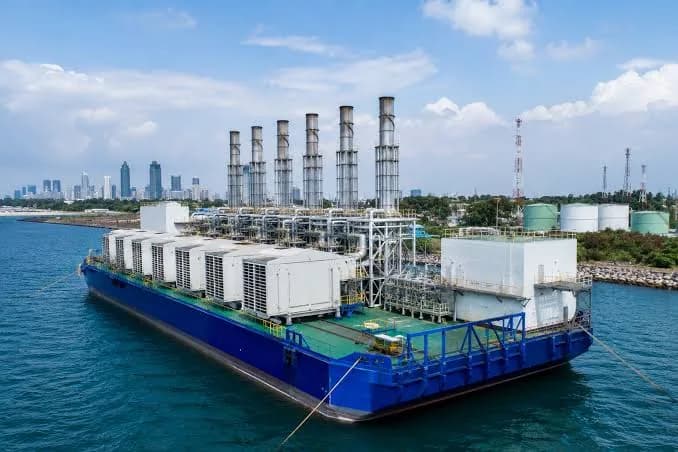
The power barge, explained in plain terms. The heart of the proposal is a power barge, an unmotorised floating platform that carries a power plant on its hull, the way a cargo barge carries goods (Business Daily, 10 September 2026). Power barges are not science fiction; they are used around the world where building a plant on land is slow or complicated. The plant is assembled in a shipyard, floated to its destination, connected, and switched on.
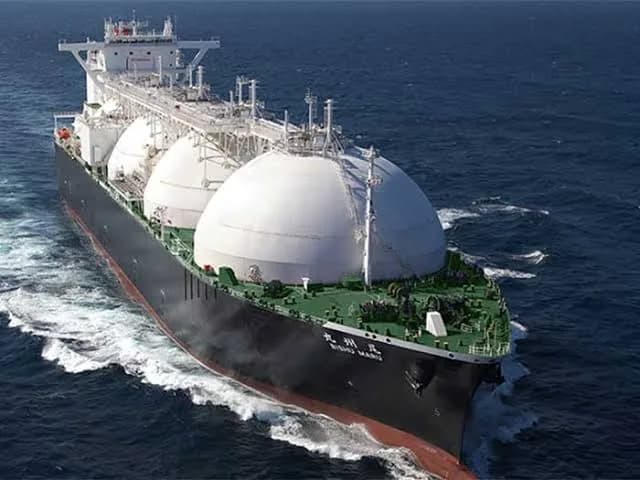
In Amaco's plan, the barge burns liquefied natural gas (LNG, which is natural gas cooled until it turns into a liquid that ships can carry) to generate electricity. That electricity feeds the data centre directly, and the same integrated system handles cooling, with heat and cold recovered and reused inside the platform rather than vented (w.media, 21 August 2026). Because the package makes its own power, it does not depend on the grid and does not compete with Kenyan homes and hospitals for electricity. Amaco also says the design can later add renewable energy and hydrogen, though it starts on gas (TechCabal, 20 August 2026).
Who is Amaco Energy Group?
Amaco Energy Group describes itself as a Greek multinational energy and infrastructure firm, led by founder and chief executive Theodore Theodoropoulos, who has personally led the Kenya negotiations (w.media, 21 August 2026). The company maintains offices in Greece and the United States, and its Kenyan project vehicle is registered as AMACO Ltd (Kenya), according to its own project pages (fetched 15 September 2026).
The Mombasa proposal did not appear from nowhere. The company registered an LNG-to-power project in Kenya in 2024, with the reference code ES00101/AMACO/2024, covering LNG delivery, storage and regasification (turning liquid gas back into gas) at Kwale County near the Mombasa port. The company lists a regasification capacity of 10.5 billion cubic metres (about 6.2 million tonnes) per year, a target start year of 2027, and a current status of permitting phase (AMACO project page). The data centre announcement is effectively step two of that energy plan: the gas infrastructure now has a computing customer attached.
What the GE Vernova agreement changes
In September 2026 the project gained its most credible ingredient so far. Amaco announced a cooperation agreement under which GE Vernova, the US energy equipment company descended from General Electric, will supply gas turbines for the Hercules power barge, with electrification and digital technologies possibly following as the platform develops (Business Daily, 10 September 2026). In the company's own words: "Amaco-Hercules has entered into a cooperation agreement with General Electric that will see it integrate GE Vernova gas turbines into the Hercules power barge facility."
Why does this matter? Because turbine supply is one of the hardest bottlenecks in the global power business right now, and GE Vernova is the industry's biggest player, with more than 7,000 large turbines totalling over 800 GW of capacity across more than 120 countries (Business Daily, 10 September 2026). A vendor of that size engaging publicly signals the project has moved beyond brochure stage. To keep it honest: a cooperation agreement is still not a hardware order with delivery dates, both sides describe integration "as the platform develops". But it is more than most concept proposals ever secure.
Why Mombasa, and why off-grid
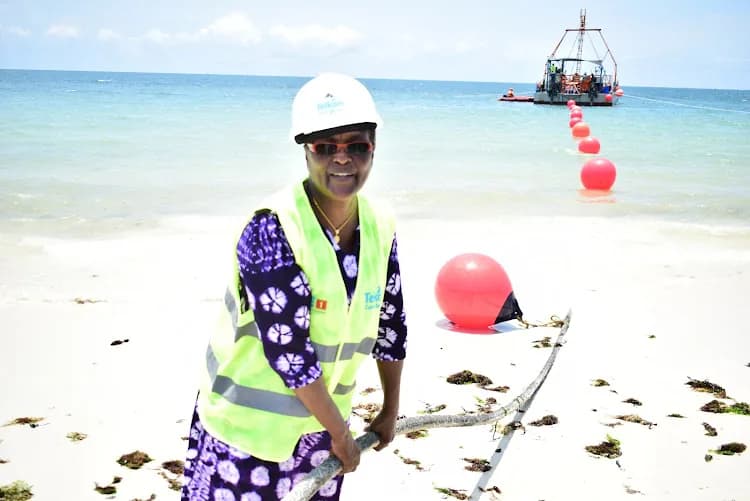
Kenya's data centres cluster in Nairobi because the customers are there; our analysis of why Kenya's data centres cluster in Nairobi and Mombasa explains the three forces behind that map. Mombasa has always offered a different set of inputs. Seven live submarine cable systems make landfall on its coast (SEACOM, TEAMS, EASSy, LION2, DARE1, PEACE and 2Africa), with Africa-1 landed and Meta's Daraja in development, and the landing stations themselves already anchor facilities like iColo MBA1, the coast's busiest interconnection point. The port matters twice for this project: it is where LNG fuel can be delivered, and it is where the cables come ashore.
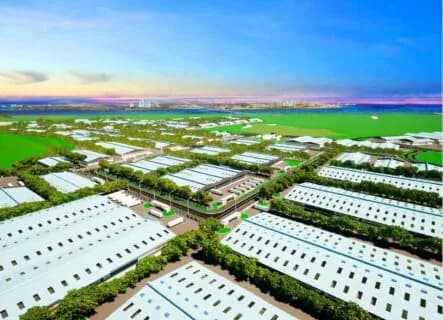
The candidate sites are Dongo Kundu and Kilindini, next to the port and the 3,000-acre Dongo Kundu Special Economic Zone, where industrial park developer ARISE operates (Construction Review Online, 10 September 2026). Amaco points to a demand pipeline of roughly 75 MW of potential base-load demand from heavy industry, plus another 75 to 100 MW potentially from initial data centre customers (Business Daily, 10 September 2026). In other words, the project bets on the port economy and the SEZ rather than on Nairobi's banks and telcos.
The off-grid choice addresses the constraint that has capped every big Kenyan data centre plan so far: electricity. Kenya's record peak demand was 2,439 MW, reached in December 2025, so a single 100 MW AI campus would add demand equal to about 4 percent of the national peak (TechCabal, 20 August 2026). The cautionary tale is the Microsoft-G42 project near Olkaria in Nakuru County, announced in May 2024 at about $1 billion, which has stalled partly over a power request that grew from 60 MW to 1,000 MW, roughly a third of Kenya's total installed generation (Kenyans.co.ke, 22 August 2026; Business Daily, 10 September 2026). Amaco's answer is to sidestep that fight entirely: bring your own power plant. We unpack the generation-versus-reliability logic behind moves like this, and the questions buyers should ask any facility about power, in our power reliability explainer.
There is even a plan for the surplus. Amaco has said the system could contribute additional generation to Kenya's broader energy needs, and Construction Review Online reports a potential export path to the local grid near the Mariakani substation (Kenyans.co.ke, 22 August 2026; Construction Review Online, 10 September 2026). That would make the project unusual in a second way: a data centre that adds electricity to the grid instead of straining it.
What is confirmed, and what is not
Confirmed. The $1.5 billion (Sh194.2 billion) proposal for Mombasa, first reported on 17 August 2026 (Business Daily). The GE Vernova cooperation agreement for the power barge, announced 10 September 2026 (Business Daily). Dongo Kundu and Kilindini as candidate sites, citing port proximity and Special Economic Zone demand (Business Daily, 10 September 2026). Government engagement, including CEO Theodore Theodoropoulos's meetings in Nairobi and his August meeting with ICT Cabinet Secretary William Kabogo (Business Daily, 10 September 2026). The underlying 2024 LNG-to-power registration at Kwale County, in permitting phase with a 2027 target start year (AMACO project page).
Reported, not confirmed by Amaco. The 28-month construction estimate after approval (Construction Review Online, 10 September 2026) and the surplus-export plan via Mariakani (Construction Review Online; Kenyans.co.ke, 22 August 2026).
Not disclosed at all. The data centre's final capacity in megawatts, the financing behind the $1.5 billion figure, the customers, the fuel supply contracts, the water arrangements, and the environmental assessment for siting an LNG-fired plant next to a working port. Amaco has not published a construction timeline for the data centre itself (Business Daily, 10 September 2026).
One housekeeping note: as of 15 September 2026, DC254 has not added this project to its directory count of 27 tracked facilities. A proposal without approval, financing, or a confirmed site does not yet meet the directory's verification bar, whatever the size of its headline number. Kenya's data centre market in numbers tracks what has actually been built and disclosed, including the roughly 10.5 MW of operational IT load published by the eight facilities that disclose figures.
The open questions
The money. A $1.5 billion project needs financing, and no lenders or equity partners have been named. TechCabal's caution from 20 August 2026 is worth keeping in view: Africa has no shortage of ambitious infrastructure proposals that never progressed beyond the announcement.
The size. Amaco's spokesperson described "one of the world's largest AI data-centre facilities" without a megawatt figure (w.media, 21 August 2026). Every comparison in this article, and every capacity planning decision by the grid operator or the county, waits on that number.
The fuel. LNG must be imported, and gas in a country whose electricity is mostly renewable (Kenya runs about 1 GW of geothermal, one of the world's greenest grids) invites a cost and carbon debate. The IEA estimates gas supplies about 26 percent of data centre electricity globally, but in Kenya the LNG system has to prove an advantage on cost and reliability over the alternatives (TechCabal, 20 August 2026).
The water. Mombasa has long struggled with water shortages and relies on supplies from outside the county. Amaco says the integrated system avoids pressuring local water resources, a consequential claim in that city, and one that should be established clearly before any approval (TechCabal, 20 August 2026).
The approvals. The project is in the permitting phase, and the timing is notable: Kenya is mid-transition in how it regulates data centres, with the Communications Authority having placed them under the telecommunications licensing regime and now consulting on a standalone data centre licence (Business Daily, 10 September 2026).
What to watch next
Big proposals announce themselves loudly and then go quiet, so the useful discipline is to watch for observable milestones. Each of these would move the project from pitch to plan:
- A formal approval or environmental licence from the relevant Kenyan authorities, which is the gate everything else sits behind.
- A firm turbine order, meaning a hardware contract with delivery dates rather than a cooperation agreement.
- A berthing or anchoring arrangement with the Kenya Ports Authority for the barge within the Port of Mombasa ecosystem.
- A disclosed capacity figure and ideally a named anchor customer for the computing capacity.
- Financing, in the form of named lenders, equity partners, or a final investment decision.
- Offtake interest from the Dongo Kundu SEZ's industrial tenants, the demand pool Amaco says justifies the site.
If those milestones start landing, Mombasa's long-standing role as a cable and transit stop could grow into something new: the first credible attempt at a third force in Kenya's data centre map, built on self-supplied power and port demand rather than the grid. That is exactly why we flagged the proposal when it first appeared, and why this article will be updated as the facts change. Until then, the honest label is the one we gave it in August: a serious test of whether the coast can host compute at scale, and no more than that yet.
Frequently asked questions
What is the Amaco Mombasa data centre project?
It is a proposed $1.5 billion (Sh194.2 billion) artificial intelligence data centre in Mombasa, announced by Greek energy firm Amaco Energy Group in August 2026 and developed under the name Project HERCULES. Its defining feature is that it would generate its own electricity from an LNG-fired floating power barge instead of buying power from Kenya's national grid. The project is at proposal stage: approvals, financing, customers and a final capacity figure have not been announced.
Who is Amaco Energy Group?
Amaco Energy Group is a Greek multinational energy and infrastructure firm led by founder and chief executive Theodore Theodoropoulos, with offices in Greece and the United States. Its Kenyan project vehicle is AMACO Ltd (Kenya). The company registered an LNG-to-power project in Kenya in 2024 (reference ES00101/AMACO/2024), covering LNG delivery, storage and regasification at Kwale County near the Mombasa port, and the data centre proposal builds on that energy plan.
What is a power barge?
A power barge is an unmotorised floating platform that carries a power plant on its hull, the way a cargo barge carries goods. It can be built in a shipyard, floated to its destination and connected to customers there, which makes it useful where building a plant on land is slow or complicated. In the Amaco plan, the barge burns liquefied natural gas to generate electricity for the data centre and its cooling systems.
Why Mombasa and not Nairobi?
Mombasa offers inputs Nairobi does not: seven live submarine cable systems make landfall on its coast (with Africa-1 landed and awaiting service), its port can deliver LNG fuel by ship, and the nearby 3,000-acre Dongo Kundu Special Economic Zone supplies industrial demand. Amaco cites a pipeline of about 75 MW of potential industrial base-load demand plus another 75 to 100 MW from initial data centre customers (Business Daily, 10 September 2026). Nairobi still holds most of Kenya's data centre demand, so the project bets on the port economy rather than the capital's enterprise base.
How big will the Mombasa data centre be?
No capacity figure has been disclosed. Amaco's spokesperson described it as "one of the world's largest AI data-centre facilities", and reported demand at the site runs 75 to 100 MW for initial data centre customers. For scale, a 100 MW AI campus would add demand equal to roughly 4 percent of Kenya's record peak electricity demand of 2,439 MW, reached in December 2025 (TechCabal, 20 August 2026). Treat any capacity number you see as unofficial until Amaco publishes one.
When will the Amaco data centre be built?
Construction has not started and no official timeline has been published. Construction Review Online reported on 10 September 2026 that, if approved, the project is expected to take around 28 months to build, and Amaco's own LNG project page lists a start year of 2027 with the project in the permitting phase. Both figures are plans, not commitments, and the project still needs regulatory approval.
Will it use Kenya's national grid?
No, the design is intentionally off-grid: the Hercules barge generates electricity for the data centre and its cooling directly. Amaco has said the system could contribute surplus power to Kenya's wider energy needs, and Construction Review Online reports a potential export path to the local grid near the Mariakani substation. That would be a bonus, not the core design.