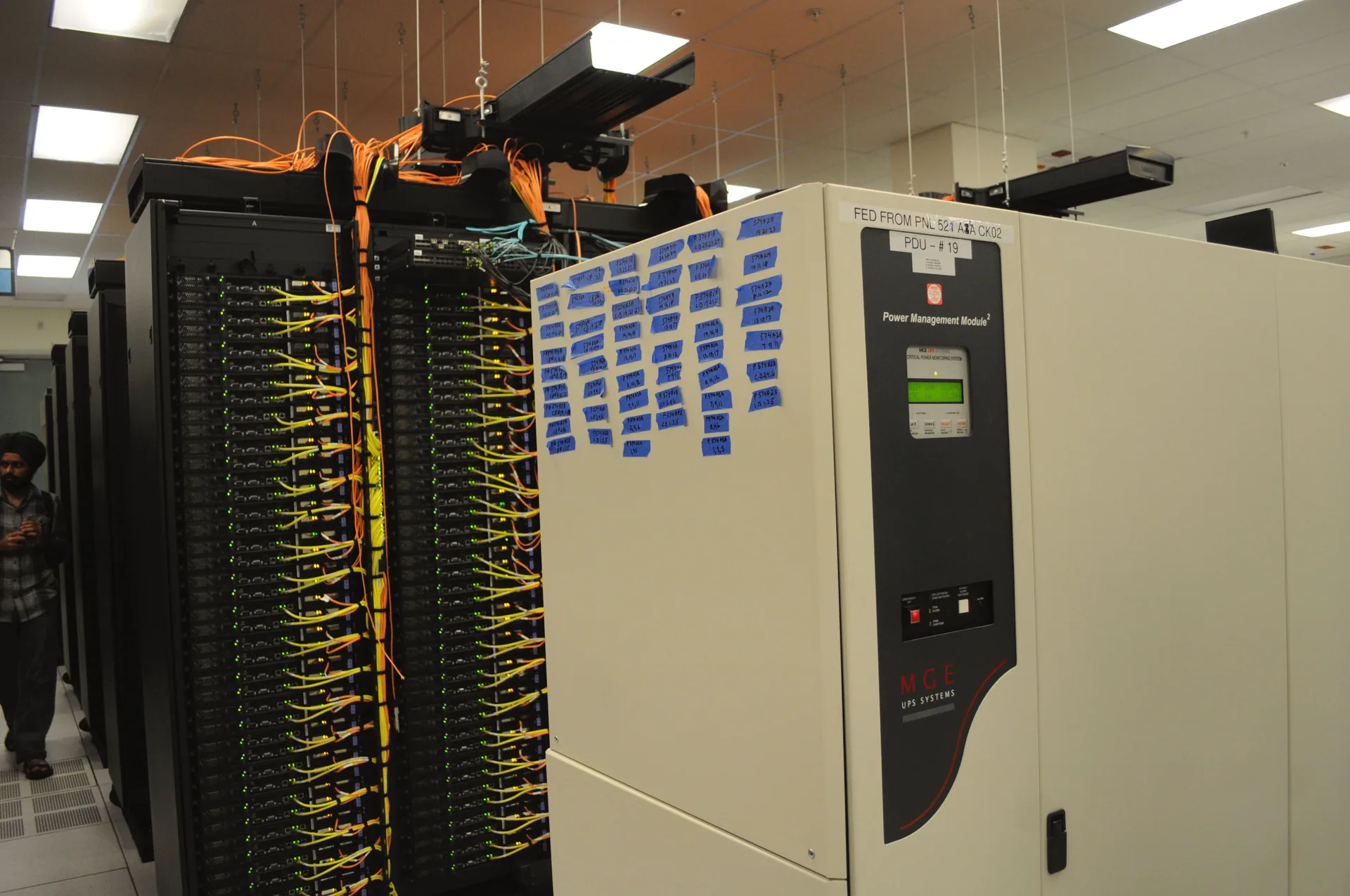

Structured cabling is the nervous system of any data centre, and getting it wrong in Kenya carries significant operational and financial consequences. From the high-density halls of Africa Data Centres in Nairobi to growing colocation facilities in Mombasa, the quality of cabling infrastructure directly determines network reliability, troubleshooting speed, and the ability to attract enterprise tenants. This guide examines the data centre cabling standards Kenya operators follow, the practical challenges of implementation, and the emerging requirements driven by AI workloads.
Key Cabling Standards Governing Kenyan Data Centres
TIA-942: The Global Benchmark
The TIA-942 standard (currently at Revision D, published by the Telecommunications Industry Association) is the single most influential cabling standard in Kenyan data centres. It defines the telecommunications infrastructure for data centres, including cabling topology, design, and installation practices.
TIA-942 organises data centre spaces into a hierarchical model:
- Entrance Room (ER): Where external carrier circuits (such as those from Liquid Intelligent Technologies or Safaricom) enter the facility
- Main Distribution Area (MDA): The central hub housing the Main Cross-Connect, core switches, and the primary patch panel fields
- Horizontal Distribution Area (HDA): Serves individual rows or zones of equipment racks
- Equipment Distribution Area (EDA): The rack-level area where servers, storage, and network devices connect
Kenyan Tier III facilities like Africa Data Centres' Nairobi campus and PAIX (Pan African Internet Exchange) have adopted TIA-942's structured approach, which ensures scalability and simplified troubleshooting. When operators invest in data centre design and construction, TIA-942 compliance is a fundamental specification.
ISO/IEC 11801: The International Counterpart
The ISO/IEC 11801 standard, particularly Part 5 (focused on data centres), provides a complementary framework. While TIA-942 is North American in origin, ISO/IEC 11801 is the international equivalent and is often referenced by European-backed operators. In Kenya, GDCA (Global Data Centre Africa) and multinational banking tenants frequently request ISO/IEC 11801 compliance.
The standard defines generic cabling for customer premises and specifies performance classes: Class D (Cat5e), Class E (Cat6), Class EA (Cat6a), Class F (Cat7), and Class FA (Cat7a). Kenyan new-build facilities typically target Class EA minimum for copper and OM4 or OS2 for fibre.
The Cabling Hierarchy: Backbone, Horizontal, and Patch
Backbone Cabling (MDF to IDF)
Backbone cabling connects the Main Distribution Frame to Intermediate Distribution Frames or Horizontal Distribution Areas. In Kenyan data centres, backbone runs predominantly use fibre optic cable due to the distances involved and the bandwidth requirements.
- Single-mode fibre (OS2): Supports distances up to 10 kilometres at 10G and is used for campus-scale interconnections, such as between the Africa Data Centres facility in Westlands and carrier PoPs along Waiyaki Way
- Multimode fibre (OM3/OM4): Supports distances up to 100–150 metres at 10G/40G and is common for intra-building backbone links
- OM5 wideband multimode fibre: Emerging in Kenyan facilities planning for 400G upgrades, supporting multiple wavelengths over a single fibre strand
Horizontal Cabling (to Racks)
Horizontal cabling runs from the HDA patch panels to individual rack positions. In Kenya, Cat6a (augmented Category 6) is the current mainstream standard, supporting 10GBASE-T at frequencies up to 500 MHz over distances up to 100 metres. Cat7 is used selectively in premium facilities but requires specialised GG45 or TERA connectors that are harder to source locally.
Patch Panels and Cable Management
Proper patch panel density and labelling are non-negotiable. Kenyan colocation providers like colocation services in Kenya operators use high-density patch panels (48-port in 1U or 96-port in 2U) to maximise rack space. Cable management accessories, including horizontal and vertical cable managers, bend radius guides, and Velcro ties (never cable ties on data cables), are essential for maintaining airflow pathways and enabling rapid troubleshooting.

Copper vs Fibre: Practical Considerations for Kenya
| Parameter | Cat6a Copper | Single-Mode Fibre (OS2) | Multimode Fibre (OM4) |
|---|---|---|---|
| Max Distance | 100 m | 10+ km | 150 m (at 40G) |
| Max Speed | 10 Gbps | 100 Gbps+ | 100 Gbps (short reach) |
| Cost per Metre | KES 300–800 | KES 150–400 | KES 200–500 |
| Connector | RJ45 | LC/SC | LC/SC |
| Power Consumption | Higher (active electronics) | Lower | Lower |
| Best Use | Server-to-ToR switch, horizontal runs | MDF-to-IDF backbone, carrier links | Intra-hall backbone, HDA interconnects |
Sourcing Challenges in Kenya
One of the persistent challenges for Kenyan data centre operators is sourcing certified cabling and components locally. While basic Cat6 patch cords are widely available in Nairobi's electronics markets (notably Luthuli Avenue and Kirinyaga Road), certified Cat6a, Cat7, and OM4/OS2 fibre components are predominantly imported from manufacturers like CommScope, Panduit, Corning, and Belden.
Lead times for specialised components can range from 2–8 weeks, which impacts project timelines for new builds. Africa Data Centres and Liquid Intelligent Technologies typically maintain strategic inventory buffers, but smaller operators may face delays. The Kenya Bureau of Standards (KEBS) requires imported cabling to meet relevant IEC standards, and customs documentation must include test certificates from accredited laboratories.
The Role of Certified Installers in Kenya
BICSI RCDD and Manufacturer Certifications
The BICSI RCDD (Registered Communications Distribution Designer) credential is the gold standard for data centre cabling design globally, and its importance is growing in Kenya. RCDD-certified professionals understand the full scope of TIA-942 compliance, including pathway design, grounding and bonding, and cable performance specifications.
In the Kenyan market, key installation partners include:
- Dimension Data (now part of NTT): BICSI-certified teams that have deployed cabling for multiple banking sector data centres
- CSquared: The fibre infrastructure company provides backbone cabling for several Nairobi facilities
- IntraVision Technologies: A local integrator with CommScope and Panduit certifications serving East African enterprises
- Safaricom Business: Offers structured cabling services for enterprise data rooms and small colocation deployments
Manufacturer-specific certifications from CommScope (SYSTIMAX), Panduit, and Corning ensure installers follow approved practices for terminating and testing their respective cabling systems. These certifications are particularly important for warranty claims, a 25-year system warranty from CommScope, for example, is only valid if installation is performed by a certified partner.
Cable Management in High-Density Environments
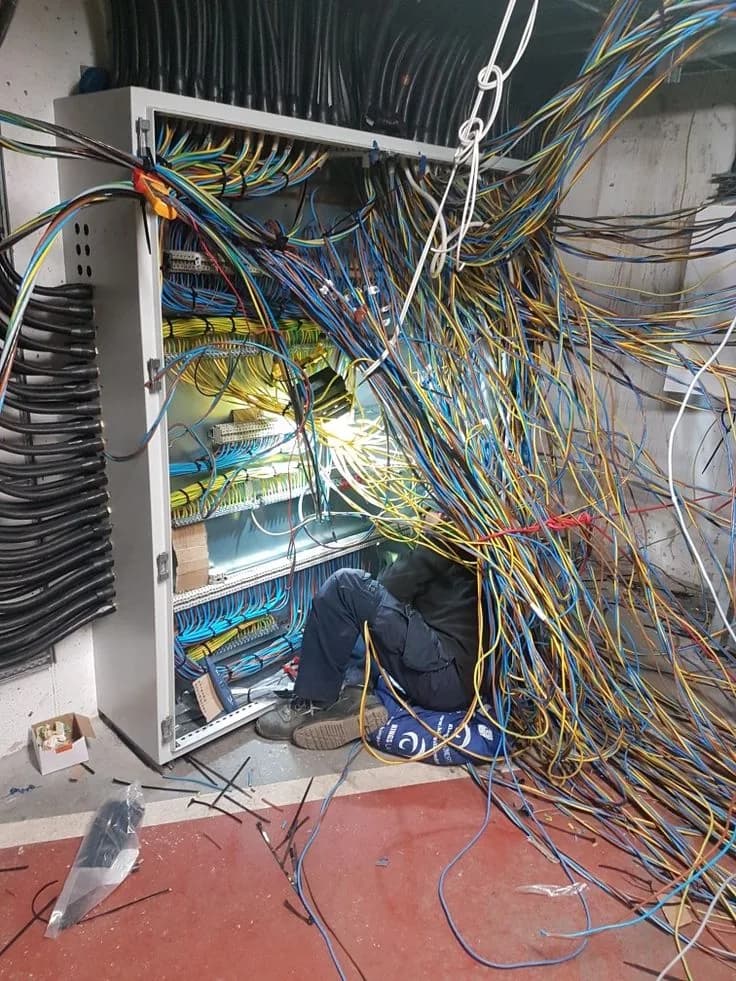
Kenyan data centres are increasingly deploying high-density computing, with some racks drawing 15–20 kW to support GPU clusters for AI workloads. High-density environments demand meticulous cable management for several reasons:
- Airflow preservation: Poorly managed cables block under-floor or overhead airflow, creating hot spots. Given that data centre cooling systems already work hard against Nairobi's ambient temperatures, cable obstructions compound the cooling challenge significantly
- Maintenance speed: In a well-organised facility, a technician should be able to trace any cable from patch panel to server in under five minutes. Disorganised cabling can turn a 15-minute task into a multi-hour exercise
- Capacity planning: Structured cabling with proper labelling allows facilities to identify unused ports and plan for expansion without deploying new cable runs
Best practices adopted by leading Kenyan facilities include:
- Colour-coded cables by function (e.g., blue for Ethernet, yellow for fibre, red for management networks)
- Pre-terminated trunk cables to reduce on-site termination errors and speed up deployment
- Overhead cable trays rather than under-floor routing where possible, separating cabling from cooling airflow
- Automated infrastructure management (AIM) systems using RFID-tagged patch cords for real-time port mapping
Nairobi's Climate and Cabling Longevity
Nairobi sits at approximately 1,795 metres above sea level, with an average temperature of 19–25°C and relative humidity frequently exceeding 65%. These environmental factors directly affect cabling infrastructure:
- Humidity and corrosion: High humidity accelerates oxidation of copper contacts, particularly at RJ45 connectors in poorly sealed environments. Gold-plated contacts are essential, and regular inspection schedules should include visual checks for verdigris on exposed connectors
- Heat and cable jacket degradation: PVC cable jackets become brittle under sustained heat exposure. Low-Smoke Zero-Halogen (LSZH) jackets are now the standard specification in Kenyan Tier III facilities, offering better flame resistance and reduced toxic fume emission, a critical safety consideration
- UV exposure: Facilities with rooftop or exposed cable runs (more common in edge computing deployments in smaller Kenyan towns) must use UV-resistant outdoor-rated cables
- Pest resistance: Termites and rodents are a real threat to ground-level cable runs in Kenya. Armoured cables and proper conduit sealing are necessary for any at-grade or below-grade installations
400G Ethernet and Cabling for AI Workloads

The rapid growth of GPU computing and AI workloads in Kenya (driven by financial services, agritech, and government digitisation initiatives) is accelerating the adoption of 400G Ethernet (IEEE 802.3bs). This has profound implications for cabling infrastructure:
- Fibre is mandatory for 400G: No copper standard supports 400G speeds. Single-mode fibre (OS2) is preferred for distances beyond 100 metres, while OM4 multimode supports 400G at 100 metres using parallel fibre (8-fibre MPO) configurations
- MPO connectors: Multi-fibre Push On (MPO) connectors (typically 12-fibre or 24-fibre) are essential for 400G parallel optic transceivers. Kenyan facilities upgrading to 400G must invest in MPO patch panels and testing equipment
- Cable bend radius: Higher-speed fibre is more sensitive to macrobending losses. Installers must maintain minimum bend radius specifications rigorously, particularly in high-density patch panel areas
- Power over Fibre (PoF): While still emerging, Power over Fibre technology is being evaluated for remote optical transceivers in Kenyan edge data centres, potentially reducing the need for separate power cables to some networking equipment
Africa Data Centres' Nairobi facility has already begun provisioning 400G-capable cabling paths in anticipation of growing AI demand, and Liquid Intelligent Technologies has announced plans to upgrade its East African backbone to support 400G interconnects between Nairobi, Mombasa, and Dar es Salaam.
Testing, Certification, and SLA Implications
Fluke Testing Protocols
Every cable link in a professional Kenyan data centre should be tested and certified using a Fluke Networks DSX CableAnalyzer (or equivalent) before being placed into service. The testing process verifies:
- Wiremap: Correct pin-to-pin connectivity
- Insertion Loss: Signal attenuation across the link
- Return Loss: Signal reflected back toward the source
- Near-End Crosstalk (NEXT) and Far-End Crosstalk (FEXT): Interference between adjacent pairs
- Channel vs Permanent Link testing: Channel tests include patch cords at both ends; permanent link tests cover the fixed cabling only
Certification Documentation
Certification reports serve multiple critical purposes:
- Warranty validation: Manufacturers like CommScope and Panduit require Fluke test reports to honour 20–25 year system warranties
- SLA compliance: Colocation customers, particularly Kenyan banks operating under Central Bank of Kenya (CBK) data governance requirements, demand certified cabling documentation as part of their due diligence
- Troubleshooting baseline: Test reports from initial installation provide a performance baseline for future comparison if connectivity issues arise
- Handover documentation: When facilities change ownership or management (as occurred with several acquisitions in the Kenyan market), certified cabling records ensure continuity
Kenyan operators that maintain rigorous Fluke testing programmes include Africa Data Centres, IXAfrica, and PAIX Nairobi. Smaller facilities sometimes skip comprehensive testing to reduce costs, a practice that frequently leads to intermittent connectivity issues and customer dissatisfaction.
Real-World Cabling Practices in Kenyan Facilities
Africa Data Centres, Nairobi
The flagship Nairobi campus (formerly the Telkom Kenya facility along Muthangari Drive) features a fully structured cabling design following TIA-942-B topologies. The facility uses a combination of CommScope SYSTIMAX 360 fibre for backbone runs and Cat6a copper for horizontal distribution. Cable management employs overhead ladder racking with horizontal wire managers at each rack, and all installations are Fluke-certified with full documentation available to colocation tenants.
PAIX Nairobi
The Pan African Internet Exchange facility in Nairobi serves as a critical interconnection point for East African carriers. Its cabling infrastructure prioritises high-density fibre patching with MPO-based trunk assemblies supporting the KIXP (Kenya Internet Exchange Point) peering fabric. PAIX maintains colour-coded cabling with strict separation between carrier, peering, and management networks.
IXAfrica
As one of Nairobi's newer carrier-neutral data centres, IXAfrica has invested in pre-terminated cabling systems to accelerate deployment times for new tenants. The facility targets TIA-942-C compliance and offers 400G-ready fibre paths as standard in its premium colocation tiers.
Frequently Asked Questions
What cabling standard is most commonly used in Kenyan data centres?
TIA-942 is the most widely adopted cabling standard in Kenyan data centres, particularly among Tier III facilities like Africa Data Centres and PAIX Nairobi. ISO/IEC 11801 is also referenced, especially by multinational colocation operators. Both standards define the structured cabling architecture, including backbone and horizontal cabling subsystems, that Kenyan facilities follow to achieve international compliance and attract enterprise clients.
Is it better to use copper or fibre optic cabling in a Kenyan data centre?
Both have their place. Copper (Cat6a/Cat7) is cost-effective for short runs up to 100 metres and is commonly used for horizontal cabling to individual server racks. Single-mode fibre (OS2) is preferred for backbone cabling between the Main Distribution Frame (MDF) and Intermediate Distribution Frames (IDF) due to its longer reach and higher bandwidth. Multimode fibre (OM3/OM4) is used for shorter backbone runs within the same hall. For new AI and GPU deployments, fibre is increasingly the default.
How does Nairobi's climate affect data centre cabling?
Nairobi's high humidity (averaging 60–80%) and warm temperatures can accelerate cable jacket degradation, particularly for PVC-sheathed cables. Low-smoke zero-halogen (LSZH) rated cables are strongly recommended to mitigate toxic fume risks. Condensation can also form on exposed patch cords if the cold aisle is significantly cooler than the ambient environment. Proper environmental controls and raised-floor cable routing help manage these risks effectively.
Why is Fluke testing and certification important for Kenyan colocation providers?
Fluke DSX cable testing provides independent, standardised verification that every cable link meets its rated performance (e.g., Cat6a at 10GBASE-T). This certification documentation is essential for colocation providers to guarantee service-level agreements, support warranty claims from cable manufacturers, and demonstrate compliance to enterprise tenants. In Kenya, colocation customers (particularly banks and telecom operators) routinely request Fluke test reports before signing leases.
What certifications should a data centre cabling installer have in Kenya?
The most recognised credentials include BICSI RCDD (Registered Communications Distribution Designer), manufacturer-specific certifications from CommScope, Panduit, and Corning, and CompTIA Network+ for foundational networking knowledge. In Kenya, Africa Data Centres and Liquid Intelligent Technologies typically require BICSI-certified installers for their facility builds. The East Africa Data Centre Association also advocates for structured cabling training through local technical institutions.
For further reading on the telecommunications infrastructure standards referenced in this article, consult the TIA-942-D Telecommunications Infrastructure Standard for Data Centres and the ISO/IEC 11801-5:2017 standard for data centre cabling.