
At ITW & Datacloud Africa in Nairobi on 9 September 2026, a quiet signing took place that says more about the region's data centre future than most megawatt announcements.
The IBTC Data Centre Academy formally expanded into Kenya, signing iXAfrica Data Centre and IMEX as East African delivery partners alongside the Africa Data Centres Association (ADCA), Schneider Electric University and DC Elite.
The significance is simple. Africa's data centre industry has a demand problem it talks about constantly, but the constraint it complains about most in private is people. This is the first structured attempt to build the bridge from Kenyan engineering graduates into data centre careers, anchored in a live hyperscale Nairobi facility.
What the IBTC Data Centre Academy actually is
IBTC (International Business Training College) is a South African tuition provider that has offered globally recognised qualifications since 2006. Its Data Centre Academy, launched in April 2026, is the continent's flagship workforce-development programme for the industry, built on a "source, train, place" model.
The model has three moving parts: internationally recognised certifications, structured online learning, and a three-week internship on a live data centre floor. Certification content comes from Schneider Electric University, with EPI as the certification partner.
IBTC demonstrated the model before exporting it. It sponsored 30 recently graduated engineers through the inaugural Schneider Electric University Data Centre Certified Associate programme, and it has separately trained and certified an entire operator workforce in Qatar to set a baseline standard across live sites.
Rack Centre in Lagos was the first operator to join, sponsoring candidates and hosting internships in the pilot phase. "This initiative creates a practical pathway into the industry, and we're proud to be part of building that future," said Lars Johannisson, Rack Centre's CEO, at launch.
The Kenya signing: who does what

The Kenya programme formalised at ITW & Datacloud Africa, where IBTC had just presented "Growing the DC Talent Pool - an African Context" on the Datacloud Keynote Stage. Six organisations signed or stood alongside, each with a distinct job.
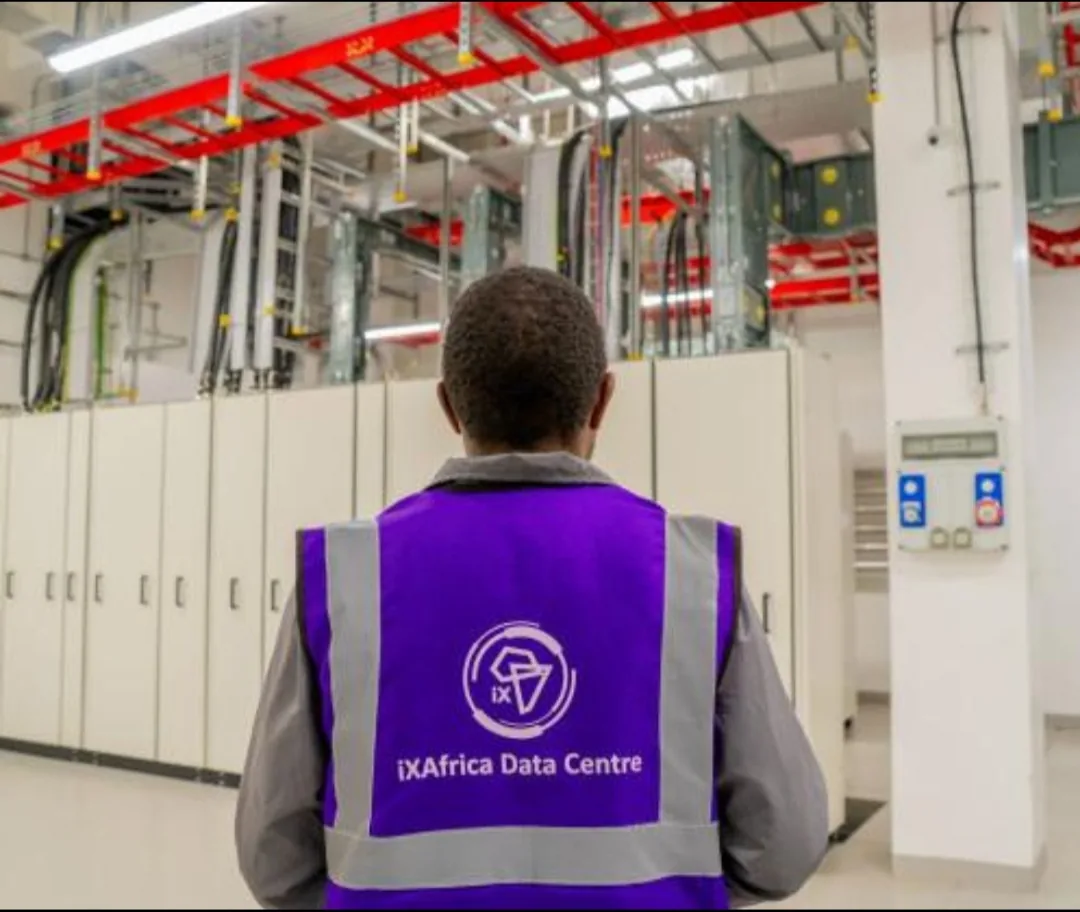
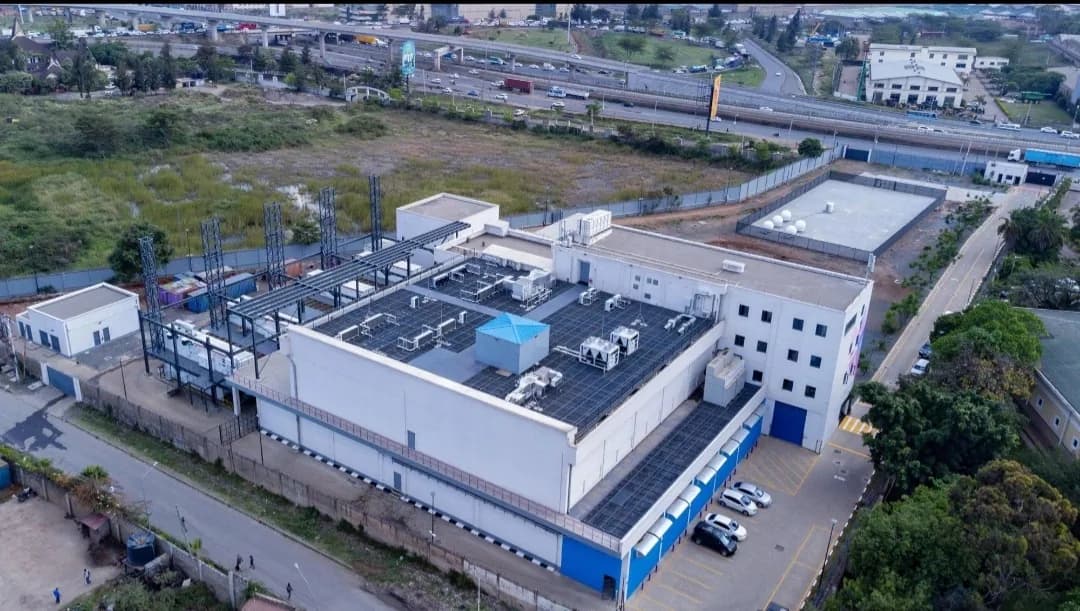
iXAfrica Data Centre is the live environment. East Africa's first hyperscale, carrier-neutral operator, headquartered on Mombasa Road and majority-owned by Helios Investment Partners since December 2022, it has nominated the initial cohort: five technical staff, each taking a three-week practical placement on live equipment.
IMEX (Imexolutions Ltd) supplies the hands-on component. The Nairobi-based electrical engineering firm, established in 2009, is East Africa's only certified Schneider Electric EcoStruxure PME and Critical Power EcoXpert partner. Its gear is what trainees will actually touch.
"Critical power systems can't be learned from a textbook," said Shinu Vattathara, IMEX's Managing Director. "Giving this cohort hands-on time on real OEM equipment is exactly the gap this programme closes."
ADCA convenes industry governance through the programme's Steering Committee, keeping training aligned with what operators actually need. DC Elite manages the recruitment and placement pipeline that carries graduates from certification into employer interviews. Schneider Electric University and EPI/EXIN provide the curriculum and certifications respectively.
The certification ladder: DCCA I to CDCA
The pathway runs in two stages. DCCA I, built on Schneider Electric University's curriculum, covers infrastructure, power, cooling, controls, security and risk: the full stack a facilities-side engineer needs before touching production systems.
DCCA II builds toward the EPI/EXIN CDCA (Certified Data Centre Associate), a globally recognised designation. That portability matters: a Kenyan engineer certified this way carries a credential understood in Frankfurt, Singapore and Johannesburg alike.
Steve Santini, Vice President for Secure Power in Sub-Saharan Africa at Schneider Electric, framed the rationale plainly: a sustainable talent pipeline is critical infrastructure for the industry's growth, not a nice-to-have.
The design choice that distinguishes this from most training is the placement. "Training on live infrastructure, not just theory, is what makes graduates job-ready," said Snehar Shah, iXAfrica's CEO. "That's the value we bring to this partnership."
Who pays: the EU's Digital Investment Facility
The Kenya expansion anchors the country's participation in the Digital Investment Facility (DIF), an EU Commission co-funded programme. DIF funded the industry research that shaped the Academy, and its mandate is specific: grow the workforce, not merely certify people already in it.
The distinction matters. Most data centre training certifies people already working on-site, which shifts talent between employers without growing the pool. DIF was designed to fund the part of the pipeline the commercial market will not: building a bridge from recent engineering and telecoms graduates, who have the aptitude but no visibility into the industry, into careers they did not know existed.
"Developing sustainable digital infrastructure requires investment not only in technology, but in people," a DIF representative said at the Academy's launch.
For Kenya, the timing is pointed. The country is positioning itself as a green compute destination on the strength of its geothermal grid, and every announced campus generates the same question from investors: who will staff it?
What it means for Kenyan job-seekers
The honest answer today: five people are on the pathway, and the programme is open. IBTC has invited East African operators to certify existing technical staff, sponsor emerging talent, host interns or build structured graduate pipelines.
For a graduate, the realistic entry route is through a sponsoring operator or partner rather than open enrolment. That makes the ecosystem partners worth watching, because each new operator that joins widens the door.

Our guides on data centre careers in Kenya and how to get a job in a Kenyan data centre cover what employers actually screen for today. The certifications that matter in Kenya sit neatly alongside DCCA I, and career progression patterns show where a facilities-side path leads after entry.
What to watch
Three markers will tell you whether this becomes a pipeline or a press release.
Watch the cohort size: five is a pilot, and scaling to successive intakes across iXAfrica's NBOX phases is the first proof of intent. Watch partner adoption: IBTC has opened the Academy to new East African partners, and every additional operator or OEM that signs widens the funnel the way Rack Centre did in Nigeria. And watch placements: DC Elite's job is to carry graduates into employment, and placement rates, not certificates issued, are the number that will test the "place" in source-train-place.