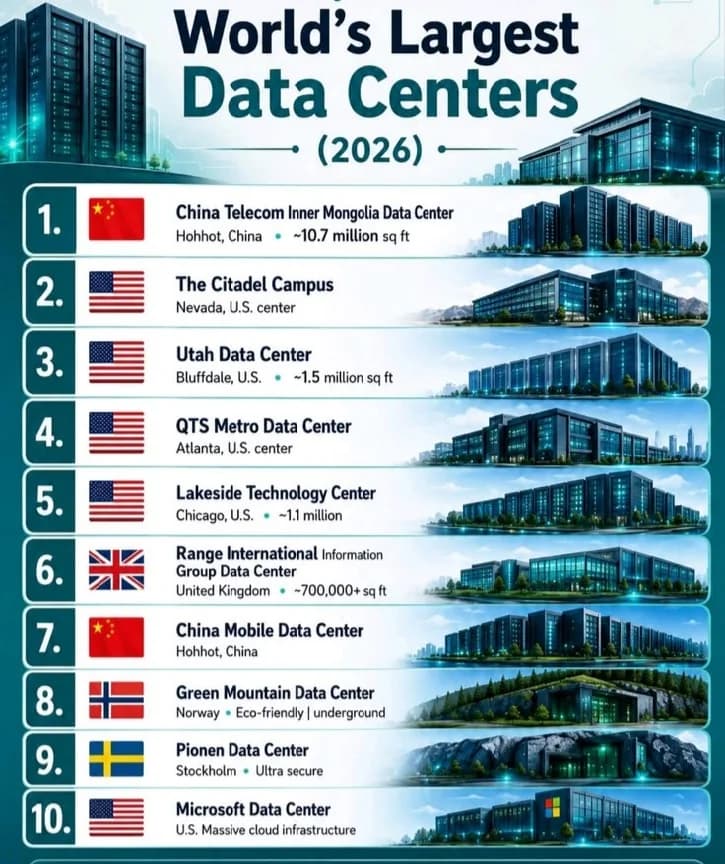
While most of East Africa's data centre conversation is about construction (who is building, where, and when the grid can keep up) the money side of the industry just posted a masterclass. Keppel DC REIT and its sponsor Keppel announced on 1 September 2026 that they will collectively acquire nearly all of two Tokyo data centres for 190 billion yen, roughly US$1.2 billion, in one of the year's defining statements about what institutional capital will pay for mature digital infrastructure. The facilities are Tokyo Data Centre 4 and Tokyo Data Centre 5 in Inzai City, Greater Tokyo: freehold, hyperscale, fully-fitted co-location buildings in one of the world's deepest data centre markets.
Nothing about the transaction touches Africa directly. Everything about its structure should. The deal is a public, audited catalogue of the metrics that global capital underwrites at scale, and the distance between those metrics and what most African facilities can evidence today is, in one number each, exactly why the continent's data centre story remains a development story rather than a REIT story.
The Deal Mechanics, Briefly
The structure is precise. Keppel DC REIT and Keppel, through its stake in Keppel Japan KK, will jointly hold 90 percent of the two facilities, with the Reit taking an 88.62 percent effective interest in each and the current operator (described only as an established global data centre owner) retaining the remaining 10 percent. The aggregate price of 190 billion yen lands about 2.1 percent below the assets' combined valuation of 194 billion yen, with the Reit's share of the payment totalling roughly 168.4 billion yen. Completion is targeted for the fourth quarter of 2026.
Funding follows the classic infrastructure playbook: match the equity raise to the asset's income currency. The Reit's manager launched a private placement targeting at least S$600 million, 280.1 million new units offered at S$2.096 to S$2.142, a 2.5 to 4.6 percent discount to the pre-announcement volume-weighted average price, and demand proved strong enough to upsize it within a day to S$625 million, fixing the issue price at S$2.10 (about 4.5 percent below the S$2.20 close before the announcement) for 297.6 million new units that begin trading on 10 September. Alongside the placement sits an advanced distribution of S$0.02241 to S$0.02281 per unit for the period between 10 July and 9 September. The balance comes from yen-denominated debt and internal sources, so the facility's revenues and the debt servicing its purchase sit in the same currency. African developers hammering out project finance would do well to internalise that discipline: currency-mismatched data centre debt has quietly killed more regional business cases than land or fibre ever have.
The Metrics That Made It Accretive
The reason the acquisition is distributable-income accretive rather than dilutive is a short list of contractual features, and it doubles as the cleanest checklist African operators will find anywhere for what "institutional grade" actually means.
Pro forma, had the deal closed on 1 January 2025, full-year distribution per unit for FY2025 would have risen 2.6 percent, from S$0.10381 to S$0.10649. Underneath that: contracted average annual rent escalation of about 2.8 percent; in-place rents estimated to be at least 30 percent below prevailing market rates, embedding reversion upside at renewal; weighted average lease expiry of 4.5 years for Tokyo Data Centre 4 and 10.6 years for Tokyo Data Centre 5; and both facilities fully occupied by four investment-grade internet enterprise and IT services clients, three of them new to the portfolio. The manager also highlighted portfolio effects, top-client concentration falling from 43.5 percent to about 38.2 percent of rental income, and contracted power capacity edging up from 95 to 96 percent.

Each line item answers a specific investor fear. Escalators answer inflation. Below-market in-place rents answer valuation risk, you are not buying the top of the market. Long WALE answers vacancy risk. Investment-grade covenants answer counterparty risk. And contracted power capacity answers the question that has become the industry's universal constraint: does the asset control the electrons its revenue depends on? Kenya's operators will recognise the last one immediately, because grid access is precisely where Kenya's power infrastructure shapes local deal terms.
Strategically, the acquisition lifts the Reit's assets under management from S$6.3 billion to approximately S$7.6 billion across 27 data centres in 10 countries, and raises Japan's share of portfolio rental income from roughly 9 percent to about 23 percent, with Singapore anchoring at around 60 percent. Even a S$7.6 billion vehicle manages geographic concentration deliberately, a discipline that reads as caution to Tokyo and as aspiration to African markets still waiting on their first REIT-grade portfolio.
Why a Tokyo Deal Matters in Nairobi
The connection to Kenya is not rhetorical. Global capital is finite, fungible, and comparative: the same pension, infrastructure, and sovereign funds evaluating Tokyo assets are the LPs and co-investors African developers pitch. A US$1.2 billion cheque for fully-leased, freehold hyperscale stock in Greater Tokyo sets the opportunity cost against which any Nairobi project competes. When a Nairobi developer promises a 15 percent development yield, the investor's internal question is why they should take construction and lease-up risk in a frontier market when a 2.8-percent-escalator, investment-grade-leased Japanese asset is available at a 2.1 percent discount to valuation.
The answer, of course, is growth, African data centre demand is compounding faster than Tokyo's, and our Kenya market outlook makes that case in detail. But growth only converts into capital when it arrives wrapped in the contractual features this deal displays. That is the practical translation for Kenyan founders and facility owners: the valuation conversation is won in the lease, not in the pitch deck. Lease length, tenant covenant quality, escalators, power contracts, and concentration limits are the difference between pricing an asset as infrastructure and pricing it as a bet.
There is a local-capital angle too. Kenya has no listed data centre REIT, and Kenya's capital markets have yet to see a securitised digital infrastructure vehicle of the kind Singapore, Japan, and increasingly Europe take for granted. The tax incentives available to Kenyan data centre investors address the build phase; a REIT framework would address the exit phase, giving today's private backers a route to recycle capital into the next facility. Until that market deepens, the Keppels of the world will keep finding African exposure through private development capital rather than portfolio acquisitions, because there is not yet an institutional-grade portfolio to buy.
The Playbook, distilled
Strip the deal to its transferable lessons and four stand out for African operators, investors, and anyone building a data centre business on the continent, points we also stress in our due diligence checklist and market entry guide.
First, contract for the long sale from day one. Every feature that made the Tokyo assets institutional-grade (escalators, WALE, covenants) was written into leases years before any acquisition was contemplated. Operators who sign three-year leases at flat rents with single-tenant concentration are not building an asset; they are renting out a building. Second, treat power as a contracted revenue input, not an operating detail: 96 percent contracted capacity is a headline investors read. Third, match funding currency to income currency, the yen-debt structure is not cleverness, it is survival. Fourth, concentration is a managed metric, not an accident: the Reit celebrated reducing top-client dependence from 43.5 to 38.2 percent, and African facilities planning hyperscale anchor tenants should model the same drift and its exit-day consequences.
None of this requires a Singapore listing to be useful. It requires founders who understand that the eventual buyer (whether a REIT, a pension fund, or a strategic operator) will underwrite the leases, not the ambition. Tokyo just published the syllabus.