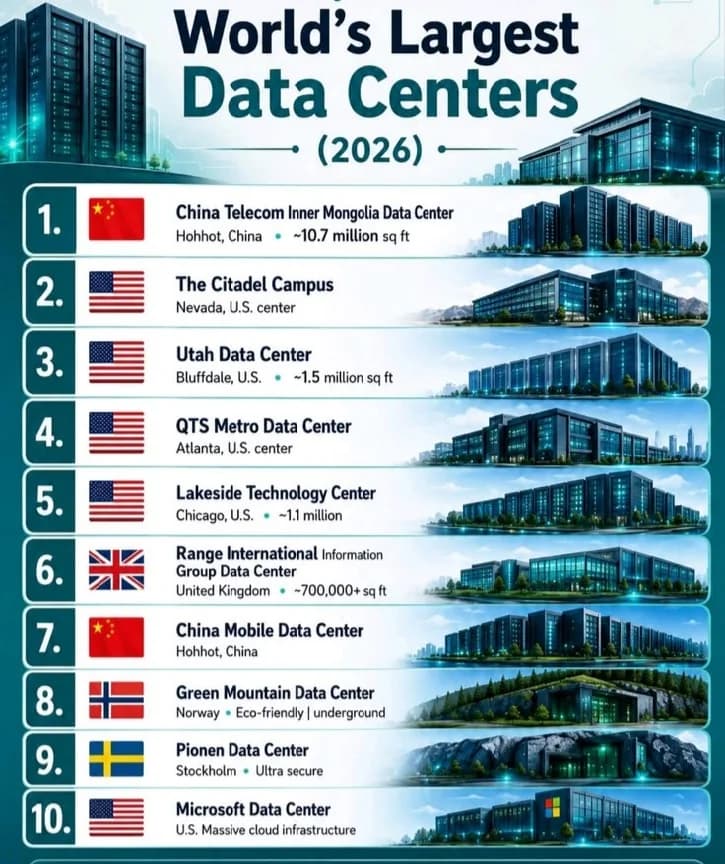
What Is a Hyperscale Data Centre?
If you have ever streamed a Netflix show, searched on Google, or booked an Uber ride, your request was processed inside a hyperscale data centre, a gargantuan computing facility so large it can stretch across multiple football pitches and consume enough electricity to power a small Kenyan town. But what exactly makes a data centre "hyperscale," and why does it matter for Kenya's digital future?
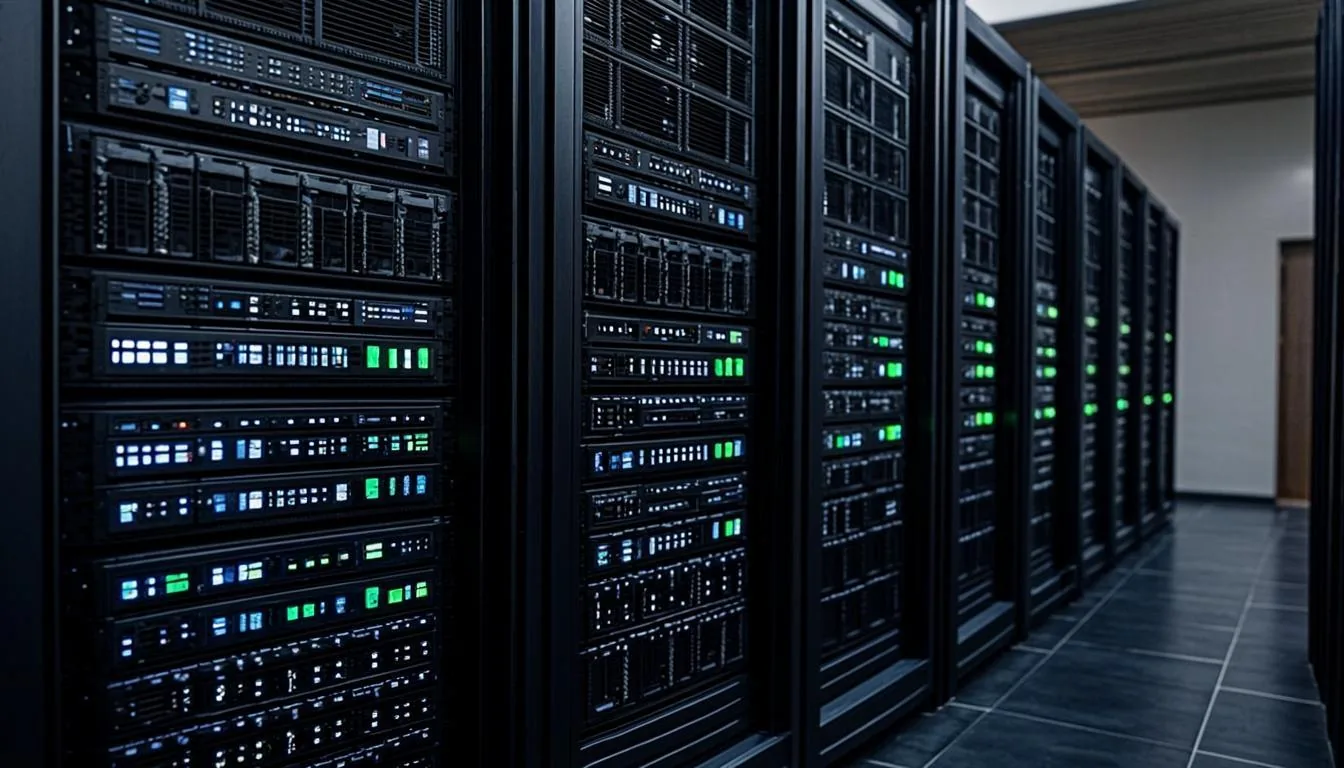
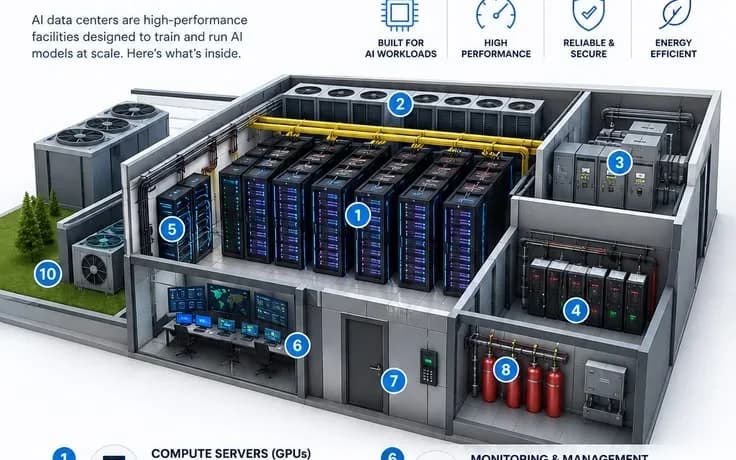
In simple terms, a hyperscale data centre is a massive facility owned and operated by a single technology company to support its cloud computing, artificial intelligence, and digital services at a global scale. Unlike standard what is a data centre facilities that serve multiple tenants, hyperscale data centres are purpose-built for one operator, typically one of the world's largest technology companies.
How Hyperscale Differs from Enterprise and Colocation Facilities
To understand hyperscale, it helps to compare it against the other two main categories of data centre.
Enterprise data centres are built and operated by individual organisations for their own IT needs. A bank in Nairobi might operate a 500 kW facility to run its core banking systems. These are typically small, private, and designed for a single organisation's workloads.
Colocation data centres, such as those operated by Africa Data Centres and PAIX in Kenya, provide shared space, power, and cooling. Multiple customers rent rack space and bring their own equipment. Kenya's largest colocation facilities range from approximately 5 MW (PAIX Mombasa and Nairobi) to around 10 MW (Africa Data Centres' facilities).
Hyperscale data centres exist on an entirely different scale:
- Power capacity: 100+ megawatts of critical IT load, compared to Kenya's entire colocation market, which is estimated at roughly 20–30 MW combined.
- Server count: Tens of thousands to hundreds of thousands of servers in a single facility.
- Physical footprint: Often spanning hundreds of thousands of square metres across multiple buildings on a single campus.
- Power infrastructure: Hyperscalers typically build their own dedicated power substations connected directly to the national grid, bypassing standard utility distribution.
- Ownership: Single-tenant, the entire facility is owned and operated by one company (Amazon, Microsoft, Google, Meta, etc.).
For context, a single hyperscale campus can consume more power than Mombasa County's entire industrial demand. This is why data centre tier ratings matter enormously, hyperscale facilities are built to Tier III+ or Tier IV standards, ensuring 99.982% to 99.995% uptime.
The Global Hyperscale Operators and Their African Footprint
The hyperscale market is dominated by a handful of technology giants. As of 2025, the major hyperscale operators globally include:
- Amazon Web Services (AWS)
- Microsoft Azure
- Google Cloud Platform (GCP)
- Meta (Facebook)
- Alibaba Cloud
- Oracle Cloud Infrastructure (OCI)
Where Are They in Africa?
Africa's hyperscale presence is currently concentrated entirely in South Africa:
- AWS Africa (Cape Town) Region: Launched in April 2020, this was the first AWS region on the African continent. It includes three Availability Zones and has been a game-changer for South African enterprises seeking low-latency cloud services.
- Microsoft Azure South Africa: Microsoft operates two regions in South Africa, South Africa North (Johannesburg) and South Africa West (Cape Town), both launched in 2019. These were Microsoft's first cloud regions in Africa.
- Google Cloud Johannesburg: Google launched its Johannesburg region in 2023, becoming the third hyperscaler with a physical African presence. The region serves customers across Sub-Saharan Africa.
Notice the pattern? All three hyperscalers chose South Africa, not Kenya, not Nigeria, not Egypt. This is a critical point for understanding the barriers Kenya faces.
Why No Hyperscale Data Centre in Kenya, Yet
Kenya is widely recognised as East Africa's technology hub, home to a vibrant startup ecosystem, a mature fintech sector (M-Pesa, and hundreds of mobile lending platforms), and a growing digital economy. So why haven't hyperscalers built here?
1. Power Reliability Concerns
Hyperscalers design their facilities for 99.999% uptime at the infrastructure level. While Kenya Power (KPLC) has made significant improvements, the grid still experiences frequency instability, voltage sags during heavy rain seasons, and unplanned outages. A hyperscale facility consuming 100+ MW cannot afford even momentary power quality issues. The cost of building fully redundant power systems (including massive diesel generator farms and battery backup) adds significantly to the capital expenditure in markets where grid power is unreliable.
2. Market Size
South Africa has Africa's most mature enterprise IT market, with large financial services, mining, and manufacturing sectors that are heavy cloud consumers. Kenya's cloud market, while growing at approximately 25–30% annually, is still smaller in absolute terms. Hyperscalers typically require a minimum addressable market of several hundred million dollars in annual cloud spend before committing to a $200–500 million facility build.
3. Regulatory Environment
Kenya's regulatory landscape for data centres is still evolving. The Data Protection Act 2019 introduced data localisation requirements that could drive demand, but the licensing framework, tax incentives (or lack thereof), and the approval process for large-scale power connections remain less investor-friendly than South Africa's. Hyperscalers look for regulatory certainty, clear, stable rules that won't change after they commit hundreds of millions of dollars.
4. Fibre Connectivity
While Kenya has excellent international connectivity through submarine cables landing in Mombasa (including EASSy, TEAMS, and SEACOM), the inland fibre backbone to landlocked neighbours (Uganda, Rwanda, Burundi, South Sudan, and eastern DRC) is less robust. South Africa's fibre network connects more thoroughly to Southern African Development Community (SADC) countries, making Johannesburg a more attractive regional hub.
The Economic Impact Hyperscale Facilities Bring
When a hyperscaler builds a data centre, the economic ripple effects are substantial. The AWS Cape Town region provides the closest African example:
- Direct employment: Hundreds of construction jobs during the build phase, followed by permanent engineering, operations, and security roles.
- Indirect employment: Thousands of jobs created in the local ecosystem, from fibre network construction to managed service providers, system integrators, and cloud consulting firms.
- Tax revenue: Significant contributions to corporate tax, property tax, and customs duties on imported equipment.
- Ecosystem development: The presence of AWS, Azure, and Google Cloud in South Africa has spawned a thriving community of cloud-native startups, training academies, and partner networks.
- Foreign direct investment: Each hyperscale facility represents $200–500 million (or more) in capital investment, sending a strong signal to other technology companies.
For Kenya, attracting even a single hyperscale facility could transform Nairobi into the undisputed cloud capital of East Africa, creating an ecosystem that benefits the entire region.
Kenya's Potential to Attract Hyperscale Investment
Despite the current barriers, Kenya has several compelling advantages that could attract hyperscale investment in the medium term:
Growing enterprise cloud adoption: Kenyan banks, telecom companies (Safaricom, Airtel), and government agencies are rapidly migrating to cloud. The Huduma Namba digital identity project and the e-Citizen platform are driving government cloud consumption.
Geothermal energy advantage: Kenya is a global leader in geothermal energy, with the Olkaria geothermal complex producing over 800 MW. For hyperscalers increasingly focused on renewable energy and carbon neutrality, Kenya's geothermal resources are a genuinely unique selling point. See our guide on geothermal energy for Kenyan data centres for a deeper analysis.
Strategic location: Nairobi's position as a gateway to East Africa (a market of over 300 million people) is attractive. If fibre connectivity to neighbouring countries improves, Nairobi becomes a natural regional hub.
Young, tech-savvy workforce: Kenya produces thousands of IT graduates annually, and the country's engineering talent is well-regarded across the continent.
What Needs to Change
To convert this potential into reality, several things must happen:
-
Power cost and reliability must improve: Kenya's commercial electricity tariffs, while lower than many African countries, are still higher than the global average for data centre operations. KPLC needs to demonstrate consistent power quality at the scale hyperscalers require. The development of solar power solutions for data centres is a step in the right direction.
-
Regulatory certainty: The Kenyan government, through the Communications Authority and the Kenya Investment Authority, needs to create a clear, attractive incentive framework, potentially including tax holidays, duty-free importation of data centre equipment, and streamlined power connection processes.
-
Fibre backbone expansion: Investment in cross-border fibre to Uganda, Rwanda, and beyond would dramatically increase Kenya's appeal as a regional hub. The comparison between Nairobi and Mombasa highlights the importance of connectivity infrastructure.
-
Market development: Continued growth of Kenya's enterprise cloud market (driven by digital transformation in banking, government, healthcare, and education) will eventually reach the scale that justifies hyperscale investment.
Understanding Regions and Availability Zones
Hyperscale cloud providers organise their infrastructure into regions and availability zones (AZs), concepts that are central to how hyperscale data centres operate.
A region is a geographical area where a cloud provider has clustered data centres. For example, "AWS Africa (Cape Town)" is a region. Each region typically contains two or more availability zones.
An availability zone is one or more discrete data centres within a region, each with independent power, cooling, and networking. The AZs within a region are connected through low-latency fibre links but are physically separated (often by several kilometres) so that a fire, flood, or power outage at one AZ does not affect the others.
This architecture is why hyperscalers build campuses of multiple data centres rather than single massive buildings. When AWS launched in Cape Town, it opened with three AZs, meaning at least three separate data centre facilities (likely more, since each AZ can include multiple buildings).
For Kenya, this means that attracting a hyperscale investment would likely involve not just one data centre, but a campus of two to four facilities, representing billions of shillings in investment.
Comparing Hyperscale to Kenya's Current Data Centre Landscape
| Feature | Kenyan Colocation | Hyperscale |
|---|---|---|
| Power capacity | 1–10 MW per facility | 100–500+ MW per campus |
| Tenancy model | Multi-tenant | Single-tenant |
| Typical operators | Africa Data Centres, PAIX, Liquid Intelligent Technologies | AWS, Microsoft, Google, Meta |
| Number of servers | Hundreds to low thousands | Tens of thousands+ |
| Primary customers | Banks, telcos, government, enterprises | Cloud service users globally |
| Power infrastructure | Utility grid + backup | Own substation + utility + backup |
| Investment scale | KES 2–10 billion per facility | KES 30–75 billion+ per campus |
Africa Data Centres' facilities in Nairobi (including the campus along Mombasa Road) represent the largest data centre investments in East Africa at approximately 10 MW. PAIX operates facilities in both Nairobi and Mombasa at around 5 MW each. Liquid Intelligent Technologies also maintains a significant presence. But even combined, these facilities are a fraction of the scale of a single hyperscale campus.
The Road Ahead for Kenya
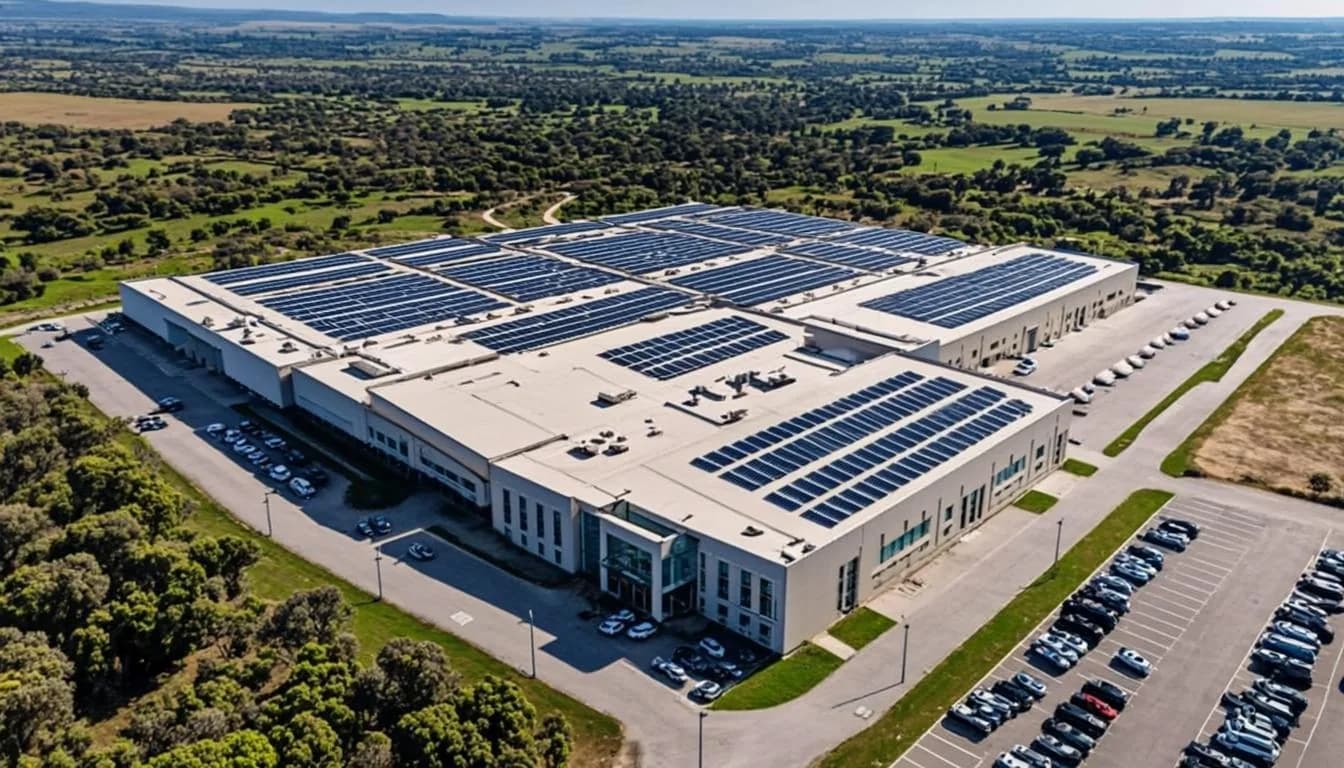
The question is not whether hyperscale data centres will come to Kenya, but when. The convergence of several trends, AI-driven demand for computing capacity, Africa's rapidly growing digital economy, Kenya's renewable energy advantages, and the natural saturation of South Africa as Africa's primary cloud hub, all point toward East Africa as the next frontier.
Kenya's government has signalled its ambitions through the Kenya Digital Masterplan 2022–2032, which explicitly targets data centre development as a national priority. The Konza Technopolis project, while primarily focused on IT services and BPO, includes data centre infrastructure plans that could eventually attract hyperscale interest.
For businesses and IT professionals in Kenya, understanding the hyperscale landscape is essential. Even without a local hyperscale presence, Kenyan organisations are already consuming AWS, Azure, and Google Cloud services, routed through the Cape Town and Johannesburg regions. This introduces additional latency (typically 40–60 milliseconds from Nairobi to Cape Town) that a local region would eliminate.
Frequently Asked Questions
What is the minimum power capacity of a hyperscale data centre?
A hyperscale data centre typically operates at 100 megawatts (MW) or more of critical IT load power. For comparison, most Kenyan colocation facilities currently operate between 1 MW and 10 MW. This massive power requirement is why hyperscalers often build their own dedicated power substations connected directly to the national grid.
Why hasn't AWS, Google, or Microsoft built a data centre in Kenya yet?
Several factors explain this. First, power reliability remains a concern, hyperscalers require near-perfect uptime, and while Kenya Power has improved, frequency stability and outage management still lag behind hyperscale standards. Second, Kenya's enterprise cloud market, while growing fast, is smaller than South Africa's. Third, regulatory certainty around data localisation, licensing, and taxation is still evolving. Finally, Kenya lacks the deep fibre backbone connectivity to landlocked East African countries that would make Nairobi a natural regional hub on par with Johannesburg.
How does a hyperscale data centre differ from a colocation facility?
A colocation facility rents out space, power, and cooling to multiple tenants who bring their own servers. A hyperscale data centre is owned and operated by a single company (such as Amazon, Google, or Microsoft) to run its own cloud services at massive scale. Hyperscale facilities typically have over 5,000 servers and 100+ MW of power, while colocation facilities in Kenya like Africa Data Centres and PAIX serve many customers in shared environments of 1–10 MW.
What is the economic impact of a hyperscale data centre on a local economy?
The AWS Cape Town region, launched in 2020, provides a useful reference point. It created hundreds of direct and indirect jobs during construction and operations, generated significant tax revenue, stimulated demand for local fibre network expansion, and created an ecosystem of partners, managed service providers, and training programmes. Similar investment in Kenya could catalyse the broader tech ecosystem and position Nairobi as the cloud capital of East Africa.
What would Kenya need to do to attract hyperscale investment?
Key requirements include guaranteed power reliability with redundant grid connections and competitive tariffs, a clear and stable regulatory framework for data centres, improved fibre connectivity to neighbouring countries, investment-ready land with access to large-scale water and power infrastructure, and a larger enterprise cloud market. The Communications Authority of Kenya and Kenya Investment Authority would need to work closely with hyperscalers to create incentive packages comparable to what South Africa has offered.