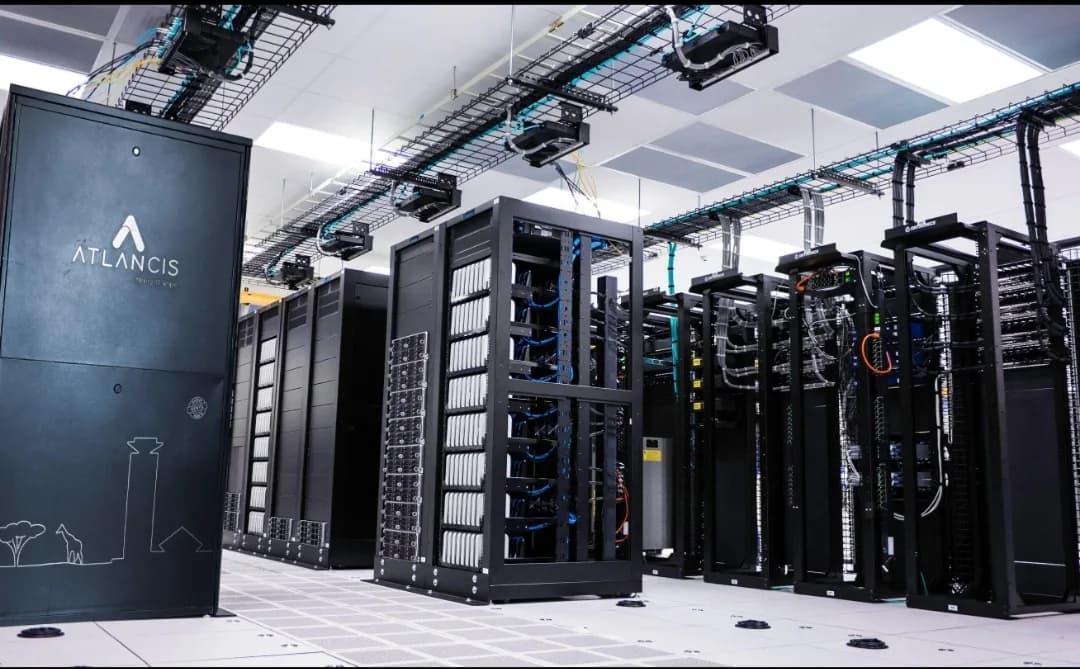
Kenya's data centre market has crossed the point where the interesting question is no longer how much is being built. Twenty of the 27 facilities on the DC254 verified board are operational, carrying 42.9 MW of designed capacity, with 10.5 MW of published live IT load between them. Another 230 MW sits in the pipeline at various stages of commitment, from the 77 MW rising out of the ground in three under-construction projects to the 100 MW stated in the Microsoft and G42 announcement that remains at the intention stage. On 8 September 2026, the Communications Authority opened a consultation on a standalone data centre licence, and with it, the question changed again: not just what gets built, but what the industry should have to say about itself in public.
Because that is the uncomfortable part of the current record. The market publishes capacity enthusiastically and discloses almost nothing else. Operators state design figures, certification lists and connectivity counts. Almost none publish what a building actually draws from the grid, what it drinks, or how those numbers change as the hall fills. This piece asks a simple question of the verified record: what can a reader establish today about a Kenyan data centre beyond the press release, and what should a licensing framework require to be on the table?
A licence framework puts disclosure on the agenda
On 8 September 2026 the Communications Authority of Kenya published a notice proposing a standalone data centre licence category, replacing the current treatment of colocation operators under the Network Facilities Provider Tier 2 regime. The Authority's stated rationale is to "provide regulatory clarity, enhance visibility over data centre operations, support investment in digital infrastructure, and align Kenya's framework with proportionate approaches adopted in comparable jurisdictions." The proposed licence would cover "entities that provide colocation data centre services, including the attendant supporting services."

The proposal sat on the Authority's open consultations page through our verified captures of 24 September, 4 October and 6 October, with a comment window of thirty days from publication, closing on or about 8 October 2026. Outcome searches we ran on 10 October, including sweeps for a gazette supplement and industry-association submissions, found no decision notice; the most recent coverage on record is still from the proposal window itself. What the final framework contains, fees, obligations, and critically whether it attaches any disclosure or reporting requirements to the licence, is not yet public. We will report it with the instrument captured the day it is.
The advisory market is not waiting. AfriTrade Group published commentary on the framework in mid-September, and on 9 October Access Partnership and AfriTrade announced a joint practice covering digital infrastructure across Kenya and the wider East African region, with data centre approvals named in the initial scope (TechAfrica News, ITWeb Africa, Capital FM, 8–9 October 2026). When the consultants mobilise before the rules are final, it is a fair signal that compliance, and the paperwork around it, is about to become a real cost line.
Five questions a reader should be able to answer
The framework under discussion is a licensing instrument, but the debate around it has converged on a disclosure question. Five indicators keep recurring in how this market is argued about, and it is worth being precise about where the verified record stands on each of them for Kenya today.
| Indicator | What the verified record shows today | What is not published |
|---|---|---|
| Operational status | Fully answerable. Every one of the 27 tracked facilities carries a status, operational, under construction, committed or early stage, with its own verification date and source list | Nothing material; status is the sector's best-published fact |
| IT capacity | Partially answerable. 42.9 MW of designed capacity across the 20 operational facilities; 10.5 MW of published live IT load; capacity figures labelled by type on the DC254 board | Per-facility live IT load for most operational sites, and a stated measurement basis for several headline figures |
| Electricity | Thin. Power architecture claims (2N systems, N+2 cooling) and a handful of design statements, such as NBO2's master plan substation above 20 MW at full build | Actual consumption by any tracked facility, contracted supply volumes, and load factor over time |
| Water | Thinner still. Cooling method is occasionally stated as an operator claim | Consumption, source and treatment for every tracked facility, there is no published Kenyan water figure in the dataset |
| Regulatory status | Partially answerable. Licence categories sit on CA registers, and the standalone licence proposal is documented through its consultation trail | The final framework terms, fees and any disclosure obligations the licence will carry |
The pattern is consistent: the industry publishes what helps it sell, and the reader fills the rest with assumptions. A licensing moment is the natural point to reset that, because a licence is enforced paperwork, and paperwork is disclosure by another name.
What "6.4 MW" actually tells you
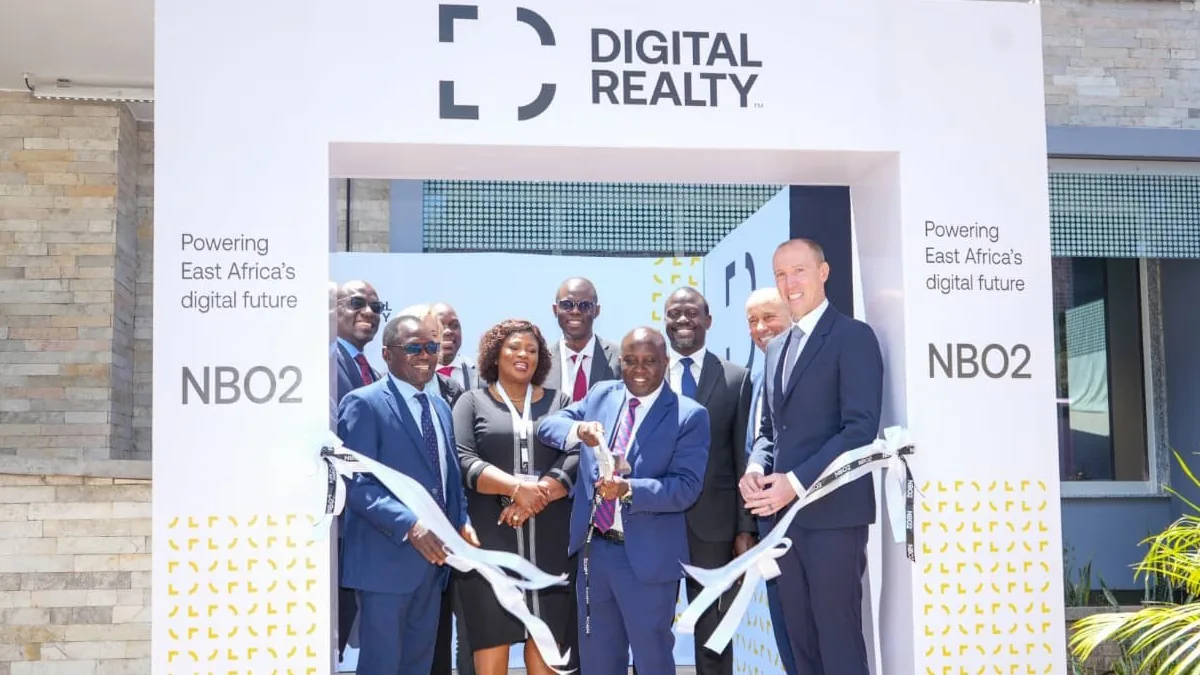
The measurement-basis problem is easiest to see in a single live example. When Digital Realty announced the opening of NBO2 in Nairobi on 7 September 2026, the announcement's headline figure was "6.4 MW of capacity", with no statement of whether that is commissioned IT load, installed design capacity, or a campus-level planning number. An earlier figure of 6.5 MW of IT load, from Developing Telecoms in August 2024 and repeated by the operator before launch, sits on the same record as a documented pre-launch discrepancy. The DC254 record carries both, labels the 6.4 MW as designed capacity, and leaves live IT load deliberately empty because no commissioned figure has been published.
Down the road on the same Karen campus, NBO1, the facility PeeringDB shows carrying more than 60 networks and four internet exchanges, publishes no IT load figure at all. The operator's own listing does not state one, and the DC254 divergence note for the record says exactly that: ask for committed and available capacity in kW before sizing a deployment.
None of this is unusual, and that is the point. Across the 27 tracked records there are 29 standing divergence notes, each recording a place where the public record conflicts, drifts or goes quiet. The directory's capacity chips, LIVE, DESIGNED, PLANNED, ANNOUNCED, exist because a bare megawatt number, repeated without its basis, is the single most common misreading in this market. Disclosure policy should start from the same insight: a capacity figure without a stated measurement basis is not transparency, it is marketing with a decimal point.
Electricity: the number everyone wants, nobody publishes
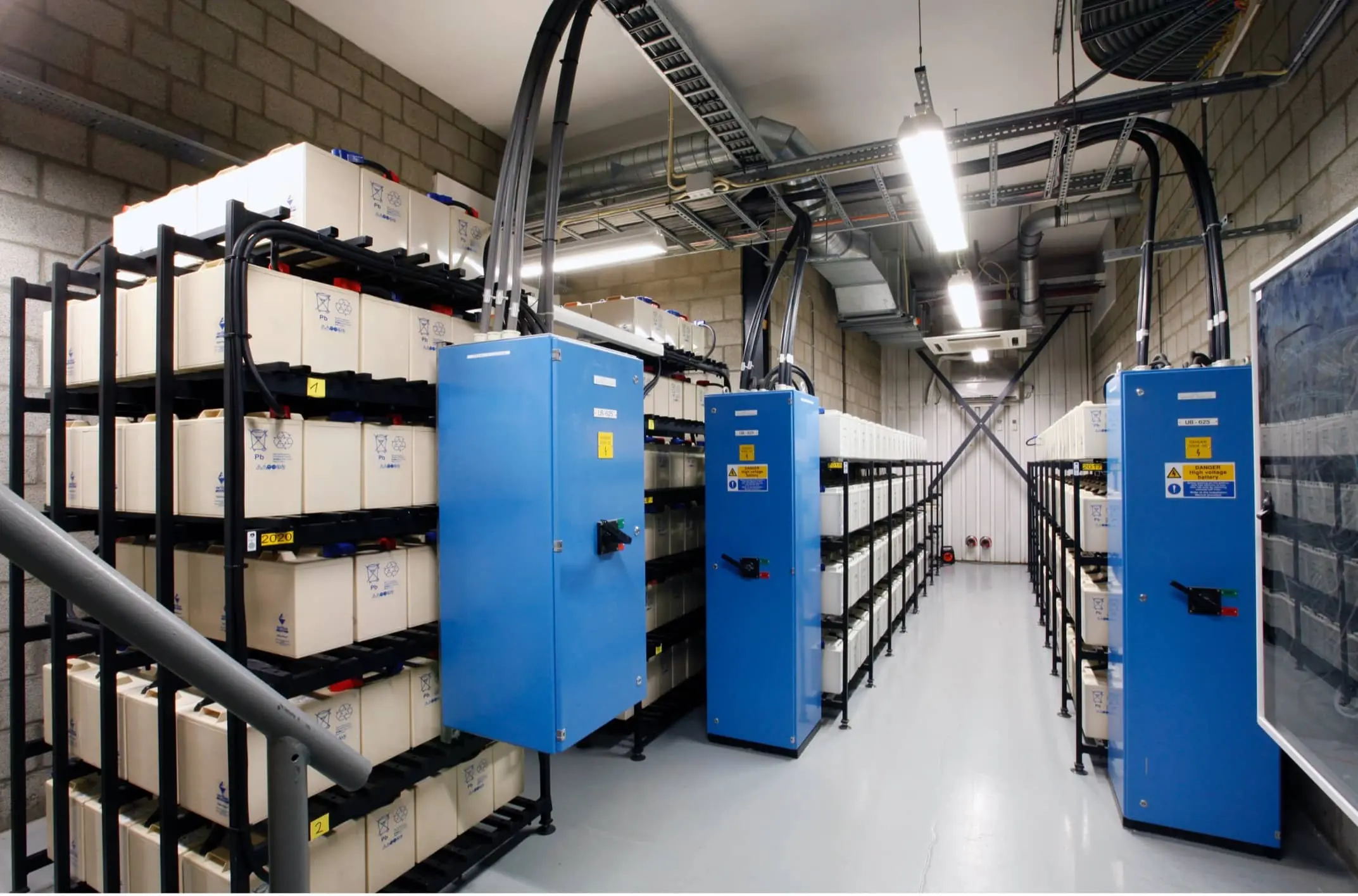
Power is the first question every serious buyer, investor and regulator asks about a data centre, and it is where Kenya's public record is thinnest relative to interest. What exists is architecture and design talk: 2N power distribution claims, N+2 cooling, and design statements like the NBO2 master plan's captive substation consuming over 20 MW at full build. What does not exist, for any tracked facility, is a consumption figure, how many megawatt-hours the building actually drew last year, against what contracted supply, at what load factor.
The closest the public record comes to a power story is the one attached to the market's most-announced project. The Microsoft and G42 joint venture, stated at 100 MW and a billion US dollars, remains an early-stage record on the DC254 board, and our power-corridor tracking notes the single-site power-delivery constraint that has been reported around it. Geothermal from Olkaria is discussed as the primary source, discussed being the operative word, since no PPA, no grid agreement and no consumption profile has been published for verification.
This is where the licence consultation matters most. Grid-connected load of this scale is a planning question for Kenyan institutions, and consumption data is exactly what a licensing or reporting framework could require operators to file, even if commercial confidentiality keeps the raw numbers out of public view, an aggregate or audited disclosure would transform the quality of public debate.
Water and cooling: almost nothing on the record
If electricity is thin, water is absent. Cooling method occasionally appears as an operator claim, the tracked Kenya records variously state N+2 cooling and similar architectures, but consumption, source and treatment are unpublished across the board. There is no published Kenyan water figure in the verified dataset, not because nobody has looked, but because no operator has put one on the record.

The regional context makes this worth attention now rather than later. In South Africa, civil rights groups have called for a halt to new data centre construction amid water and power concerns; the country's Human Rights Commission told the Associated Press it had received more than 250 submissions after inviting public input in May, and President Ramaphosa's push to attract further digital infrastructure investment now runs alongside that scrutiny (AP, 4 September 2026). The claims in that debate are contested and, on several points, unverified, which is precisely the problem. A market that had published consumption figures per facility would be arguing with numbers instead of about them.
Kenya has the advantage of watching that argument arrive before its own build-out peaks. The proposed licence framework is the instrument that could require resource-use disclosure from the start, for every licensee, on a consistent basis, the difference between designing transparency in and retrofitting it under pressure.
What good disclosure would look like
Between the verified record and the consultation, a short checklist is coming into focus, five things a licensed Kenyan data centre could reasonably be expected to state, each currently missing or unstandardised in public reporting:
- Status, dated. The sector already does this well; keep it, and make the verification date part of the licence record.
- Capacity with a basis. Every published megawatt figure labelled as commissioned IT load, installed design capacity or planned build, the distinction the NBO2 announcement shows is still optional today.
- Electricity in and out. Contracted supply and annual consumption, even in aggregate or audited form, so the grid question can be argued with numbers.
- Water by the litre. Consumption, source and cooling method, the three inputs to every water-use argument the South African debate is currently having without data.
- Regulatory position. Licence category, conditions and any reporting obligations, published by the regulator as a register rather than assembled piecemeal by researchers.
None of this is exotic. Most of it is what operators already compute internally, and several regional peers have begun publishing pieces of it voluntarily. The cost of standardisation is small; the cost of a contested, data-free public argument, the South African path, is larger, and Kenya can still choose to skip it.
Does the proposed licence actually require any of this?
Unknown, honestly. The consultation text we captured proposes the licence category and its scope; the reporting obligations that would attach to it have not been published. We will document the final framework's disclosure terms, or its silence on them, as soon as the instrument is out.
Is the market hiding something, then?
No, that is not the finding. Published design capacity, certification claims and connectivity counts are real, and this market publishes more than most on the continent. The gap is specific: consumption, water and measurement bases are not standardised, so the reader cannot compare facilities or hold the sector to its own numbers. A gap is an evidence problem, not an accusation.
How is DC254's own record kept honest?
Every facility record carries its own verification date, its sources, and a divergence note wherever the public record conflicts. Records are re-verified on rolling dates, so a September date beside an October one is the system working, not drift. Where we cannot verify a figure, commissioned IT load at most operational sites, water everywhere, the field is left empty and the gap is stated.
The bottom line: Kenya is about to hand a growing industry a licence, and the framework's drafting is the cheapest moment it will ever have to decide what the public record of that industry should contain. The verified board shows a market that publishes capacity well and consumption not at all. Five disclosure lines would fix that, and every one of them is already being computed somewhere inside the operator's own systems. All figures in this piece come from the DC254 verified dataset, captured operator announcements and regulator documents, with evidence gaps marked as gaps, the standard we would like to see the licence require of everyone.