Kenya's drive for digitalisation has intensified the conversation around data-centre development. Investment announcements, new facilities and plans for AI infrastructure keep raising expectations about the country's position in Africa's digital economy. The ambition is no longer in question. The market has moved from whether Kenya will host meaningful computing capacity to how much, how soon, and where.
But one question deserves greater scrutiny than it usually receives: who can secure the reliable, affordable electricity required to operate the next generation of data centres?
The buildings matter. So do fibre networks, subsea cables, land and computing hardware. Yet without dependable power, a data centre cannot deliver its intended computing capacity. Power is the one input every other investment depends on, and it is also the input most often summarised in a headline number rather than examined in detail.
For Kenya, the challenge is becoming more specific. Can developers secure electricity at the scale, location, cost and reliability their projects require, and demonstrate that the supporting infrastructure is ready to operate? Those are measurable questions, and this article works through them with the evidence available today.
The numbers behind Kenya's data-centre market
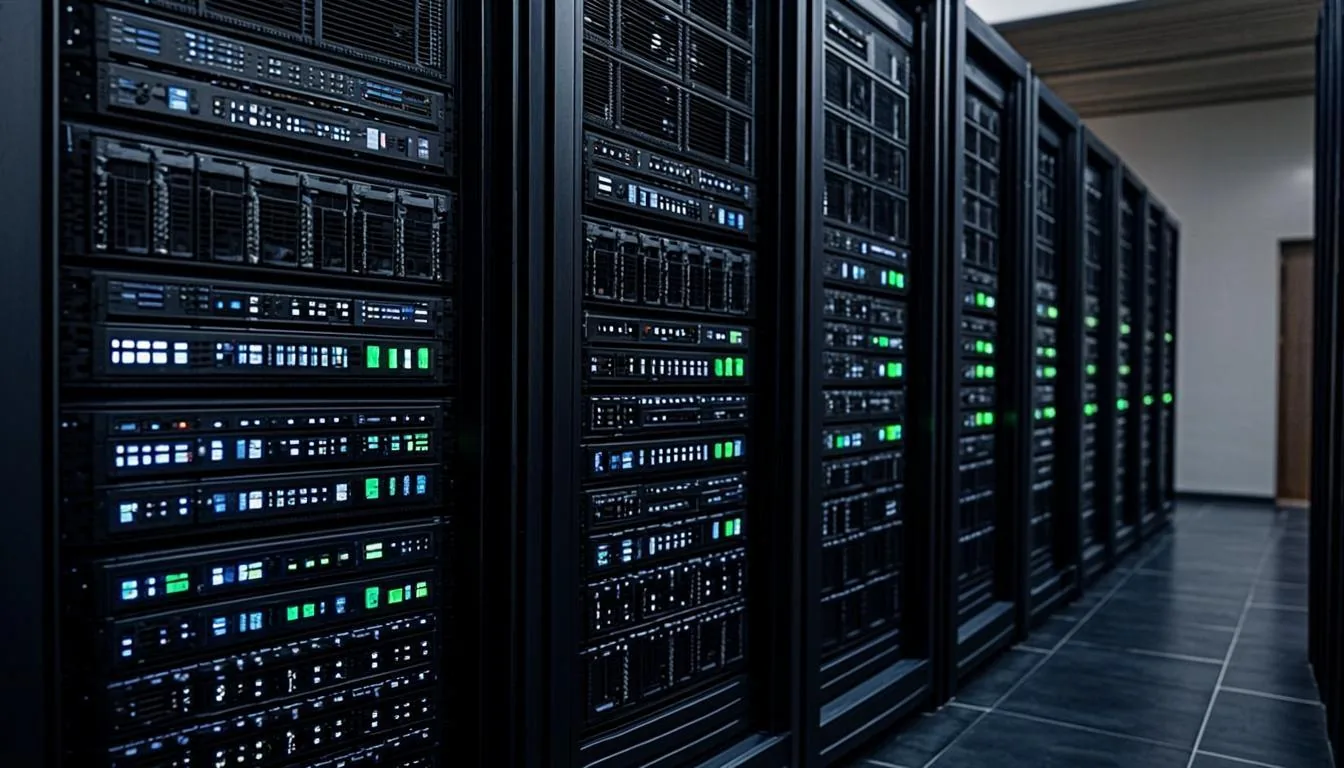
The DC254 tracker, last verified in October 2026, is the starting point for understanding the gap between existing infrastructure and announced ambition. The dataset tracks 27 Kenyan data-centre facilities, of which 20 are operational. Those operating facilities publish 10.5 MW of live IT load, figures disclosed by eight of the twenty operators, against 42.9 MW of designed capacity. Behind them sits a further 230 MW of announced pipeline: 77 MW under construction, 53 MW committed and 100 MW at early stage, led by the Microsoft-G42 proposal near Olkaria.
These figures describe different stages of infrastructure development, and they should not be treated as interchangeable measures of available capacity. A project can announce hundreds of megawatts without having secured financing, completed construction, commissioned its electrical systems or installed computing equipment. Likewise, a facility's designed capacity does not tell you how much IT load is installed and operating: across the 20 operational facilities, published live load runs at less than a quarter of designed capacity.
The distinction matters. For investors and customers, the question is not simply how much capacity Kenya has announced. It is how much capacity can actually be delivered. Power is central to that distinction, because electricity must arrive at a specific site, in sufficient quantity, at a contracted price, before anything else in the facility can function. The quarterly State of the Market 2026-Q3 report documents the same figures together with their methodology, and Kenya's data centre market in numbers unpacks what each measure does and does not tell you.
Three approaches to powering Kenya's next data centres
Kenya's emerging data-centre market presents different approaches to electricity supply. Three models deserve closer examination: grid-connected facilities, dedicated generation, and renewable-backed power. The baseline for all three comes from the DC254 Rack Report power review published on 11 October 2026, which re-checked the power record for all 27 tracked facilities field by field and source by source. Every single record starts from Kenya Power. Fourteen facilities disclose on-site backup generation alongside their grid supply, six run on grid service alone with one further grid connection recorded as planned, three pursue redundancy-first designs, and two disclose no arrangement at all. Not one operator has yet put their name to a renewable power purchase agreement.
1. Grid-connected facilities
The first model relies on electricity supplied through Kenya's national power system. The sector's legal framework is the Energy Act 2019, under which the regulator, the Energy and Petroleum Regulatory Authority, reviews and approves the power purchase agreements that govern electricity sales, with Kenya Power as the principal distributor and transmission and distribution infrastructure connecting generation to customers (EPRA).
For data-centre operators, the important questions extend beyond the amount of electricity generated nationally. They need to establish whether sufficient power can be delivered to a particular site, whether the connection can support the facility's intended load, what the commercial terms are, and how continuity will be maintained during outages or maintenance.
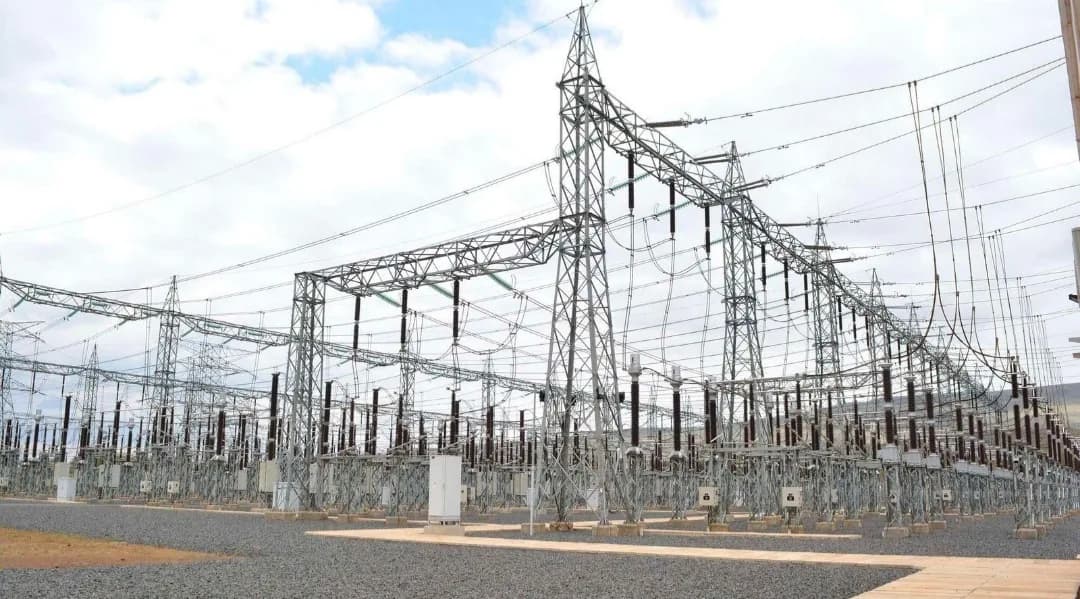
A country can have substantial generation resources while a particular development still faces connection, transmission or site-level constraints. The cautionary example is the Microsoft-G42 campus announced near Olkaria in May 2024 at about $1 billion, which has stalled partly over a power request that grew from 60 MW to 1,000 MW, roughly a third of Kenya's total installed generation (Kenyans.co.ke, 22 August 2026; Business Daily, 10 September 2026). Kenya's record peak demand stands at 2,439 MW, reached in December 2025 (TechCabal, 20 August 2026), so requests of that size stop being a connection query and become a national planning question.
These questions require project-specific evidence. National generation figures alone cannot establish whether a particular data centre has secured the power it needs. Kenya's power infrastructure and the data centre constraint examines the delivery chain in detail, and how power reliability shapes data centre design explains what operators build to compensate for it.
2. Dedicated generation: the Hercules proposal
A more distinctive approach is emerging in Mombasa. AMACO Energy Group, a Greek energy and infrastructure firm, has announced plans for Hercules, a proposed AI data-centre and energy infrastructure project estimated at US$1.5 billion, first reported on 17 August 2026 (Business Daily). In September 2026, AMACO announced a cooperation agreement with GE Vernova covering gas-turbine technology for a planned offshore power barge (Business Daily, 10 September 2026). The concept is to develop electricity generation alongside the proposed computing infrastructure rather than depend on a conventional grid connection.
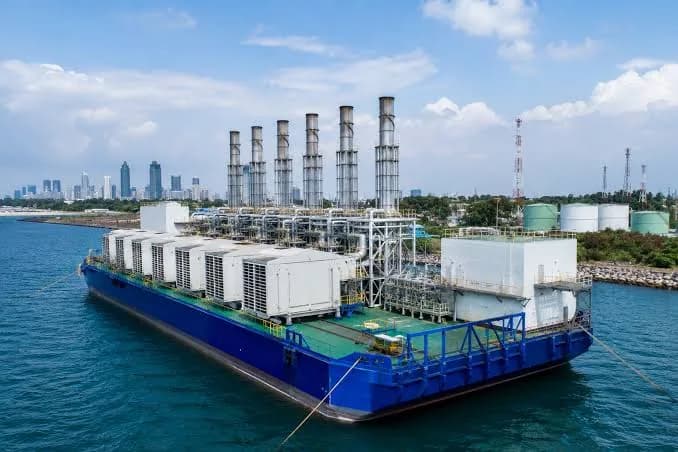
The proposal is significant because it places power generation at the centre of the data-centre investment model: the fuel, the turbines and the computing load are designed as one system. The candidate sites are Dongo Kundu and Kilindini near the Port of Mombasa, and the underlying LNG-to-power registration sits in the permitting phase with a 2027 target start year (Business Daily, 10 September 2026; AMACO project page).
However, an agreement with an equipment supplier is not evidence that a power plant or a data centre has been commissioned. The project's final capacity, financing, confirmed site, construction schedule, fuel arrangements and contracted customer demand all require further verification, and none of these has been disclosed. The energy model also raises questions about fuel costs, emissions, grid integration, backup arrangements and the long-term commercial viability of LNG-powered computing infrastructure, which we examine in the full Hercules case study.
Hercules should therefore be tracked as a proposed project, not as operating Kenyan data-centre capacity. It is not counted in the DC254 directory's 27 facilities, because a proposal without approval, financing or a confirmed site does not meet the directory's verification bar, whatever the size of its headline number.
3. Renewable-backed power
The third approach involves renewable electricity, whether through direct generation, contractual supply arrangements or other structures that support a facility's energy requirements. Kenya's geothermal, hydro and wind resources make this an important area of investigation: the national grid draws over 90 percent of its electricity from renewable sources, one of the greenest generation mixes in the world (DC254 Rack Report, 11 October 2026).
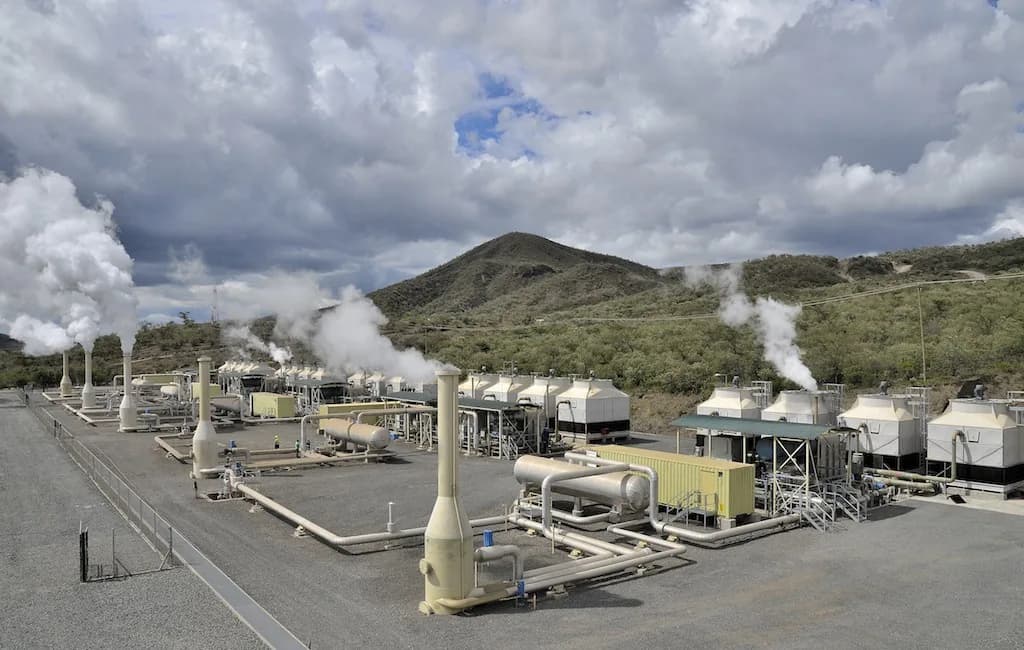
But the presence of renewable generation in the national electricity mix does not automatically establish that a particular data centre is supplied by a dedicated renewable-energy arrangement. The grid mix is a national generation statistic, not a guarantee of site-specific power delivery. The same power review found only three records in the directory carrying any renewable-energy claim at all, and none of the three is an operator-disclosed renewable power purchase agreement.
The distinction is important. A credible assessment needs to establish the operator's actual supply arrangements, the contractual structure, the source of electricity and any claims about renewable-energy coverage. It should also examine how the facility maintains continuity when a particular generation source is unavailable. Renewable supply, grid connections and backup systems are not necessarily competing choices; a data centre may combine several of them to meet its operating requirements. For DC254, the objective is to document the arrangement each operator actually uses rather than assign facilities an energy profile based on assumptions. Kenya's renewables and industrial power tracks what would change this picture, and what a genuine renewable supply claim would look like.
The real test: can power be delivered when computing needs it?
The AI infrastructure debate often focuses on headline investment figures and planned megawatts. Yet several distinct milestones sit between an announcement and a functioning AI data centre:
- Power identified: The developer has described a potential source of electricity.
- Power contracted: A supply or generation arrangement has been agreed, subject to its terms and conditions.
- Power infrastructure delivered: Required generation, transmission, connection and distribution equipment has been installed.
- Systems commissioned: Electrical and backup systems have passed the necessary commissioning tests.
- IT capacity operational: Computing equipment has been installed, energised and made available for service.
These milestones should not be collapsed into a single claim that a project has secured power. A signed agreement may be an important step, but the evidence required to establish operational readiness is different in kind, not just in degree. Hercules currently sits between the first milestone and the second: the power source is described and an equipment partner is engaged, but no supply contract, financing or construction schedule has been published.
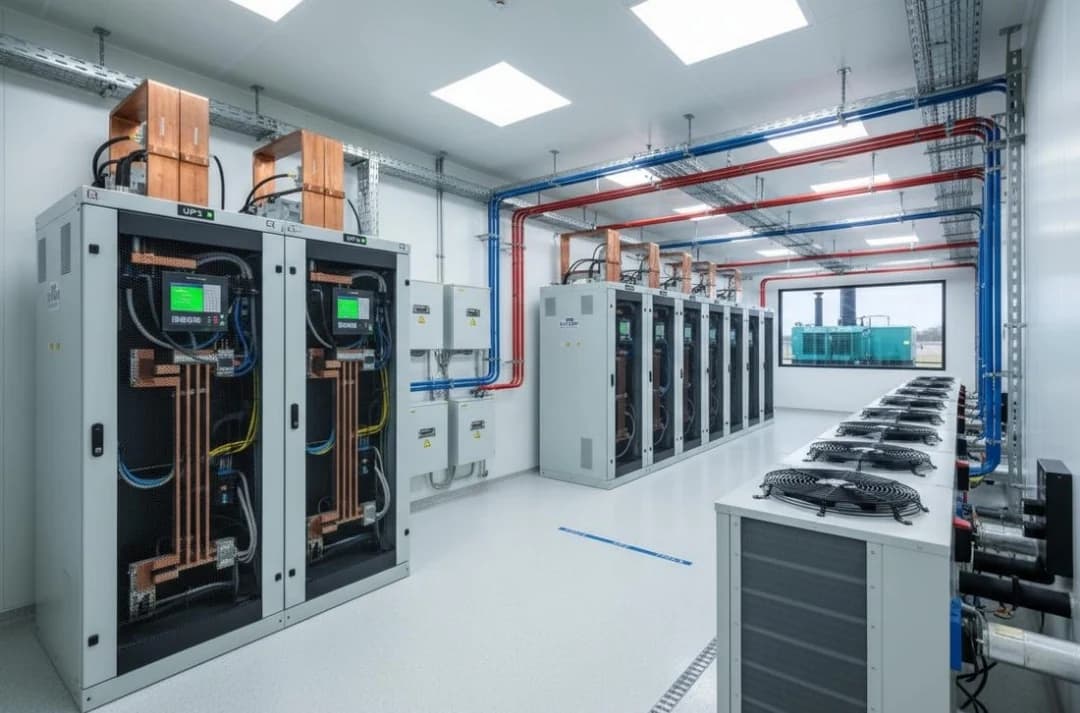
For large AI workloads, operators must also plan cooling, power distribution, redundancy and the electrical requirements of high-density computing equipment. These systems influence both the facility's design and its operating costs, and they are where paper projects quietly fail: commissioning tests exist precisely to expose the gap between what a design promises and what the installed system delivers. The relevant question is whether the complete infrastructure system can support the intended workload, not simply whether a developer has announced an electricity source. UPS systems and backup power for Kenyan data centres covers the continuity layer in detail.
What this means for Kenya's competitiveness
Reliable power is one component of a competitive data-centre market. It must work alongside connectivity, suitable sites, financing, skilled personnel, regulatory clarity and customers willing to purchase computing services. A weakness in any one of them eventually shows up as an empty hall or a delayed opening, whatever the launch ceremony said.
Geography offers Kenya's two candidate hubs different starting hands. Mombasa has a potential strategic advantage in its international connectivity and port infrastructure: seven live submarine cable systems make landfall on its coast, and the port can deliver fuel and heavy equipment by sea. Nairobi has an established concentration of digital infrastructure and network interconnection, anchored by operating facilities such as iXAfrica's NBOX1 and iColo MBA1.

But geographic advantages do not establish that a proposed facility is commercially ready. A developer must still demonstrate that it can finance the project, secure the required approvals, deliver the power architecture, connect to the relevant networks and attract enough demand to justify the investment. For AI infrastructure, these questions become especially important because the costs of computing hardware, electricity, cooling and supporting infrastructure must be considered together: a cheap kilowatt-hour delivered unreliably can cost more than an expensive one delivered with proper redundancy.
Kenya's opportunity is therefore not measured solely by the size of its announced project pipeline. It also depends on the country's ability to turn credible proposals into reliable, operating infrastructure. That is a question of delivery, and delivery is verifiable.
What should Kenya disclose?
There is a practical opportunity to improve the quality of public information about data-centre development, and the market itself supplies the argument for it. Today only eight of the twenty operational Kenyan facilities publish a live IT load figure at all, which means most capacity conversations run on designed numbers rather than operating ones. Operators, developers and relevant public agencies could help investors, customers and policymakers by publishing consistent information on:
- Operational status: Announced, financed, under construction, commissioned or operating.
- IT capacity: Installed and operating load, clearly distinguished from designed or proposed capacity.
- Electricity arrangements: Grid connection, contracted supply, dedicated generation and backup systems.
- Power readiness: Connection milestones, commissioning status and material constraints, where disclosure is appropriate.
- Energy and cooling: Relevant consumption data, cooling systems and documented sustainability commitments.
- Project delivery: Financing milestones, construction progress and expected commissioning dates, clearly labelled as estimates when unconfirmed.
Such disclosure would make it easier to distinguish infrastructure that exists from capacity that remains on paper. It would give customers a stronger basis for evaluating service availability, and give policymakers better evidence for planning electricity, transmission and digital infrastructure. Our earlier analysis of what operators should disclose sets out the case in full.
The DC254 position
Kenya's AI data-centre race should be assessed through evidence of delivery, not announcements alone. DC254's role is to track the progression from proposed investment to secured infrastructure, commissioned systems and operating computing capacity. That means asking the same questions of every project: What is confirmed? What remains proposed? What capacity is actually operating? What evidence supports the claim?
The Hercules proposal provides a useful case study because it makes the relationship between electricity generation and AI infrastructure explicit. But the same verification standard should apply to grid-connected facilities and to projects pursuing renewable-backed power. The objective is not to favour one energy model before the evidence is available. It is to establish which arrangements can meet each project's requirements, at what cost, with what risks and under what conditions.
As AI infrastructure investment grows, which developers can demonstrate that they have secured the power, financing, connectivity and operational capability required to deliver working data-centre capacity? The answer will tell us more about Kenya's readiness for AI infrastructure than the announced megawatts alone.
DC254 tracks Kenya's data-centre facilities, capacity, development pipeline and supporting digital infrastructure in the public tracker. Project statuses and capacity figures should always be read alongside their sources, verification dates and stated definitions.
Frequently asked questions
How much data-centre capacity does Kenya actually have operating?
As of the DC254 tracker, last verified in October 2026, Kenya has 27 tracked facilities, of which 20 are operational. Those operating facilities publish 10.5 MW of live IT load, disclosed by eight of the twenty operators, against 42.9 MW of designed capacity. A further 230 MW of pipeline is announced: 77 MW under construction, 53 MW committed and 100 MW at early stage. These are different stages of development and should not be read as one number.
Does Kenya have enough electricity for AI data centres?
The honest answer is project-specific rather than national. Kenya's grid draws over 90 percent of its electricity from renewable sources, but a national generation mix does not guarantee delivery to a particular site at a particular size and price. The measurable questions are whether each developer can secure power at the scale, location, cost and reliability its project requires, and whether the connection, backup and commissioning evidence supports that. This article deliberately avoids a blanket shortage or surplus claim because the project-level evidence, not the headline, decides outcomes.
What is the Hercules project in Mombasa?
Hercules is a proposed AI data-centre and energy infrastructure project in Mombasa announced by AMACO Energy Group in August 2026, estimated at US$1.5 billion. In September 2026 AMACO announced a cooperation agreement with GE Vernova covering gas-turbine technology for a planned offshore power barge. The design would generate electricity alongside the computing load instead of relying on the grid. Final capacity, financing, a confirmed site, construction schedules and customers have not been disclosed, so DC254 tracks it as a proposed project and it is not counted in the directory's 27 facilities.
Are Kenya's data centres powered by renewable energy?
The grid is: over 90 percent of Kenya's electricity comes from renewable sources, stated as a national generation mix. The operators' own claims are thinner. DC254's power review published on 11 October 2026 found only three records in the directory carrying any renewable-energy claim at all, and none of them is an operator-disclosed renewable power purchase agreement. A renewable grid mix and a renewable supply contract for a specific facility are different things, and only the second can be verified per site.
What is the difference between announced and operational capacity?
Five milestones sit between them: power identified, power contracted, power infrastructure delivered, systems commissioned, and IT capacity operational. An announcement usually covers only the first. A signed agreement advances the second, but capacity only becomes operational when computing equipment is installed, energised and available for service after commissioning tests. Treating these stages as interchangeable is the most common error in reading data-centre market numbers.