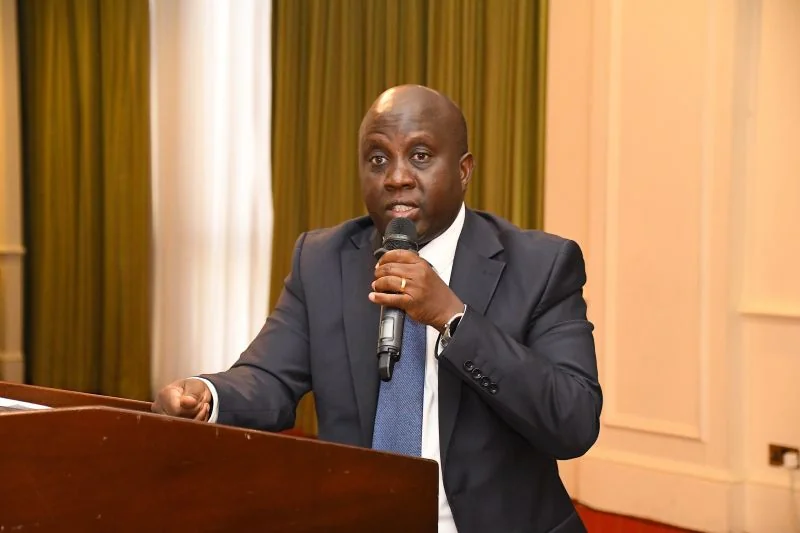
On Tuesday 13 October 2026, the government of Kenya put a number on one of its biggest connectivity bets. At a pre-bid session in Nairobi for the framework agreement tender on national backbone and cross-border links, Principal Secretary for ICT and the Digital Economy Eng. John Kipchumba Tanui announced that the state is making KSh 13 billion available to catalyse matching private investment and deliver at least 27,000 km of backbone, middle-mile and cross-border fibre. The session brought together internet service providers, telecommunications operators, investors, financiers and development partners, with the CEO of the ICT Authority, Jesse Maruti, also present according to the PS's account.
The tender sits under the Kenya Digital Economy Acceleration Project, better known as KDEAP, the World Bank-supported programme that funds much of Kenya's current digital infrastructure build-out. It is not a small procurement: the framework covers two lots, national backbone links and cross-border links, and will run for an initial three-year term with the option to extend by up to two further years. For anyone tracking Kenya's digital infrastructure, from fibre networks to the data centres they feed, this is one of the most consequential procurements of the year.
What the tender actually buys
The ICT Authority's advert, published on 15 September 2026 on its open tenders page, describes a "framework agreement for extending national backbone and cross border links" in two lots: Lot 1 for national backbone and Lot 2 for cross-border links. Trade press coverage from September, including ITWeb Africa and Telecompaper, describes the structure as closed framework agreements, which means the authority pre-qualifies a pool of suppliers first, and specific build-out contracts are then awarded against that framework as volumes are confirmed.
The Principal Secretary's September announcement spelled out the scope in the same terms: national backbone links, cross-border and metropolitan links, under a three-year framework. Bids close at 10:00 a.m. EAT on 29 October 2026. Both local and international infrastructure providers are invited to participate in what the PS called a competitive procurement, and the stated goals are resilience and redundancy for national infrastructure, more connected public institutions, affordable access, and the extension of last-mile connectivity by private operators to homes and businesses.
Where the money comes from
KDEAP is the financing engine behind this tender. The project is implemented by the ICT Authority under the Ministry of Information, Communications and the Digital Economy and supported by a US$390 million World Bank IDA credit running from 2023 to 2028, according to the project's official site. Its first phase concentrates on three priority areas: digital infrastructure and access, digital government and services, and digital skills and markets. The backbone, last-mile and cross-border connectivity expansion sits squarely in the first of those, and the project has a stated aim of mobilising an estimated US$100 million in private capital for broadband infrastructure.
The KSh 13 billion, roughly US$100 million at recent exchange rates as reported by trade outlet W.Media, is the public side of that public-private equation. The mechanism for allocating it is a Multi-Round Reverse Auction (MRRA), in which the missing links have been jointly identified and verified, according to the PS, and public support goes to the operators that require the least subsidy to build them. The approach is deliberately different from a conventional government build: instead of the state laying fibre itself, it subsidises private operators to build routes that would otherwise not be commercially viable, and the auction format is designed to drive the required support down round by round.

The market the tender is betting on
The government's case for the investment rests on sector statistics from the Communications Authority's April to June 2026 report, as cited in the PS's post. Mobile subscriptions stand at 88 million, mobile broadband at 54.9 million and mobile money subscriptions at 54 million. The mobile figures describe SIM subscriptions rather than unique individuals, and independent reporting for June 2026 puts SIM subscriptions at 87.99 million, consistent with the government's figure. On the fixed side, the numbers are smaller but growing faster: fixed internet connections reached 2.84 million by June 2026, up 32.4 percent year on year, including 1.57 million fibre connections, up 29.7 percent, figures corroborated by the Communications Authority's own public communications and independent reporting.
The fibre base has been expanding quickly. Since 2022, the private sector has added 24,000 km of fibre and the public sector 17,000 km, according to the Principal Secretary, figures reported by People Daily. International capacity stands at approximately 28.95 Tbps across Kenya's submarine cables and cross-border links, the enabler behind the country's cloud services, digital trade and BPO ambitions. Against that base, the government's ambition of more than eight million fixed broadband connections implies nearly a threefold expansion of today's fixed market, and that is the demand the 27,000 km of new fibre is meant to serve.
Why backbone economics matter for data centres
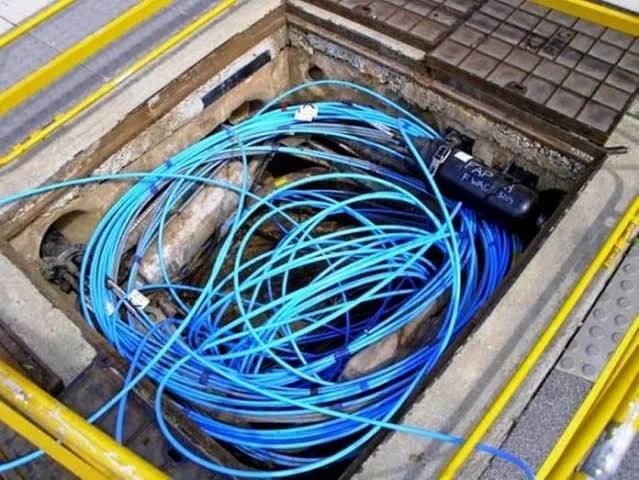
For Kenya's data centre market, this tender touches the input costs that everything else sits on. Backbone and middle-mile routes carry traffic between submarine cable landings at Mombasa, inland population centres and the facilities listed in the DC254 tracker, which last verified 27 tracked facilities with 20 operational in October 2026. Better-resourced routes mean operators can buy transit and backhaul on tighter terms, diversify away from single-path risk, and serve customers outside Nairobi without sacrificing latency guarantees. Kenya's fibre optic networks and data centres explains how that transport layer works in practice.
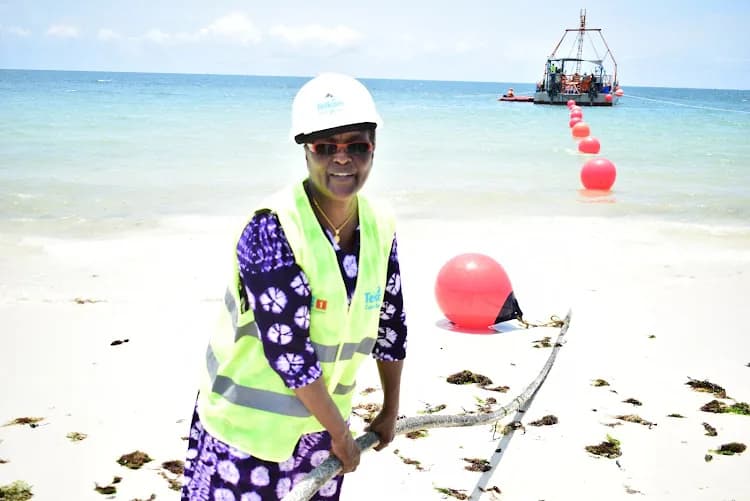
The cross-border lot matters just as much. Landlocked neighbours in the region currently depend on routes that transit Kenya, and submarine cables landing at Mombasa have historically made the country the region's natural gateway. New cross-border fibre under a Kenyan-led framework strengthens that position and deepens the case for regional traffic exchange and hosting in Nairobi, a dynamic we examined in East African data centres compared. It also complements domestic initiatives such as Kenya's compute hub plan, which depends on affordable, redundant connectivity to be credible.
What is confirmed, what is attributed and what is still unknown
Following the verification standard this site applies to every claim, the picture divides cleanly into three tiers.
Verified against official or independent sources:
- The tender exists, in two lots (national backbone, cross-border), published on the ICT Authority's open tenders page on 15 September 2026.
- The framework structure is a closed framework agreement with a three-year initial term, extendable by up to two years (ITWeb Africa, Telecompaper, AllBusiness Africa).
- Bids close at 10:00 a.m. EAT on 29 October 2026, stated in the Principal Secretary's September 2026 post.
- KDEAP is funded by a US$390 million World Bank IDA credit for 2023 to 2028, per the project's official site.
- Fixed internet reached 2.84 million connections by June 2026, up 32.4 percent, with 1.57 million fibre connections, per the Communications Authority's own communications and independent reporting.
Attributed to the Principal Secretary's post (single-source until further evidence):
- The KSh 13 billion catalytic funding envelope.
- The at least 27,000 km fibre target.
- The Multi-Round Reverse Auction as the allocation mechanism.
- The 24,000 km private and 17,000 km public fibre additions since 2022.
- The 54.9 million mobile broadband and 54 million mobile money subscription figures.
- The ambition of more than eight million fixed broadband connections.
Still unknown:
- Which specific missing links the MRRA will target, and their individual lengths and budgets.
- How much matching private capital the auction will require per route.
- The award timeline after the 29 October close, and when the first call-offs against the framework would happen.
- Any delivery schedule connecting the framework to actual lit routes.

What to watch
The immediate date is 29 October 2026, when bids close at 10:00 a.m. EAT. What follows matters more: the composition of the framework pool, the size of the subsidies the reverse auction settles on, and how quickly the first routes move from award to construction to lit fibre. Each of those steps converts a headline number into verifiable infrastructure, and each is checkable in public procurement records and operator disclosures.
DC254 will keep tracking the tender's progression alongside the facilities, capacity and pipeline in the DC254 tracker, and updates to this article will be dated and evidenced. For the underlying transport-layer context, see the Kenya Internet Exchange Point, Kenya's digital economy and data centre demand, and the quarterly State of the Market 2026-Q3 report.
Frequently asked questions
What is the KSh 13 billion for?
According to Principal Secretary Eng. John Tanui, the government is making KSh 13 billion available under the Kenya Digital Economy Acceleration Project to catalyse matching private investment and deliver at least 27,000 km of backbone, middle-mile and cross-border fibre. The money is not a single construction contract: it is public support allocated competitively through a Multi-Round Reverse Auction to operators who win places on the framework agreements.
What is KDEAP?
KDEAP, the Kenya Digital Economy Acceleration Project, is a government programme implemented by the ICT Authority under the Ministry of Information, Communications and the Digital Economy and supported by a US$390 million World Bank IDA credit running 2023 to 2028. Its first phase covers digital infrastructure and access, digital government and services, and digital skills and markets. The backbone and cross-border connectivity tender falls under its infrastructure component.
Who can bid and when does the tender close?
The ICT Authority's advert, published 15 September 2026, covers two lots: Lot 1 for national backbone links and Lot 2 for cross-border links, structured as closed framework agreements with an initial three-year term extendable by up to two further years. Both local and international infrastructure providers are invited, according to the Principal Secretary's announcement. Bids close at 10:00 a.m. EAT on 29 October 2026, per the PS's September 2026 post.
What is a Multi-Round Reverse Auction?
A reverse auction reverses the usual roles: many suppliers compete to offer a service at the lowest required public support, rather than a buyer choosing among rising bids. In a multi-round design, successive bidding rounds drive the subsidy down until only the most efficient operators remain. Kenya is applying this model so that the KSh 13 billion stretches further, with winners expected to mobilise matching private capital.
What does the tender mean for Kenya's data centres?
Backbone and cross-border fibre is the transport layer that connects data centres to submarine cable landings, internet exchange points and customers across the region. More routes and better redundancy can lower bandwidth costs and improve resilience for the 20 operating facilities in the DC254 tracker, and strengthen the case for regional traffic to be hosted in Kenya rather than abroad. The effect depends on delivery: routes must actually be built, lit and commissioned.