What the Bank Announced
In Seoul on 20 October 2026, the World Bank Group launched its first digital strategy and, alongside it, the AI Infrastructure and Readiness Initiative: a programme to give governments in Africa and Latin America shared, pay-as-you-go access to GPU computing. The Bank frames it as "a practical alternative to standalone national data centres," with Cassava Technologies and NVIDIA named as knowledge partners. President Ajay Banga tied the package to what the Bank calls "small AI, AI for the people," arguing that digital technology helps countries create jobs and make scarce resources go further.
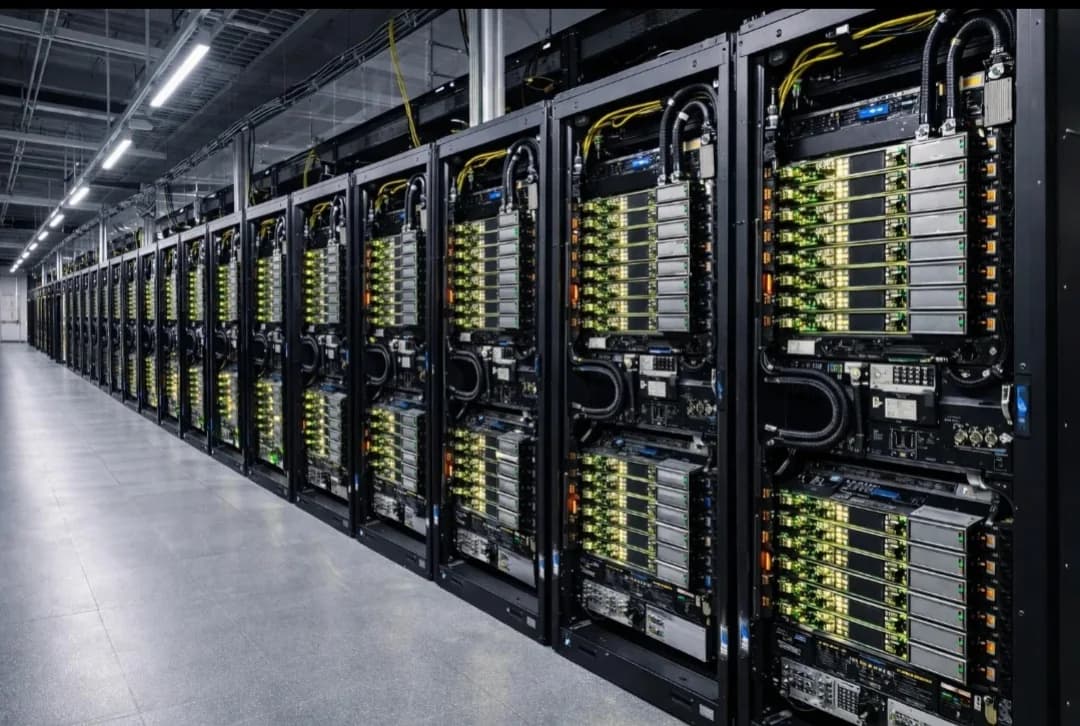
Read that framing carefully, because it contains a quiet provocation. The World Bank, the institution that has financed power grids and undersea cables for decades, is telling governments there is a path into AI that does not begin with building a national data centre. For a continent holding roughly 0.6 percent of global data centre capacity against 18 percent of the world's population, that is either the most sensible shortcut on offer or a detour around problems that still have to be solved on the ground. For Kenya specifically, the answer turns on rules the Bank's announcement never mentions: where the GPUs sit, and what Kenyan law already requires to stay home.
The Numbers Behind the Push
The Bank's own figures explain the urgency. Sub-Saharan Africa accounts for about 18 percent of the world's population but holds roughly 0.6 percent of global data centre capacity, and only around 5 percent of existing African facilities are ready for AI workloads, according to figures the Bank has circulated with the announcement. Measured differently, Africa averages about 0.33 MW of data centre capacity per million people, against roughly 15 MW globally.
The readiness picture is just as uneven as the infrastructure. The Bank's Africa Economic Update, published a day after the announcement, finds AI adoption concentrated in a small set of leading economies, with Nigeria, South Africa and Kenya ahead of the pack, and most African countries using AI below the levels seen in lower-middle-income economies. More than 2 billion people were offline in 2025, and internet use in low-income countries stood at 23 percent against 94 percent in high-income ones. Those are the conditions the shared-compute proposal is designed for: governments that need results before they can finance concrete.
The Rent-versus-Build Question
The initiative's premise deserves a fair hearing before a verdict. Building a national AI data centre means solving power first, then cooling, connectivity, financing and finally demand. Kenya's own pipeline shows how slow that chain runs: the Konza expansion is only now entering PPP preparation funding, years after entering the pipeline. For a ministry that wants crop disease detection for farmers or an inventory tool for clinics, waiting for a national facility to reach financial close is not a plan. Renting pooled capacity turns a capital problem into an operating expense and lets useful work start this fiscal year.

But renting has a catch that the announcement leaves entirely open, and early reporting noticed. As written, the initiative does not say how governments will access the infrastructure, what it will cost, which countries participate first, or, most importantly for this audience, where the shared GPUs would physically be located. Every one of those unknowns sits upstream of the decision the Bank is asking governments to make. The compute-gap story we covered in September made a related point about private capital: announcements are easy, the terms sheet is where reality lives.
What Kenya's Own Rules Already Decide
Here is the part of the debate that happens in Nairobi rather than Seoul. Kenya's Data Protection Act and the public-sector hosting expectations built around it already require much government and personal data to remain in-country. That legal fact does most of the work in the rent-versus-build argument before economics enters at all.

A shared GPU pool whose location is undisclosed cannot host a workload the law says must live in Kenya. It cannot process citizen records for a ministry, back a government cloud, or touch the datasets that localisation rules protect. What it can serve is the wide upper layer of AI work that carries no residency constraint: model experimentation, non-sensitive inference, prototyping for agriculture and small business tools. Kenya's data sovereignty push is not a mood or a preference; it is a compliance perimeter. Any government computing plan splits cleanly along that line, and the Bank's initiative, as announced, only serves one side of it.
That is also why the rent-versus-build framing is a false binary for Kenya. The country is not choosing between a GPU rental account and a national data centre. It is building the local layer because law and anchor demand force it, the compute hub plan says as much, and commercial capacity is arriving regardless: Cassava, one of the initiative's own knowledge partners, has said its NVIDIA-powered AI factory is deploying in South Africa with expansion planned for Nigeria, Kenya, Egypt and Morocco. A government that rents pooled compute for bursty small-AI work while local capacity matures is running a sensible on-ramp, not abandoning the build.
The Wrinkle in the Partner List
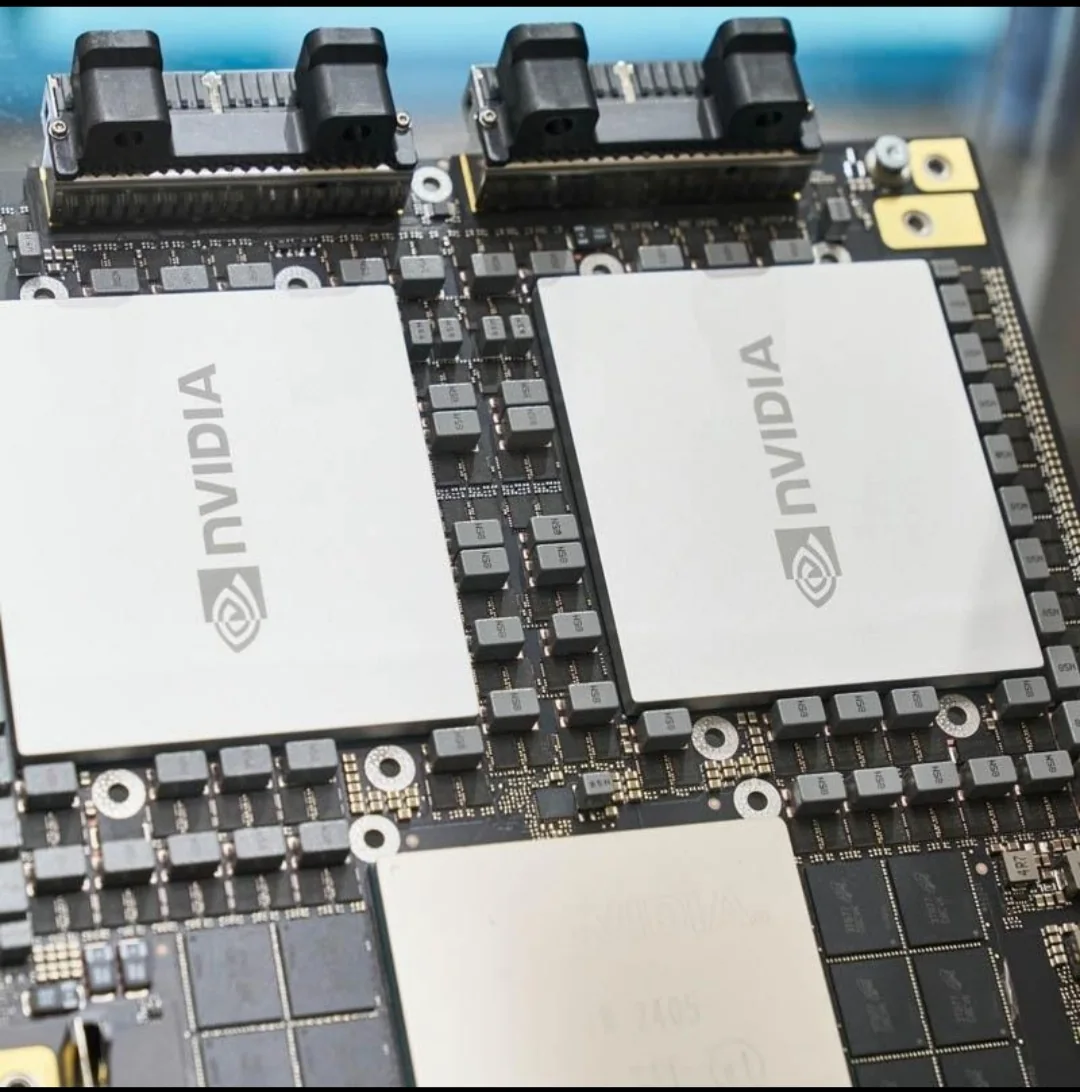
Cassava and NVIDIA's role deserves scrutiny, because the Bank has handed its credibility to two parties with a commercial roadmap of their own. Cassava is not a neutral consultancy; it is an operator building paid AI capacity across the continent, with Kenya on its expansion list. If the initiative's shared pools end up riding on commercial infrastructure like Cassava's AI factories, the programme becomes a demand-aggregation vehicle that channels government spending into private facilities. That would be defensible, arguably elegant, but it should be said plainly. It would also mean the GPU location question answers itself: the capacity would sit where the operators build, including, eventually, in the region.
The optimistic read and the cynical read converge on the same watch item. If the shared pools sit in-region, the initiative seeds utilisation for exactly the local facilities DC254 tracks and lowers the unit cost of government AI. If they sit outside Africa, the initiative becomes an off-ramp that quietly ships commodity AI workloads abroad while the hard local problems of power and financing remain unsolved. The announcement, as it stands, supports either interpretation, which is precisely why the GPU location and data residency terms are the details to watch.
What Shared Compute Cannot Do
Strip the debate to workload shapes and the limits become obvious. Small AI, the Bank's own target, means intermittent, modest inference jobs: identifying a crop disease from a photo, drafting a clinic summary, forecasting stock for a kiosk. Those jobs fit rented pools well. The workloads that anchor a national digital economy do not: identity platforms, tax systems, health records, government cloud, anything under a residency rule, and any training run large enough to need sustained power contracts. Those need facilities with metered power, certified operations and contracts, the things data centre operators actually sell. An economy that rents all of its compute has outsourced its leverage over pricing, uptime and jurisdiction, and no development lender has answered for that yet.
There is also the constraint under every constraint. Power, not GPUs, is the binding input for local capacity in most of the region, which is why the Bank's own energy programming runs in parallel. Compute rentals do not build generation or transmission; they simply make demand productive wherever electricity already exists.
What to Watch
Five markers will settle whether this initiative helps Kenya's infrastructure or routes around it:
- GPU location and data residency terms. The single most consequential undisclosed detail. In-region capacity makes the initiative a complement; out-of-region capacity makes it a workaround.
- The access mechanism and price list. Pay-as-you-go against whose invoice, settled in which currency, with what commitment? Ministries will want comparisons before signing anything.
- The first cohort. Which governments enrol, and whether Kenya, already ahead on adoption per the Bank's own update, is among them.
- The knowledge partners' footprint. Whether Cassava's Kenya expansion and the Bank programme develop into one pipeline, with the initiative steering demand toward commercially built regional capacity.
- Uptake against the local plan. Whether ministries rent first and build later, or rent instead of building. The first pattern accelerates Kenya's compute hub ambitions; the second starves them.
The DC254 View
Our read, stated plainly: for Kenya, the initiative is best treated as an on-ramp and a demand signal, not an alternative. Localisation rules decide the base case; the market, power first, decides the build. A government that rents burst capacity while Konza's PPP, the Cassava expansion and the compute hub plan mature loses nothing and buys time. A government that reads "alternative to standalone national data centres" as policy direction would be trading a solvable infrastructure problem for a dependency nobody has priced. The Bank has offered a bridge. Kenya should walk it without mistaking it for the destination.
Frequently Asked Questions
What is the AI Infrastructure and Readiness Initiative?
A World Bank Group effort announced in Seoul on 20 October 2026, offering governments in Africa and Latin America shared, pay-as-you-go access to GPU computing as a practical alternative to building standalone national data centres. Cassava Technologies and NVIDIA are named as knowledge partners. It sits inside the Bank's first digital strategy.
Does shared compute mean countries no longer need their own data centres?
No. The initiative targets small, bursty AI workloads like crop disease detection or inventory tools. Sustained, compliance-bound workloads such as government cloud, identity systems and health records still need in-country capacity, especially where data protection law requires local residency. Shared compute is an on-ramp, not a substitute for the infrastructure behind sovereignty rules.
Where would the shared GPUs be located?
The announcement does not say. Neither the press release nor early coverage discloses where the pooled capacity would physically sit, how governments would access it, or what it would cost. GPU location is the decisive detail for countries with data residency rules, because compute outside the country cannot host locally-resident data.
How does this interact with Kenya's data localisation rules?
Kenya's Data Protection Act and public-sector hosting expectations require much government and personal data to remain in-country. Workloads covered by those rules cannot simply move to a shared pool abroad. Rented compute can serve compliant inference tasks, but the base layer of government platforms stays a local build case.
How is this different from the AWS $1.5 billion Africa commitment?
AWS's commitment is commercial: private capital building cloud regions and infrastructure for profit across African markets. The World Bank initiative is a development-financing programme lending governments a shared public-interest route into AI capacity. One adds commercial supply; the other tries to organise demand that markets have not reached yet.